Tagged: Detroit
I Hope Trump Was Right About Detroit

I hope Donald Trump was right when he thought he was insulting Detroit, while speaking here, predicting if Kamala Harris beats him in the presidential election, declaring, “Our whole country will end up being like Detroit if she’s your president.”
I hope he’s right. Harris should hope so too, and campaign on that hope.
My love affair with the Motor City began in 1989, although it wasn’t love at first sight.
After eight years working at CNN at its Atlanta, Georgia headquarters launching Headline News, producing thousands of news casts, being promoted to correspondent and anchor, it was time for a change.
That change came when CNN Detroit’s first bureau chief/reporter, the inimitable Robert Vito, was appointed to lead the network’s bureau in Rome.
Few people wanted to take his place because Detroit was, y’know, a scary, cold, murderous, nasty place. At least that was its reputation.
I’m a native New Yorker. That kind of stuff doesn’t deter me. So I applied for the job and got it.
In the weeks before I made the move, idiots in the newsroom gave me shit warning me to buy an Uzi and other small arms with which to defend my kith and kin.
But there were also a couple of folks who actually had lived and worked in Detroit and told me to ignore the morons, one predicting, “once you live there you’re never gonna wanna leave. Just give it time and explore.”
When I asked why they left, they both said it was simply a matter of seizing career opportunities but they missed the place badly and visited often.
So we moved. It wasn’t great at first. We went from a split-level house that eventually took us nine months to sell because the Atlanta market was over-built, to a rental townhouse in suburban Farmington Hills that had plenty of room but lots of, um, rodents and at least one hooker as a neighbor.
It was colder, more cloudy and at the time Detroit’s downtown was fairly run down. But I kept remembering what those folks told me about giving it time and exploring. So we did.
As the new Detroit bureau chief and correspondent my prime coverage responsibility would be, of course, the auto industry.
CNN founder Ted Turner said he established the Detroit Bureau in 1983 because he wanted to be close to the most important industry in the world. The bureau was also in the basement of PBS station WTVS a couple of blocks from the old General Motors headquarters in Detroit’s New Center area. Again, Turner put it there because he wanted CNN’s Detroit Bureau to be near the biggest company in the most important industry in the world.
I quickly found out something perhaps Turner didn’t know about Detroit and the auto industry—how warm and welcoming both could be, especially if you showed some humility and a willingness to learn, which I did.
My new charges at the bureau instantly made me feel welcomed and were kind enough to drive me around the area as I considered places to live and explained the mile road system.
Now don’t get that confused with the “southern charm” I was used to in Georgia. Let’s just say Detroit has its own vernacular—meaning a directness that one could mistake denotes rudeness.
Example. My first real contact with the auto industry was interviewing the top numbers cruncher for Ford. He was a crusty guy two months from his retirement. When I sat down to begin the interview he barked at me, “okay, you’re new, you don’t know anything. Just shut the hell up, listen to what I say and get it right.”
I did on all accounts and after my story aired he called me, now speaking in a much friendlier tone and laughed, saying, “scared the shit out of you, didn’t I? But you did real good. Welcome to Detroit.”
Yes. I needed to give Detroit a chance.
After that I was invited to attend and to speak at a number of events where industry and PR poohbahs gave me warm welcomes.
I was even invited, several times, to appear on the radio with legendary WJR morning giant, the late J.P. McCarthy, where he’d give me gentle shit about the media bashing Detroit. I won him over by changing the subject, telling him anecdotes about Ted Turner sometimes appearing the Atlanta newsroom in a bathrobe after spending the night in his office upstairs after a particularly rough evening of, er, personal enjoyment.
I was honored to be one of McCarty’s final guests on his Focus segment the week of his last shows before he retired.
Over the years my family and I discovered the beautiful suburbs, the wonders of Michigan and above all, the friendliness of its people. We also reveled in the genius of the hard-working citizens who constantly push the boundaries of technology, mobility, education and culture.
In January, 2001 CNN’s parent company completed what would end up being a disastrous merger with AOL, and the company closed bureaus and laid off about a thousand of us in one fell swoop. I was one of them.
So now a choice had to be made. Where to go to continue to make a living. Our two kids were still in school and we very much wanted to avoid uprooting them.
But in the end it wasn’t really a question of moving. My family said they love it here. The Detroit area has everything you could want—schools, shopping, recreation, culture, major league sports teams. Why move?
There weren’t any TV jobs for me so I re-invented myself as a print reporter. Again, Detroit came through for me.
The Associated Press Detroit bureau chief Charles Hill needed a national auto writer and I had place my resume on a journalism job website. He was skeptical a TV guy could actually write—typical bias against broadcast journalists—but gave me a chance.
Yes, there was a learning curve, but again, Detroit came through for me. My editor, Randi Berris and supervisor, Mike Householder, held my hand, broke me of some TV habits and were so, so patient and supportive.
It led to being recruited by The Detroit News to be the General Motors beat writer and three years later, tapped by then DaimlerChrysler PR chief Jason Vines to ghost write and manage his new blog. That job eventually grew to the creation of a new digital communications team which I was appointed to lead until I retired in 2016.
Even after I retired, the opportunities kept coming. I was recruited to use my many years of broadcast journalism experience to help out the Automotive News with its twice-daily newscasts.
That ran its course and I was immediately approached by a former Chrysler colleague at Franco PR to work as a consultant and at the same time, the Forbes Detroit bureau chief asked me if I’d like to be a freelance automotive contributor. That was in 2018 and I’m still working those two part-time gigs, which I thoroughly enjoy.
You see a theme here? Detroit represents open-mindedness, opportunity, fulfillment. My kids are adults but they’re still here. We didn’t skip town upon retirement. Indeed we bought a bigger house.
We live exactly one minute from a magnificent trail that connects with others for many, many miles where we often walk or bike ride.
We’re surrounded by lakes and are only 20 minutes from the Huron River where I often paddle in my kayak.
My daughter and boyfriend have also recently introduced me to the magnificent sport of disc golf. Who knew there were so many wonderful courses in the Detroit area—most of which charge no fee?
Detroit has become internationally renowned for its eclectic restaurant scene with restaurants led by adventurous chefs conjuring meals and experiences delighting diners with tastes that range from basic American fried stuff to gourmet dishes delving into an array of elements and cultures.
Thousands of new homes, apartments, townhouses and condos are opening or under construction, aimed at attracting new full-time residents to the city.
Take a look at Detroit’s skyline. That new Hudsons block skyscraper is a metaphor for the new heights our town is reaching.
Leave the Detroit area, leave Michigan? Are you freakin’ crazy?
So listen, Kamala Harris. If you become President of the United States, you would do well to make much of the country a lot like Detroit. And Trump? You were too stupid to know the insult you intended was actually a compliment.
Detroit’s Multi-Towering Conundrum–The Renaissance Center’s Dark Ages

What do you do with seven giant glass tubes sticking out of the ground that happen to be the most famous and distinctive feature of your city’s skyline? That’s the question folks around Detroit are asking ever since General Motors CEO Mary Barra announced the company is moving its world headquarters out of the Renaissance Center next year to a new building about a mile north.
Some say tear it all down. Barra promised GM and the developer still putting the finishing touches on the building to which the automaker is moving will work to, um, reimagine the colossal architectural beast.
Yes, I call it a beast that should actually never have been imagined.
Some context. I lived in Atlanta for eight years in the 1980’s when I worked for CNN. It’s where I saw the first iteration of what would grow to become the actual center of the Renaissance Center.
You see, the architect John Portman built his first tubular monstrosity in the city of a hundred streets with Peachtree in their names…and now, one hotel..the Peachtree Plaza. The single glass tube instantly became the key feature of Atlanta’s skyline, showcased in every image of the growing city’s downtown.
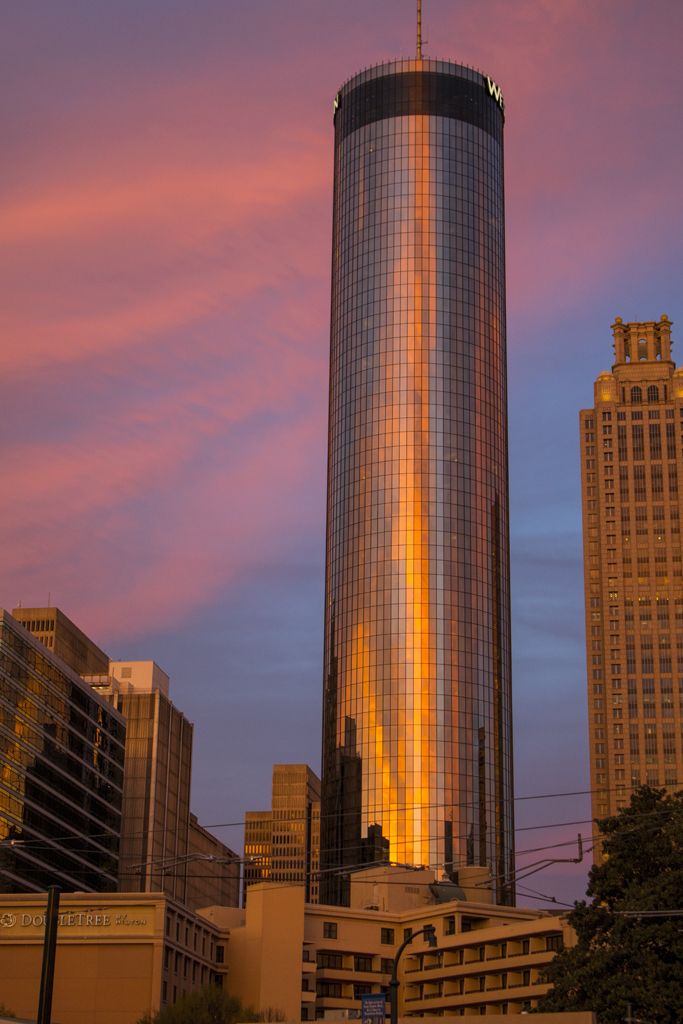
The first time I landed in Atlanta for my interview at CNN in 1981, I looked north from the terminal and saw that thing sticking up like a 12-year boy’s first real boner. The city Sherman burnt down was rising again and finally reaching puberty.
Thankfully, over the years, as Atlanta grew, so did its skyline and Portman’s glass pipette is less prominent.
Here in Detroit Henry Ford II, the Deuce, figured he’d more than double what Portman planted in Dixie and, together with Detroit leaders, commissioned the architect to duplicate Atlanta’s Peachtree Plaza, but then surround it with four octagonal office buildings all connected by a network of passageways that would challenge even the most accomplished spelunkers.
The new Renaissance Center, or RenCen, would become the symbol of Detroit…the Renaissance City. Planted on the banks of the Detroit River, facing Windsor, Canada, the RenCen overshadowed and loomed over older landmark downtown buildings such as the Penobscot and Guardian to herald the Motor City’s vitality and prominence, or at least assert it.
If anything, the RenCen was a photogenic feature that made for effective marketing materials.
Less than 20 years later it all went bad.
In 1989 I was transferred by CNN from Atlanta to Detroit to become its new bureau chief and correspondent. The company had me spend a few days getting to know the staff and the city before moving here. They put me up in what was then the Omni Hotel in the Millender Center…connected to the RenCen by a short pedestrian bridge over Jefferson Avenue.
Of course, I had heard of the RenCen and decided, one evening, to explore this famous landmark. As soon as I entered it from the pedway I felt like a piece of dust might feel as it’s sucked into the collection bag of a Hoover. It was dark and directionless, with scant chance of quick escape.
If I was a mouse seeking a piece of cheese I would starve before finding the morsel since there was no apparent logic to the labyrinth’s layout. I wasn’t dumb enough to attempt to explore the complex because it was just too, well, complex. So I returned, disappointed, to my hotel room.
Not long after I moved up to Detroit and was with my camera crew, I returned with them to the RenCen to shoot an interview with a prominent economist at Comerica Bank which had offices in one of the towers. We weaved in and out between the towers and concourses searching for the right tube to ascend to reach our destination. We were late. We apologized. The economist laughed as he said, “This place sucks. Everyone gets lost…the first dozen times they come here.”
Another time, years later, as I was heading to a meeting a very upset man came up to me. “You look like you know your way around. Please, I heard there’s an ATM here. Can you direct me?”
Deciding this person was an honest Joe who did not deserve to have his hopes and dreams crushed, I looked him in the eye and said, “Sir. Even if I told you, you’d never find it. There’s a bank right across the street. Just head for the daylight of the exit and never stop. I want you to see your family again.”
The man instantly did as he was told. He knew. The RenCen’s tubes would suck you up like bacteria in a test lab.
The place not only didn’t make sense, but it wasn’t making any money as tenants fled to locations where employees, customers and clients could reasonably expect to find their destinations without the utter frustration of being caught in a glass and concrete hamster cage.
Just as it was given up for dead, in 1996 GM bought the place at a bargain rate and moved its world headquarters there from an historic building a couple of miles north. The automaker saved the day. Instantly, thousands of people occupied offices, supported the stores and restaurants. The RenCen had a new life!
Not so fast. Shortly after GM made the move we had an interview booked with then GM CEO Jack Smith. Nice guy. The interview was for our annual auto show special and our producer wanted to use lots of lights.
We plugged ‘em in. Our lights, and all the lights on the floor, went out. Guess the building wasn’t quite ready for prime time…or any time that required extra voltage. It took a few minutes, but the electricians did their magic and we smartly reduced our lighting scheme.
Smith was cool about it. “I guess there’s still some work to be done,” he said with an embarrassed chuckle.
There was plenty of work still to be done.
GM poured millions upon millions to finally take some of the mystery of navigating the maze with a simple innovation called the circulation ring. No more weaving in and out. Take the ring like a big traffic roundabout and bail out when you reached the exit closest to your destination. The big berms that walled off the complex from the rest of the city were torn down and the soaring Wintergarden was built, offering a bright gathering venue and passageway to the Detroit River.
Then Covid hit. People started working from home. The RenCen returned to its ghostly, pre-GM silence. After the pandemic abated, Barra said workers needed to return three days a week, but by then many of them had already relocated to other GM facilities and others just never returned.
It became time to find a smaller place for the automaker to park.
So what to do with it when Mary and all her sheep settle in their new pasture?
Some say to knock it down. Others imagine apartments, condos, restaurants, some commercial space.
In another era, it might have served well as a garrison guarding Detroit against hostile canon fire from gunboats on the Detroit River. Ah..Fort Renaissance! Tower 400 forever! We have secured the circulation ring! Remember the Marriott! It’s enough to make one forget the Alamo, which is much, much smaller and has an expensive gift shop.
Only because I’m semi-retired and have the time, I think about the future of the Renaissance Center. To demolish it would just add tons of waste to the environment. To save it would just leave tons of waste above ground where at least squatters could literally lose themselves for awhile.
Maybe get Carvana to turn one of the towers into its most giant vehicle vending machine. Wouldn’t you love to see your late model Buick do a swan dive from the 39th floor? Good way to test its shocks.
Offer bungie and parachute jumping over the river. Just make sure you packed your passport in case the winds make you wind up in Windsor.
Fill one tower with infused water for all those enjoying Detroit’s magnificent River Walk. Lotsa taps all around the tower where walkers, joggers, cyclists could fill their Stanley cups, less than a mile from where the Detroit Red Wings won their Stanley Cups. Joe Louis Arena is long gone but the ground remains hallowed. Hey…it’s all marketing, go with it.
In reality, the RenCen will probably become the banal “mixed-use” property with a variety of residences, hotels, stores, restaurants and maybe once in a while, sponsored races around the circulation ring.
I can’t wait to see how Mary Barra and master developer Dan Gilbert will reimagine the RenCen, because love it or hate it, it would be a colossal shame if our city’s signature bundle of glass towers was allowed to go down the tubes.
Parked in the Motor City

The reaction from my mother made no mistake about her feelings. “Who did this to you!?!” she shouted over the phone.
I calmly replied no one “did this” to me. I asked for the transfer from Atlanta up to Detroit. It would be a big promotion. She still wasn’t happy since my parents had only retired to Florida from NYC the year before, putting them a lot closer to us and to two of their grandchildren.
It was 1989. I had worked at CNN since November, 1981 in Atlanta, first as a producer on the launch team for what was then called CNN2 and is now a far different network called HLN. Over the next 7 years I moved over to CNN as a producer, supervising producer, correspondent and fill-in anchor but what I really wanted to do is run a bureau. In the spring of ’89 that opportunity opened up when the incumbent Detroit Bureau Chief-Correspondent won his long-sought transfer to the bureau in Rome.
Not many people wanted to move to Detroit. They feared being murdered immediately upon arrival or finding their cars, wheel-less perched on milk boxes. Not me. I grew up in NYC. I loved cities, their energy, cultural mix, history and odds of covering some important and exciting stories.
So I applied…and got the job. It didn’t disappoint me. As a regional bureau we covered all of Michigan, Ohio, eastern Canada and wherever else the national assignment desk sent us. The Detroit Bureau staff was welcoming and we worked together very well.
This month marks 30 years since we hauled our kids and our stuff up I-75..and parked in Detroit.
My introduction to some of the players in Detroit, however, was, well, not quite as smooth as my start at the bureau. I was asked to give a talk introducing myself to the public relations community at a luncheon. If you know me, you know I’m a pretty short guy. Well..the fellow who introduced me was even shorter! Me, being the wiseass I am, came up to the mic, next to the unfortunate guy, looked down at him and cracked, “I think I’m gonna like it in Detroit!” The audience got the joke and laughed. My fellow shrimp did not, and promptly sulked in his seat. OK…note to self: “Detroiters are height-sensitive.”
It wasn’t long before the late, great J.P. McCarthy invited me onto his morning show on WJR. He promptly took me to task for what he felt was the national media’s obsession with beating up on Detroit I explained CNN had no such obsession, but you couldn’t simply ignore what was really happening. But things took a more positive turn when he asked me to tell an anecdote about Ted Turner, since there were a lot of bigwig corporate executives in his audience. I told him about Ted showing up in the Atlanta newsroom in his blue terrycloth robe on a Saturday morning and cajoling with the staff. We all loved him. J.P. liked that story and over the years invited me back a few times and I was very honored to be a guest during his last week of programs before he retired. Each time, he wanted another Ted Turner story. I always came prepared.
I also love Detroit because the folks are not only welcoming, but blunt in just the right way. My first week in Detroit I was assigned to an auto sales story and was scheduled to interview the head numbers cruncher at Ford. He was weeks way from retirement and feeling a little feisty.
“You know anything?” he barked at me.
“I’m new on the beat so I’m open to learning,” I humbly replied.
“Well, listen to what I say, report it accurately, don’t write any bullshit and we’ll get along fine. So ask me some questions and they better be good ” he, um, advised.
“Yessir.”
A year or two later I ran into the gentleman at a press event and he smiled as he came over to me and said, “I gave you serious shit when you were new but you more than proved yourself.”
“Thank you very much, sir.”
Detroit. Awesome.
We always thought Detroit was just another stop on the road. My wife and I met at college in Oswego, N.Y., got married a few months after graduating and had lived in Central New York State while I started my broadcasting career at a couple of radio stations, then we took off for Tucson, Arizona to earn our Masters degrees and where I got my first TV job at KGUN, first as weekend weather guy, then reporter, then producer, until I got the tip about the job at CNN.
We loved Atlanta and were actually looking for a larger house as our family grew, but then Detroit happened. Sure..three-year contract for the new position, then who knows?
But CNN renewed me a few more times until they closed the bureau in 2001 and I was laid off along with about a thousand other people. What to do?
Well, there was zero talk about leaving Detroit. We actually lived in the suburbs but we loved the area, Michigan and the people. We became avid fans of all the sports teams, attended games and took advantage of all the area had to offer.
Luckily I had a pretty good reputation in town and I quickly won the National Auto Writer position at the Associated Press, then was recruited by The Detroit News to be the General Motors beat writer and jumped to corporate when the head of PR at DaimlerChrysler started a blog and wanted an autowriter to ghost write and manage for him. Sweet job! That job morphed in an 11 year stay at the automaker where I was the first head of digital communications pioneering the concept of “corporate journalism” with my wonderful, creative team.
In 2016 I decided to retire, but leave Detroit? Leave Michigan? What the hell for? All the things our family enjoys are right here…so we sold the home we had lived in since 1992 and moved exactly 2.5 miles away to another house that had a lot of the features missing in the old one. I’ve been blessed with just enough freelance opportunities to keep me sufficiently out of my wife’s hair and around enough to be of use when called upon.
The bottom line is America has Detroit all wrong. It may be the country’s best kept secret. Great people, culture, major league sports, awesome restaurants, any kind of recreation nearby..even fowling. Look it up. For us, it’s been home for 30 years and we hope to remain here until the grim reaper comes calling….or the Detroit Lions win a Super Bowl. Hmm. Here to stay.
Detroit’s secret Amazon ingredient
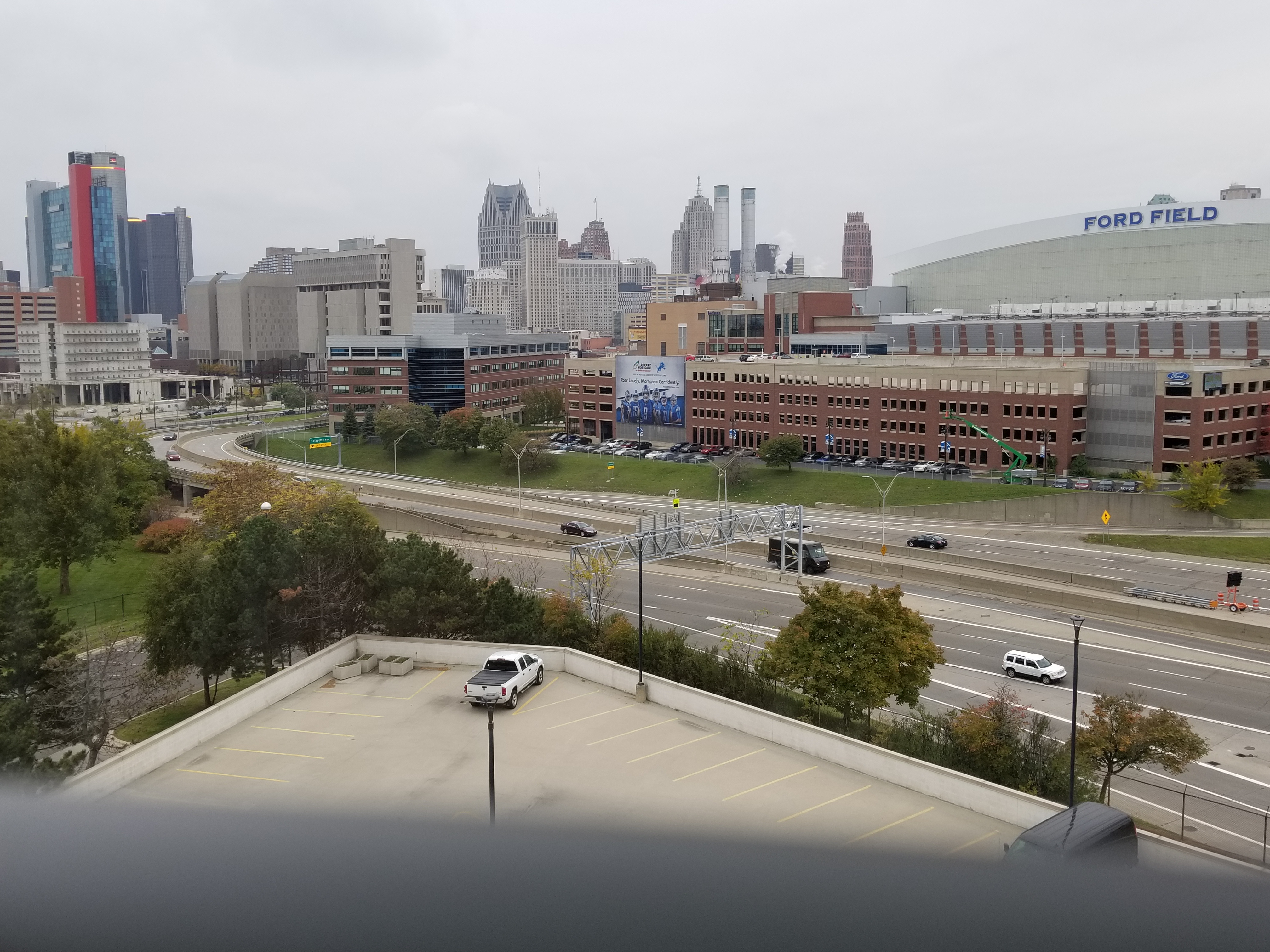 One of the great things about my little job at Automotive News is my workspace faces a window that looks out on downtown Detroit. Ford Field is just across the road, GM headquarters looms to the left and I have views of Comerica Park, Little Caesars Arena, Greektown Casino and Hotel, the historic Penobscot Building, and even the Wayne County Jail and a glimpse of Canada, just across the Detroit River. It’s a wonderful view but doesn’t show one of the key reasons I think Amazon should decide to locate its second headquarters here.
There’s been talk about the need for rapid transit, access to a ready labor force and adequate housing. But to me, what Amazon needs the most…are boxes. Millions and millions of boxes. I’ve researched this and discovered that Amazon, of course, has several suppliers for those boxes that get us giddy when they appear on our doorsteps or in our mailboxes. But let’s look to the future. The more Amazon’s business grows, so will its appetite… for cardboard boxes. 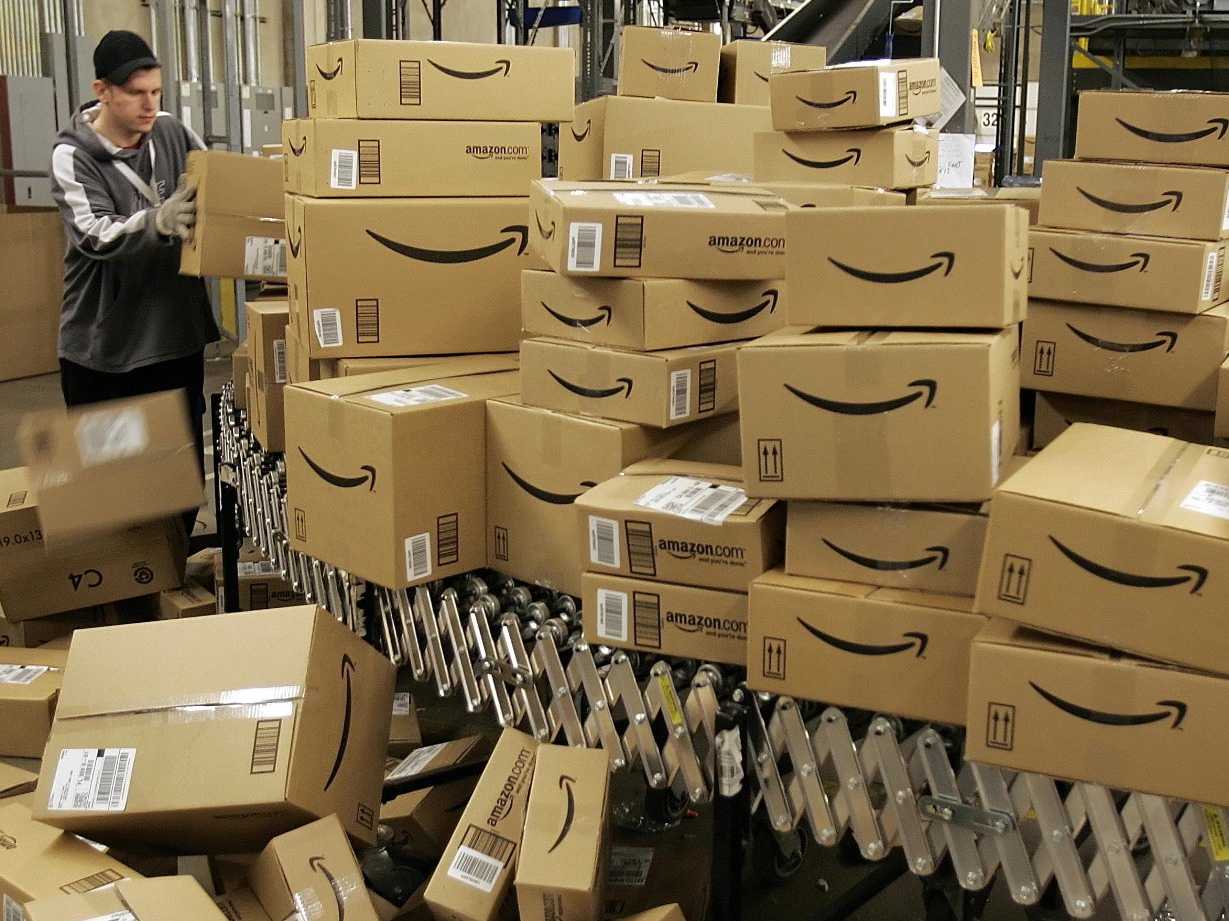
Guess what? I found more than a dozen cardboard box companies in Michigan. In fact, Michigan Box Company is smack in downtown Detroit. You gotta love the image on its website’s home page. A nice, friendly, happy, eager dog just ready to please and play…and yes…deliver! 
There’s a company in the Downriver area called ThePackline Co. You know how many different boxes they can come up with? Their website claims 1,500 different kinds of cardboard boxes in their catalog. Hell, Amazon could ship everything from prosthetic elf ears…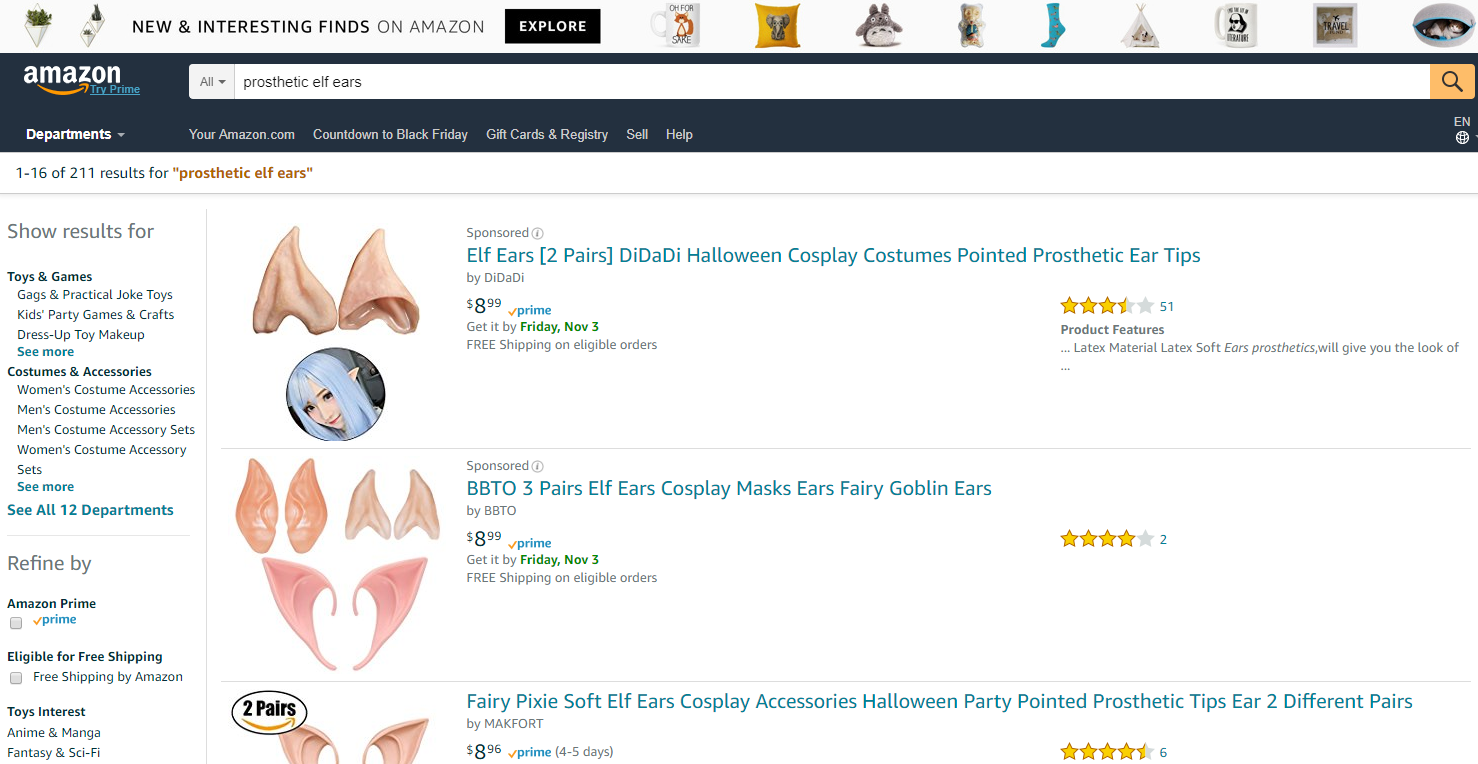
To a scale to weigh your dog, goat, pig, sheep or calf …
So sure, mass transit is nice for moving people, but Amazon’s bread and butter is moving stuff to its gazillion customers…in cardboard boxes! It’s hard to imagine Amazon ever having enough cardboard boxes since at some point brick and mortar merchants will run up the white flag in surrender to the online sales behemoth…after ordering one from Amazon and having it delivered in..a cardboard box!
So Amazon, please look past the folderol other communities may be passing your way such as pretty pictures, smiling people and promises of a fun and stimulating lifestyle. Oh yeah..we have all that…recreation, culture, technology, hardworking and ready labor force, amazing suburbs, major league sports and an international border. That’s all great. But we also have plenty of what you need the most. Yup…Detroit not only shapes up…but we have the boxes so you can ship out. Can’t wait till you land on our doorstep.
My Best Spent Buck
 I gave a guy a buck on Friday and what I got in return was a little bit of quiet shock, a plaintive question and some sincere words of thanks.
No, it wasn’t a panhandler or even anyone who asked for a handout, or actually, anything at all.
Here’s what happened. I was attending, for work, the Autorama show at Cobo Hall and pulled into a nearby parking garage. It was one of those where you needed to park two-deep. There was an attendant on each level to direct you to the next spot and take your keys in your vehicle needed to be moved if it was blocking in someone wanting to leave.
The attendant on Level 5, where I parked, took my key and placed it on hook #5. “Five on five, is you…that’ll make it easier to remember,” he said. He seemed very serious about his work. When I returned I noticed my Jeep Wrangler had been moved, and moved to a better spot, right in front of me. “Five on five,” I said to him and he smiled and gave me my key. At the last second, I decided to stick a buck in his hand. Wasn’t really sure that’s what you do, but it happened.
At first he looked shocked, then quietly asked me, “what’s this for?” I told him I appreciated him taking care of my car and it was just a small token to show it. “Besides,” I added, “I just want to. I’ve had a good day. So should you.”
“That’s really nice,” he said, “thank you so much. No one does this.”
I tell you this story not as a means of self-aggrandizement. It was only a buck, which is what I had in my pocket at the time. I tell you this story to put the thought out there that amid the anger, frustration, disappointment and dismay ruining the national morale, if we think more about helping each other through even the smallest gestures, we can pull through together. The fact is that even a simple gesture of appreciation has a long shelf life in the recipient’s psyche. It might be just enough emotional fuel to get them through a bad day, or run of tough luck. Makes the benefactor feel pretty good too. I’m so glad that on a cold Friday in Detroit, my buck stopped into the right hands.
Motor City Gladness
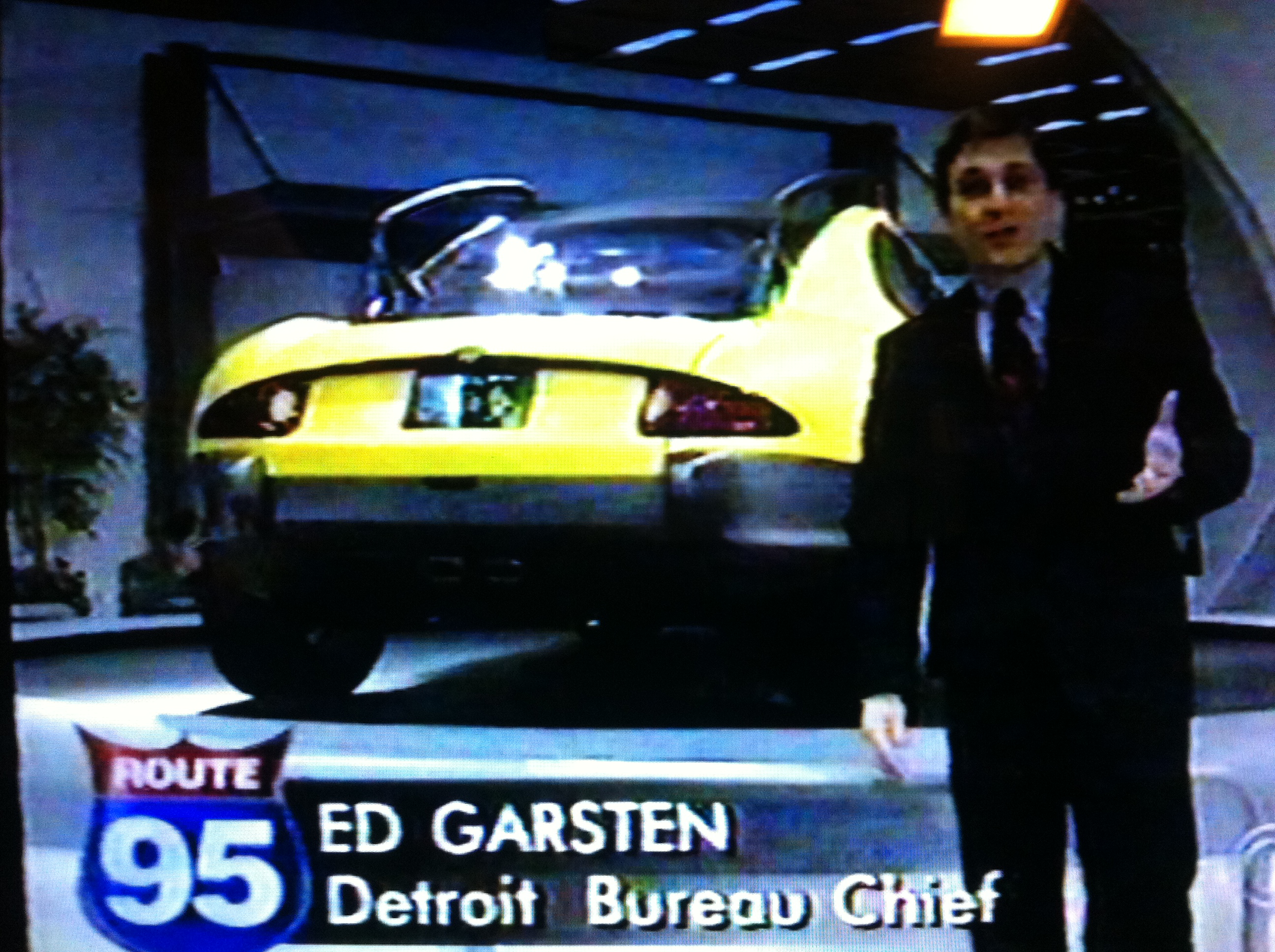 Some auto thoughts and recollections coming off another smashing media preview week at the North American International Auto show.
I had a friend in high school named Neil. He owned a brand new light green Pontiac TransAm, while I drove a ’62 Pontiac Tempest my dad bought for $25. No one loved my Tempest. Everyone loved Neil’s TransAm. One night, a bunch of us who were admitted “Neil’s TransAm Disciples,” gathered in his driveway and watched him install a set of Thrush mufflers that gave the car at least 5 extra sets of balls when Neil nailed the accelerator. Only Neil was allowed to nail the accelerator, or touch the steering wheel or deem to sit within the holy walls of of Neil’s TransAm…without Neil’s permission, of course. Besides, it had a white almost-leather interior and who needed the mortification of marring the chemically-produced cloud?
Honestly, I never gave much thought about cars after the gang scattered to universities across the country.
My first new car was a groovy red, 1974 Chevy Vega, which went through three transmissions in the three miserable years I owned it. Many years later, as the GM beat reporter for The Detroit News, I interviewed a union officer at the Lordstown, Ohio plant that produced my red lemon. He said to me “You owned a Vega? Well on behalf of all the men and women here at Lordstown, we sincerely apologize!”
As you can plainly see, I was less than an automotive aficionado…otherwise I might have settled on a Gremlin or Pacer, the Vega’s partners in the 1970’s Triad of Dreck.
My automotive ambivalence changed drastically when CNN transferred me from Atlanta to Detroit to be the bureau chief and correspondent there. Back then the bureau was in the basement of the PBS station, WTVS, two blocks from the former General Motors headquarters. I was told Ted Turner directed the bureau be located there because he wanted to be close to the biggest company in the biggest, most important industry in the country.
My education into the auto industry was swift and brutal. I was sent to interview Ford’s chief numbers cruncher for a sales story. He was three months from retirement and didn’t suffer newbies lightly.
“Sit your ass down, listen to what I say, learn from it and don’t ask any stupid questions. Got that?” How could I not?
I actually found the men and women of this great industry to be very understanding about my learning curve and as long as I didn’t act like a cocky dipshit, they were happy to help my learn the ropes.
Indeed, there I was, in a conference room with the great Lee Iacocca at Chrysler’s old Highland Park, MI headquarters. He strided into the room with a big cigar, handed the big, wet thing to his PR guy, shook my hand, smiled and asked “what’s on your mind?”
Yeah, I was starstruck because I had just read his memoirs before moving up north.
I told him I was new, and apologized if my questions seemed simple or naiive.
He gave me another big smile and said, “don’t shit your pants, ask me anything you like and I’ll make it easy for you…and welcome to Detroit.”
That was 1989. This is now. Detroit’s always been welcome to me and my family and I can’t think of a reason to hop in my jet black Jeep Wrangler Moab Edition and leave.
 edLINES