Tagged: Ed Garsten
Ghost in the Hell–A Workplace Horror Story

Unlike retail stores that show their Halloween stuff in July, I waited until now to conjure up a little verbal potion of apparitions that manifest themselves in the form of untalented and cowardly managers and executives.
You see, they don’t wait for All Hallow’s Eve to dress up as ghosts—they play the role all year long.
Just like all ineffective bosses are not alike, there are various methods employed by the bottom-feeders who would rather lurk as passive-aggressive cowards than have the courage to appear before their charges and reveal their actual frightening thoughts.
Ah..but isn’t Halloween all about fright? There’s a difference between being scary and not having the intestinal fortitude to scare up honest feedback.
Yes..it’s an exercise in the dark arts—keeping employees in the dark about where they stand, the quality of their work, the chances of promotion or raise.
I’ve worked long enough to have been ghosted by several bosses. One day you’re in the “house,” having regular conversations and interplay with the person to whom you report. Then one day that house becomes haunted when that person metamorphosizes into a being never seen, never heard, acting as if you never existed.
You’re spooked.
The questions fly through your brain. Is the boss mad at me? Am I getting fired? What’s going on?
Then you make the mistake of approaching the body with no substance looking for answers. The replies you receive are as transparent as the ghost boss’s soul.
You can hear him or her now conjuring the lies they are about to tell you. Hovering over a cauldron of steaming bullshit, they stir it while chanting the ingredients they are adding.
“A gallon of lies! A dash of mis-direction! A pair of side eyes! A dollop of deceit!”
Then they serve it up expecting you to swallow…and believe.
That’s the time to politely explain you’re already up to here with crap and tender your notice.
When the dispirited spirit attempts to reverse your resolve, you turn to the empty vessel and calmly reply, “Not a fucking ghost of a chance.”
Trick and retreat.
I Hope Trump Was Right About Detroit

I hope Donald Trump was right when he thought he was insulting Detroit, while speaking here, predicting if Kamala Harris beats him in the presidential election, declaring, “Our whole country will end up being like Detroit if she’s your president.”
I hope he’s right. Harris should hope so too, and campaign on that hope.
My love affair with the Motor City began in 1989, although it wasn’t love at first sight.
After eight years working at CNN at its Atlanta, Georgia headquarters launching Headline News, producing thousands of news casts, being promoted to correspondent and anchor, it was time for a change.
That change came when CNN Detroit’s first bureau chief/reporter, the inimitable Robert Vito, was appointed to lead the network’s bureau in Rome.
Few people wanted to take his place because Detroit was, y’know, a scary, cold, murderous, nasty place. At least that was its reputation.
I’m a native New Yorker. That kind of stuff doesn’t deter me. So I applied for the job and got it.
In the weeks before I made the move, idiots in the newsroom gave me shit warning me to buy an Uzi and other small arms with which to defend my kith and kin.
But there were also a couple of folks who actually had lived and worked in Detroit and told me to ignore the morons, one predicting, “once you live there you’re never gonna wanna leave. Just give it time and explore.”
When I asked why they left, they both said it was simply a matter of seizing career opportunities but they missed the place badly and visited often.
So we moved. It wasn’t great at first. We went from a split-level house that eventually took us nine months to sell because the Atlanta market was over-built, to a rental townhouse in suburban Farmington Hills that had plenty of room but lots of, um, rodents and at least one hooker as a neighbor.
It was colder, more cloudy and at the time Detroit’s downtown was fairly run down. But I kept remembering what those folks told me about giving it time and exploring. So we did.
As the new Detroit bureau chief and correspondent my prime coverage responsibility would be, of course, the auto industry.
CNN founder Ted Turner said he established the Detroit Bureau in 1983 because he wanted to be close to the most important industry in the world. The bureau was also in the basement of PBS station WTVS a couple of blocks from the old General Motors headquarters in Detroit’s New Center area. Again, Turner put it there because he wanted CNN’s Detroit Bureau to be near the biggest company in the most important industry in the world.
I quickly found out something perhaps Turner didn’t know about Detroit and the auto industry—how warm and welcoming both could be, especially if you showed some humility and a willingness to learn, which I did.
My new charges at the bureau instantly made me feel welcomed and were kind enough to drive me around the area as I considered places to live and explained the mile road system.
Now don’t get that confused with the “southern charm” I was used to in Georgia. Let’s just say Detroit has its own vernacular—meaning a directness that one could mistake denotes rudeness.
Example. My first real contact with the auto industry was interviewing the top numbers cruncher for Ford. He was a crusty guy two months from his retirement. When I sat down to begin the interview he barked at me, “okay, you’re new, you don’t know anything. Just shut the hell up, listen to what I say and get it right.”
I did on all accounts and after my story aired he called me, now speaking in a much friendlier tone and laughed, saying, “scared the shit out of you, didn’t I? But you did real good. Welcome to Detroit.”
Yes. I needed to give Detroit a chance.
After that I was invited to attend and to speak at a number of events where industry and PR poohbahs gave me warm welcomes.
I was even invited, several times, to appear on the radio with legendary WJR morning giant, the late J.P. McCarthy, where he’d give me gentle shit about the media bashing Detroit. I won him over by changing the subject, telling him anecdotes about Ted Turner sometimes appearing the Atlanta newsroom in a bathrobe after spending the night in his office upstairs after a particularly rough evening of, er, personal enjoyment.
I was honored to be one of McCarty’s final guests on his Focus segment the week of his last shows before he retired.
Over the years my family and I discovered the beautiful suburbs, the wonders of Michigan and above all, the friendliness of its people. We also reveled in the genius of the hard-working citizens who constantly push the boundaries of technology, mobility, education and culture.
In January, 2001 CNN’s parent company completed what would end up being a disastrous merger with AOL, and the company closed bureaus and laid off about a thousand of us in one fell swoop. I was one of them.
So now a choice had to be made. Where to go to continue to make a living. Our two kids were still in school and we very much wanted to avoid uprooting them.
But in the end it wasn’t really a question of moving. My family said they love it here. The Detroit area has everything you could want—schools, shopping, recreation, culture, major league sports teams. Why move?
There weren’t any TV jobs for me so I re-invented myself as a print reporter. Again, Detroit came through for me.
The Associated Press Detroit bureau chief Charles Hill needed a national auto writer and I had place my resume on a journalism job website. He was skeptical a TV guy could actually write—typical bias against broadcast journalists—but gave me a chance.
Yes, there was a learning curve, but again, Detroit came through for me. My editor, Randi Berris and supervisor, Mike Householder, held my hand, broke me of some TV habits and were so, so patient and supportive.
It led to being recruited by The Detroit News to be the General Motors beat writer and three years later, tapped by then DaimlerChrysler PR chief Jason Vines to ghost write and manage his new blog. That job eventually grew to the creation of a new digital communications team which I was appointed to lead until I retired in 2016.
Even after I retired, the opportunities kept coming. I was recruited to use my many years of broadcast journalism experience to help out the Automotive News with its twice-daily newscasts.
That ran its course and I was immediately approached by a former Chrysler colleague at Franco PR to work as a consultant and at the same time, the Forbes Detroit bureau chief asked me if I’d like to be a freelance automotive contributor. That was in 2018 and I’m still working those two part-time gigs, which I thoroughly enjoy.
You see a theme here? Detroit represents open-mindedness, opportunity, fulfillment. My kids are adults but they’re still here. We didn’t skip town upon retirement. Indeed we bought a bigger house.
We live exactly one minute from a magnificent trail that connects with others for many, many miles where we often walk or bike ride.
We’re surrounded by lakes and are only 20 minutes from the Huron River where I often paddle in my kayak.
My daughter and boyfriend have also recently introduced me to the magnificent sport of disc golf. Who knew there were so many wonderful courses in the Detroit area—most of which charge no fee?
Detroit has become internationally renowned for its eclectic restaurant scene with restaurants led by adventurous chefs conjuring meals and experiences delighting diners with tastes that range from basic American fried stuff to gourmet dishes delving into an array of elements and cultures.
Thousands of new homes, apartments, townhouses and condos are opening or under construction, aimed at attracting new full-time residents to the city.
Take a look at Detroit’s skyline. That new Hudsons block skyscraper is a metaphor for the new heights our town is reaching.
Leave the Detroit area, leave Michigan? Are you freakin’ crazy?
So listen, Kamala Harris. If you become President of the United States, you would do well to make much of the country a lot like Detroit. And Trump? You were too stupid to know the insult you intended was actually a compliment.
Detroit’s Multi-Towering Conundrum–The Renaissance Center’s Dark Ages

What do you do with seven giant glass tubes sticking out of the ground that happen to be the most famous and distinctive feature of your city’s skyline? That’s the question folks around Detroit are asking ever since General Motors CEO Mary Barra announced the company is moving its world headquarters out of the Renaissance Center next year to a new building about a mile north.
Some say tear it all down. Barra promised GM and the developer still putting the finishing touches on the building to which the automaker is moving will work to, um, reimagine the colossal architectural beast.
Yes, I call it a beast that should actually never have been imagined.
Some context. I lived in Atlanta for eight years in the 1980’s when I worked for CNN. It’s where I saw the first iteration of what would grow to become the actual center of the Renaissance Center.
You see, the architect John Portman built his first tubular monstrosity in the city of a hundred streets with Peachtree in their names…and now, one hotel..the Peachtree Plaza. The single glass tube instantly became the key feature of Atlanta’s skyline, showcased in every image of the growing city’s downtown.
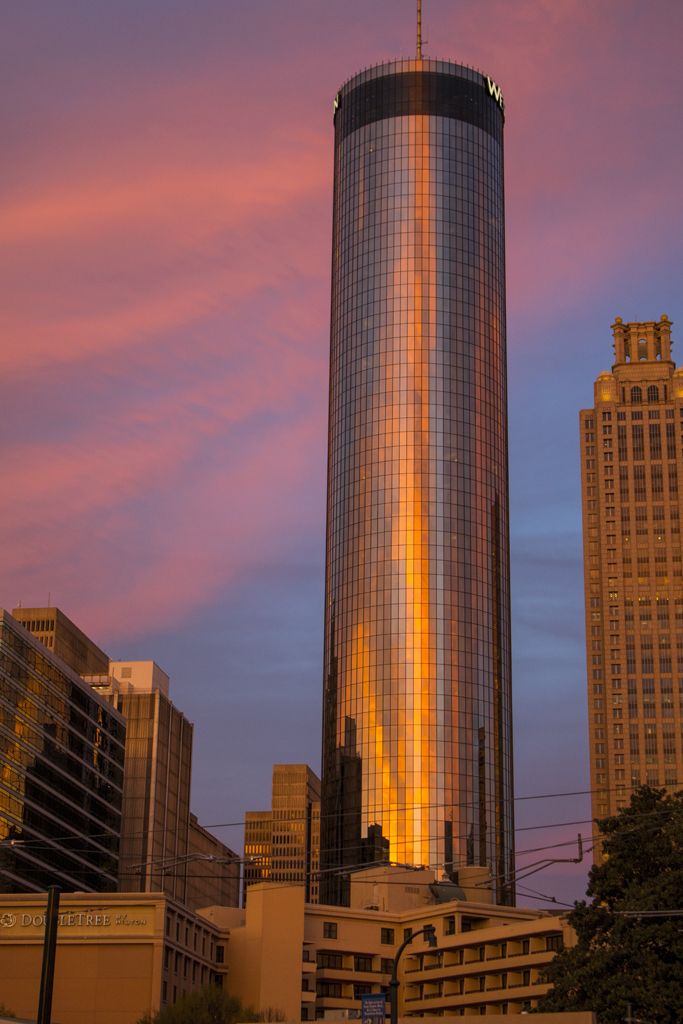
The first time I landed in Atlanta for my interview at CNN in 1981, I looked north from the terminal and saw that thing sticking up like a 12-year boy’s first real boner. The city Sherman burnt down was rising again and finally reaching puberty.
Thankfully, over the years, as Atlanta grew, so did its skyline and Portman’s glass pipette is less prominent.
Here in Detroit Henry Ford II, the Deuce, figured he’d more than double what Portman planted in Dixie and, together with Detroit leaders, commissioned the architect to duplicate Atlanta’s Peachtree Plaza, but then surround it with four octagonal office buildings all connected by a network of passageways that would challenge even the most accomplished spelunkers.
The new Renaissance Center, or RenCen, would become the symbol of Detroit…the Renaissance City. Planted on the banks of the Detroit River, facing Windsor, Canada, the RenCen overshadowed and loomed over older landmark downtown buildings such as the Penobscot and Guardian to herald the Motor City’s vitality and prominence, or at least assert it.
If anything, the RenCen was a photogenic feature that made for effective marketing materials.
Less than 20 years later it all went bad.
In 1989 I was transferred by CNN from Atlanta to Detroit to become its new bureau chief and correspondent. The company had me spend a few days getting to know the staff and the city before moving here. They put me up in what was then the Omni Hotel in the Millender Center…connected to the RenCen by a short pedestrian bridge over Jefferson Avenue.
Of course, I had heard of the RenCen and decided, one evening, to explore this famous landmark. As soon as I entered it from the pedway I felt like a piece of dust might feel as it’s sucked into the collection bag of a Hoover. It was dark and directionless, with scant chance of quick escape.
If I was a mouse seeking a piece of cheese I would starve before finding the morsel since there was no apparent logic to the labyrinth’s layout. I wasn’t dumb enough to attempt to explore the complex because it was just too, well, complex. So I returned, disappointed, to my hotel room.
Not long after I moved up to Detroit and was with my camera crew, I returned with them to the RenCen to shoot an interview with a prominent economist at Comerica Bank which had offices in one of the towers. We weaved in and out between the towers and concourses searching for the right tube to ascend to reach our destination. We were late. We apologized. The economist laughed as he said, “This place sucks. Everyone gets lost…the first dozen times they come here.”
Another time, years later, as I was heading to a meeting a very upset man came up to me. “You look like you know your way around. Please, I heard there’s an ATM here. Can you direct me?”
Deciding this person was an honest Joe who did not deserve to have his hopes and dreams crushed, I looked him in the eye and said, “Sir. Even if I told you, you’d never find it. There’s a bank right across the street. Just head for the daylight of the exit and never stop. I want you to see your family again.”
The man instantly did as he was told. He knew. The RenCen’s tubes would suck you up like bacteria in a test lab.
The place not only didn’t make sense, but it wasn’t making any money as tenants fled to locations where employees, customers and clients could reasonably expect to find their destinations without the utter frustration of being caught in a glass and concrete hamster cage.
Just as it was given up for dead, in 1996 GM bought the place at a bargain rate and moved its world headquarters there from an historic building a couple of miles north. The automaker saved the day. Instantly, thousands of people occupied offices, supported the stores and restaurants. The RenCen had a new life!
Not so fast. Shortly after GM made the move we had an interview booked with then GM CEO Jack Smith. Nice guy. The interview was for our annual auto show special and our producer wanted to use lots of lights.
We plugged ‘em in. Our lights, and all the lights on the floor, went out. Guess the building wasn’t quite ready for prime time…or any time that required extra voltage. It took a few minutes, but the electricians did their magic and we smartly reduced our lighting scheme.
Smith was cool about it. “I guess there’s still some work to be done,” he said with an embarrassed chuckle.
There was plenty of work still to be done.
GM poured millions upon millions to finally take some of the mystery of navigating the maze with a simple innovation called the circulation ring. No more weaving in and out. Take the ring like a big traffic roundabout and bail out when you reached the exit closest to your destination. The big berms that walled off the complex from the rest of the city were torn down and the soaring Wintergarden was built, offering a bright gathering venue and passageway to the Detroit River.
Then Covid hit. People started working from home. The RenCen returned to its ghostly, pre-GM silence. After the pandemic abated, Barra said workers needed to return three days a week, but by then many of them had already relocated to other GM facilities and others just never returned.
It became time to find a smaller place for the automaker to park.
So what to do with it when Mary and all her sheep settle in their new pasture?
Some say to knock it down. Others imagine apartments, condos, restaurants, some commercial space.
In another era, it might have served well as a garrison guarding Detroit against hostile canon fire from gunboats on the Detroit River. Ah..Fort Renaissance! Tower 400 forever! We have secured the circulation ring! Remember the Marriott! It’s enough to make one forget the Alamo, which is much, much smaller and has an expensive gift shop.
Only because I’m semi-retired and have the time, I think about the future of the Renaissance Center. To demolish it would just add tons of waste to the environment. To save it would just leave tons of waste above ground where at least squatters could literally lose themselves for awhile.
Maybe get Carvana to turn one of the towers into its most giant vehicle vending machine. Wouldn’t you love to see your late model Buick do a swan dive from the 39th floor? Good way to test its shocks.
Offer bungie and parachute jumping over the river. Just make sure you packed your passport in case the winds make you wind up in Windsor.
Fill one tower with infused water for all those enjoying Detroit’s magnificent River Walk. Lotsa taps all around the tower where walkers, joggers, cyclists could fill their Stanley cups, less than a mile from where the Detroit Red Wings won their Stanley Cups. Joe Louis Arena is long gone but the ground remains hallowed. Hey…it’s all marketing, go with it.
In reality, the RenCen will probably become the banal “mixed-use” property with a variety of residences, hotels, stores, restaurants and maybe once in a while, sponsored races around the circulation ring.
I can’t wait to see how Mary Barra and master developer Dan Gilbert will reimagine the RenCen, because love it or hate it, it would be a colossal shame if our city’s signature bundle of glass towers was allowed to go down the tubes.

Figuring It Out At Niagara Falls
We stopped by Niagara Falls the other day on our way to visit relatives in Rochester, N.Y. We’d seen them before, the Falls, that is, because they’re not far off the route across Canada from Michigan we’ve taken for over 30 years. Yeah, we’ve seen the in-laws plenty but they don’t have a gift shop.

In the past, we’d stop on the Canadian side because the long-held opinion is the view from there is better.
But this time I wanted to see for myself, so we pulled into Niagara Falls State Park on the U.S. side and walked and drove around for some close-up views.
No, we didn’t do the tourist stuff by taking a cruise on the Maid of the Mist or take an elevator to the top of the observation tower. Just walked around along the fence then where you’re close enough to get kissed by the falls’ mist . See the photos and video.
Here’s the bottom line. No matter what side you’re on, it’s a lot of water plunging over the rocks with a crash, stirring up clouds of mist and your face gets wet.
But since I’m getting to that point if life where wonders seem more matter of fact and my biggest wonder is wondering about the symbolism of millions of gallons of water spilling over a cliff.
So my gaze turned upriver from the falls as we worked our way around, then off, Goat Island toward the bridge to Grand Island. Within a few miles you see the dramatic change. The Niagara River appears placid and innocent, apparantly without a clue it’s headed for a fall.
Suddenly the current quickens and accelerates into what’s known as the American Rapids. The water turns turbulent and confusing. White caps and waves, danger and demise just ahead.
Indeed, the river then splits over three towering precipices forming the triumverate of famous Falls—The Bridal Veil, Horseshoe and American. The once lazy Niagara River unwittingly violently dumped overboard about 170 feet into the Niagara Gorge then just as abruptly shakes its head, clears its mind and wanders willingly into Lake Ontario wondering what the hell just happened.
So now in my seventh decade with so many years of alternating personal turbulence, acceleration, stagnation, surprise, disappointment, agony, elation, success and failure behind me, I can’t help but both look back to the upriver portion of my life and then ahead to where I will meet my precipice.
How much longer will the relative peace and yes, occasional boredom, of retirement continue flowing like the lazy Niagara River that oozes from Lake Erie then heads north and west and north again where it empties into Lake Ontario.
At what point will I be rudely rousted into the American Rapids of my life—that final, irrevocable sprint to a point you only see once it’s too late and your personal river has run its course.
But just like the wondrous Niagara Falls—not before providing for yourself and others you pass along the way some thrills, love, memories, kindness…and a refreshing mist to remind them you were there.
Let Sleeping Limbs Lie

The other night I got up around 3am because my left arm fell asleep. The more I thought about it, the more I wondered why, in the middle of the night, the rest of me wasn’t asleep. When all of me is asleep does it actually feel as numb as my sleepy arm, only I don’t know about because, well, I’m asleep?
Taking this further, if I start shaking my arm that’s asleep and wake it up, then go back to sleep, have I just wasted my time? Seems like I’m pissing off my arm which was sound asleep, until I rudely rousted it then expected it to immediately return to slumber.
When I finally awakened to start my day and grab some breakfast, it was difficult to lift a spoon to eat my Cheerios. You see my spoon-lifting left arm was lethargic from having its sleep interrupted and was grouchy the rest of the day, at one point, refusing to participate in nut cracking—a two-armed task, and threatened a stirring strike, leaving undissolved sugar at the bottom of my coffee cup.
Oh, I could use my right arm but as a southpaw it would only result in a dreadful mess and give my left arm another reason to elbow the milk carton in a mocking manner.
Consider this a valuable lesson learned. If you wake up in the middle of the night with a snoozing extremity, turn over and let it go. It’s nothing to lose sleep over.
Secrets of CNN Center From Its First Supervising Producer

Two Eds are better than one. Ed Turner and me at the Supervising Producer pod in CNN Center
The news broke this week that CNN Center in Atlanta will be closing by the end of the year. Here’s something few people know. I was the first supervising producer on duty when CNN Center opened in 1987.
I was working the 11pm-7am shift in preparation for the morning show called Daybreak at the time. Sounds like a shitty graveyard shift, but overnight in the States is prime time for overseas news. Can’t say “foreign” news because Ted Turner didn’t allow it. You had to say “international” or some other synonym for news not happening in the U.S. because, he correctly asserted, people in Bulgaria hearing news about their country wouldn’t consider that news foreign. Ted was a pretty brilliant guy.
We weren’t actually on the air yet from CNN Center. That would happen when Daybreak signed on at 6am. The last live newscast from CNN’s original location at 1050 Techwood Drive across from Georgia Tech University was Newsnight Update, which ended at 1:30 am.
With a TBS camera rolling for an upcoming documentary on the move at the appointed time I called over to Techwood to say something like, “operations are complete at Techwood. Time to move the mile or so down to CNN Center.” I’m sure it was better than that but sadly I never documented my remarks because I was sure they were unremarkable.
A little while later, Susan Rook, who had anchored that last live show from Techwood, arrived at CNN Center with a gift for me. She had removed one of the CNN logos on the anchor set and presented it to me. It’s on my office wall along with a photo from the 1989 CNN bureau chief’s meeting in Ted’s office and a poster signed by Ted wishing the Detroit Bureau luck when it opened in 1982.

I was the Detroit Bureau chief and correspondent from May, 1989 to January, 2001. When I was laid off in the great purge of ’01 I took the framed poster with me. The bureau was closed later that year.
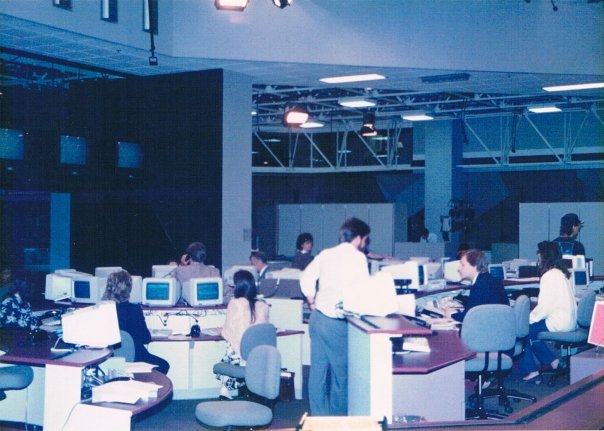
Something else about CNN to which I will sheepishly admit. While the place was under construction I was appointed to a committee to help design the layout of the newsroom. For some reason I had the hairbrained idea it would be cool to emulate a print newsroom set up with circular team workstations with an editor in the middle—the slot..get it?
To my dismay the others loved it and that’s the way the “pods” were built. They were almost universally despised. Writers and producers around the rims were uncomfortable and the editors often complained of feeling like chestnuts roasting on ambient fires.
Once I caught wind of this dissatisfaction I never once, until this moment, mentioned that I was largely responsible for my colleagues’ misery. Apparently no one else remembered and the subject was never brought up. Why am I admitting this now? Because someone is likely to write another “history” of CNN and not get it exactly right. Call me.
For many years I had the blueprints for the newsroom design and I still might, but I can’t lay my fingers on them because there’s a good chance one of my family members used it to wrap Christmas presents and they’ve long ago been buried in a Michigan landfill. I have some boxes to exhume. Maybe they’re in there. But I won’t be looking today.
One of my strongest recollections from being the first supervising producer at CNN Center was learning the layout, especially the location of the washrooms. You see, working at CNN could be very stressful and when someone had the need there could be no delay.
It actually cracked me up as I sat in the elevated supervising producers pod, which was crescent shaped and not round, and crazed producers and writers who hadn’t taken advantage of the advance tours, screamed at me, “where the hell is the fuckin’ bathrooooooom!” If it was someone who had exhibited especially ass-holey behavior to me in the past, I’d kinda look up and ask, “what?” “Gotta go!!!!! Where!!!!!????” they’d holler while nature was hollering back at them. Then I’d point them in the right direction.
Often, when there were finished doing their business and returned to the newsroom they’d offer their appreciation for the information I shared with a familiar hand gesture, which I’m sure, in some culture, meant, “Next time I will pee on your shoes.”
Being the supervising producer meant largely, um, nothing. You didn’t actually produce. You mainly made sure the upcoming newscasts were leading with the best and latest stories, the producers knew of new material coming in on the satellites and if someone called in sick you had to find a replacement.
I loved that part. A producer would call in sick at, say, 1am and I’d ring up the designated replacement. Without fail I had rousted that person from their chaotic dreams and they’d bark at me, “do you know it’s the middle of the freakin’ night?” I’d calmly reply, “it’s the middle of my work day. Need you to come in tomorrow and produce the 2pm show.” Rough words were exchanged but the deed was done. I’d won again.
Working in the middle of the night I often had conversations with correspondents stationed overseas. Sometimes it was to approve a script, but at least one based in Japan just wanted to talk because he was lonely.
During many of the hours when I had literally nothing to do, I’d decide to prowl the oddball nooks and crannies of CNN Center. From the top floor of the CNN space you could look out at the atrium and see all sorts of things. Sometimes I’d see couples emerging from the movie theater or Omni Hotel or offices that were coupled with other people in real life. Omerta!
I remember the very last time I was in CNN Center. I had come down from Detroit in late 2000 to meet with the bosses. It was a one-day quickie. Unremarkable, but somehow I knew my time at the network would end soon. I kinda turned around and took what I just felt was my last look at the place and cracked up to myself thinking, “those poor slobs are still sweating in my pods.”
Podcast: Tales From the Beat-Weekly Look At News and PR From Both Sides
One of the features I write for Franco PR as their Integrated Media Consultant is a look at news and PR issues from both sides of the scrimmage line given my long experience in both journalism and corporate communications. Recently, I decided to add a podcast version that I’d love to share with you all.
You can now listen to Tales From the Beat on Spotify, IHeartRadio, Amazon Music and Apple Music.
Here’s the first one related to the recently revived Detroit Auto Show. Love to get your feedback. Thanks!
Now It Can Be Told–How Mikhail Gorbachev Unknowingly Helped Me Save An Executive’s Day
Now that Mikhail Gorbachev is no longer with us, I don’t think he’d mind me telling this story. You see, he unknowingly participated in a little trick I pulled in order to help a major executive save face in front of an even bigger one.

Back on April 25, 2012 a gathering was held in Chicago to honor past Nobel Prize winners. At the time I was the head of Fiat Chrysler Automobile’s digital communications team, which was part of the corporate communications department.
The Jeep Brand was sponsoring a luncheon and that included a keynote speech by our chief marketing officer.
One of the services we provided was shooting and editing video posted on the company’s media website for use by any media that wished to include it in their coverage of a particular story.
Normally, I wouldn’t be the one doing the shooting but on this day our two real videographers we otherwise assigned, so I jumped in, popping over to Chicago to shoot the speech and post it to the media site.
We got to the location a little early and after setting up my tripod in the best position to capture the speech I decided to shoot some b-roll. Good call. As I was shooting I can’t believe who I see through my viewfinder ambling into the room as if it was lunch time at the company cafeteria.
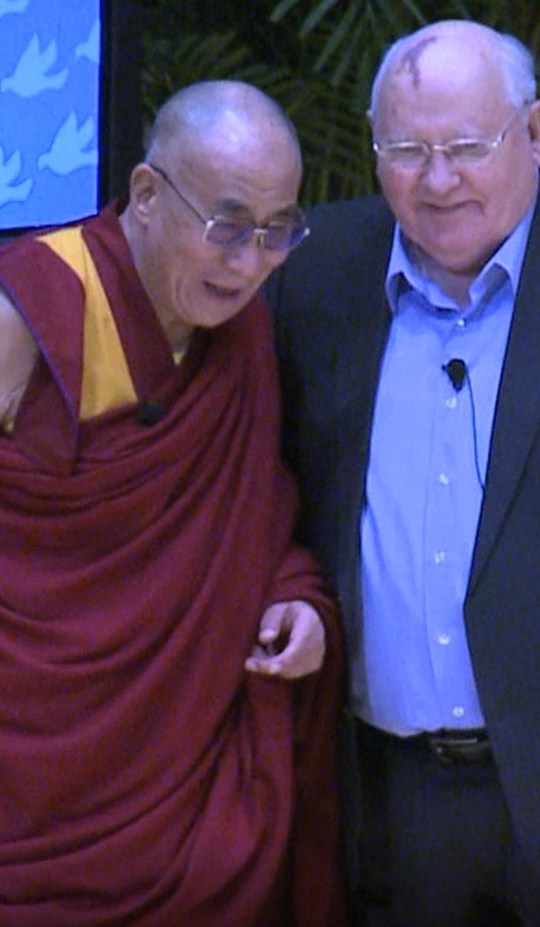
First there was the former President of Poland Lech Walesa, then the Dalai Lama and finally this smiling guy with a familiar port wine spot on his head, Mikhail Gorbachev. They all take seats at the round table with our CMO. I shoot and shoot, all the while not believing the giants I’m shooting sipping from their water glasses and munching on rolls.
About 15 minutes before his speech our CMO comes up to me and gives me a troubling order. “Do not shoot me. Just shoot these famous people LISTENING to me so I can bring the video back to the CEO to show him how interested these Nobel Laureates were in my speech.” The CEO was the late, wonderful and demanding Sergio Marchionne.

I explained I was there to shoot his speech for use on the media site and the media would not use video of that does not show the speaker. But he was desperate. “You have to help me. I don’t care about the video. I have to show Marchionne something!”
OK. I can appreciate not wanted to piss off the big boss. So I came up with a plan.
To satisfy the media I actually did shoot the entire speech, but when I emailed the edited version to the CMO it showed Gorbachev and Walesa and Penn and the Dalai Lama all raptly listening and even applauding! The speech was a freakin’ hit with these historic figures! See the video below!
Within hours I received a giddy email from the CMO telling me how much Marchionne loved the video and what a genius I am.
Genius? Wouldn’t go that far. I grabbed the shots of all those folks listening to a speech, but it was my executive’s—it was the person who spoke before him. Then I edited in clips from that footage into my executive’s speech so I looked like they were listening to him. I did shoot the actual applause that came after his speech. Since this version was for internal use only and not for editorial use, it seemed like an OK way to help out a stressed executive. After all, they all DID listen to him, but I was just one guy with one camera so I had to find a way to make it work.
After that day, every time I saw Gorbachev or Walesa or the Dalai Lama or Sean Penn I just smiled to myself, remembering my little editing sleight-of-hand using some slightly time-shifted shots of them to help out an important co-worker make an impression with the big boss.
Oh…the version released on the media site did NOT include my editing artwork—just the video of the speech.
The late Mr. Gorbachev, I’m sure, could relate to a bit of intrigue to save a colleague from the wrath of the supreme leader. Call it a bit of video perestroika—restructuring. Da?
July 4th Memories: Footballs, Fireworks, Road Flares Falling Underwear, 2022 Update
 Fourth of July always meant two things back in Glen Oaks Village, where I grew up in eastern Queen, New York: a glorious barbecue behind the apartments with our four closest neighbors, and foolish decisions regarding fireworks.
First the barbecue. Glen Oaks is a community so large it has its own zip code and is home to about 50-thousand residents. Built in the 1940’s and written up in national magazines, it remains a showplace.
We shared a common backyard that contained a long clothesline for all to use and expanses of soft grass. The neighbors set up long aluminum tables end to end in the backyard and each family had its own grill. Ours was a dinky thing we received as a free gift from the now defunct Bayside Federal Bank for opening up an account. It was just large enough, though, to cook a few hot dogs and burgers for my brother and me and our parents. Those big Weber grills hadn’t yet been invented.
One of our neighbors, the guy we always suspected was in the Mafia, had the best grill. It was about a yard in diameter on a fancy stand and he cooked Italian sausage. We always wondered what truck it fell off.
Another neighbor sounded like that old actor Peter Lorre and just as sinister. When he asked for another hot dog you could always imagine the next thing he’d say was, “or I’ll kill you.” Turns out he was very mild mannered. He just sounded like an assassin.
After eating we’d invariably start tossing around a football, which, in turn, always seemed to knock someone’s clean underwear drying on the clothesline onto the ground. That action sparked the owner of the drying underwear to stick their head out their back window overlooking the yard and shout things that directed all of us to burn in a very warm deep, underground place. This only sparked us to start aiming for other items drying on the line and if you could dump a fitted sheet you won the admiration of all, and the raising ire of the the sheet’s owner who would call the cops on us only to be told, “sorry, but we’ve got four cases of wet socks ahead of you.”
 Now the fireworks. Our dads would score some firecrackers or more powerful ashcans from the docks in lower Manhattan and we’d pretty much shoot them off with no incident, although it was always entertaining to slip a few lit ones through someone’s mail slot.
Our dads were, if anything, both smart and devious. Two cases in point. First, was when they could only come up with sparklers instead of firecrackers or ashcans. C’mon, sparklers? No noise, no nothin’. Sparklers were for wimps or kids whose dads worked in the suburbs. But my dad was especially resourceful. After all, he was a World War II hero, winning medals for capturing a house of Germans by shouting orders in Yiddish, which sounds like Germans to exit the house and the idiots complied. So he knew a thing or two about misdirection.
“Look, you’re doing it wrong with the sparklers by just holding them,” he explained. “When they’re halfway done throw them in the air as high as you can and they become Roman Candles!” Crap! We had Roman Candles in our hands all this time and didn’t know it! Yes, sometimes kids were as gullible as wartime Germans. We totally bought it, and except for when a lit sparkler landed in someone’s garden igniting their pansies it was a damn good ruse.
Speaking of ruses, when our dads came up totally short they caucused in desperation and pulled out a couple of road flares and lit them. “We call them ground-level displays!” one would say. Ah..dads can be such good bullshitters. That’s why we love them.
Then there was the time the brother of one of our friends was on leave from the Navy. He thought it would be cool to wrap up some .22 caliber bullets in an envelope, stuff it in a drainpipe, light it up and run like hell. Guess what? Bullets are faster than idiotic Navy guys on leave. The dumb guy spent the rest of the Fourth, and a good deal of the 5th through 8th in the hospital healing from his awesome stunt.
At least he didn’t shoot down anyone’s drying BVDs.
Busting Baseball Crib Notes

I’m old enough to remember hiding “crib notes” in my hand when attempting to not fail a trigonometry exam. Oh c’mon, you did it too. Maybe you scribbled some facts in pen on your hands or arms. Get caught, you get sent to the principal’s office, or worse, get a F on the exam. Aw, don’t act self-righteous about it. I bet you read the Classic Comic version of Silas Marner or dove into the Cliff Notes rather than suffer through the actual, depressing book.
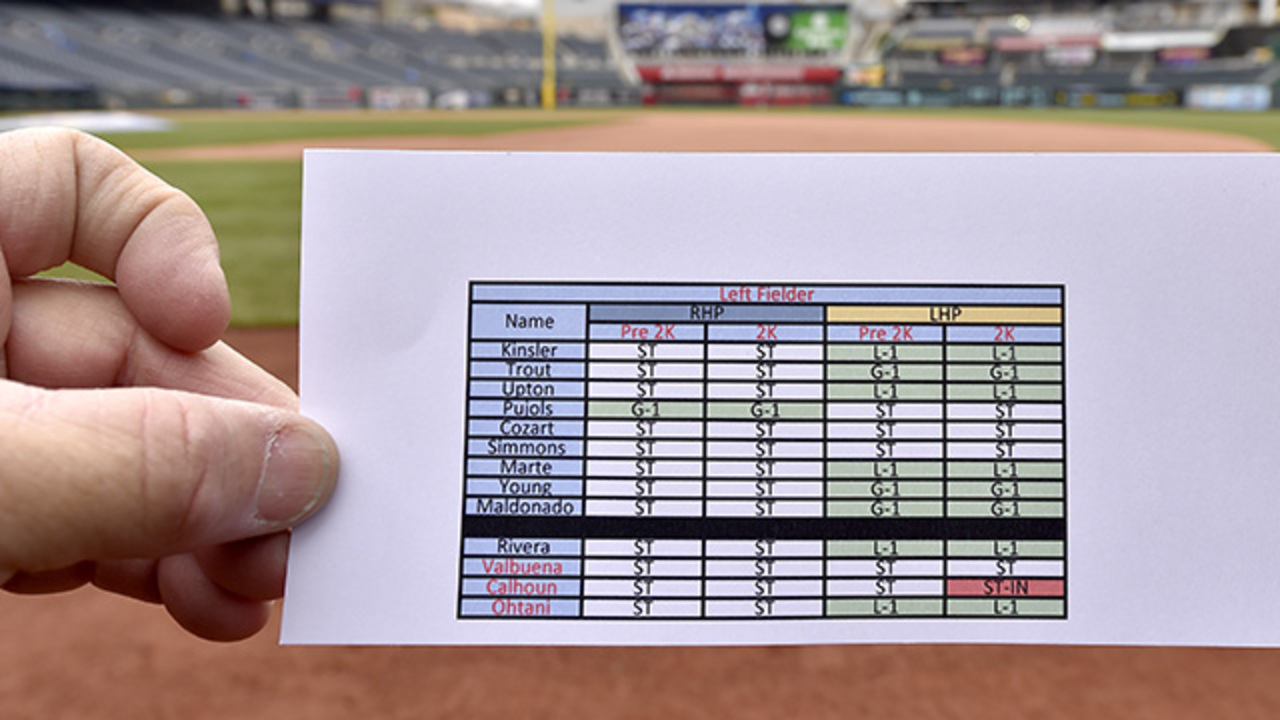
Yeah, yeah, it’s technically cheating, which has me thinking about what’s become glaring demonstrations of cribbing among Major League Baseball players. It’s right there on TV. Catchers sport those flip up things attached to their wrists that contain intelligence on opposing batters. Pitchers and position players doff their caps where they’re hiding cheat sheets on how to play the next guy at bat.
I don’t know the exact wording but I’m imagining something like, “Joey Bagadonuts sucks at hitting sliders,” “Andy Eatme hits to short right field and has bad breath.” This is invaluable intelligence as to how to pitch to or defend against the hitter. But it just smacks of smuggling crib notes into the test room.


OK, I’ll invoke it. What I was a kid, players just, well, remembered things about their opposition or had a feeling about the guy and acted accordingly. Can you imagine a grouchy Nolan Ryan looking inside his cap for advice on how to brush back a batter with a 100 mph fastball? Screw it, he’d just terrorize the guy on general principles because it’s fun.
If Ryan’s catcher had the temerity to flip up and refer to crib notes on his wrist and then actually suggest a pitch based on that information, I’m guessing he’s the one who would get the heater aimed at his head.
Did Willie Mays need notes hiding on his head? Are you kidding? Ball goes up, ball comes down… in his mitt. What’s so hard about that? Nothing, if you’re Willie Mays.
I know, it’s all related to the scourge of sports related Sabremetric, data, numbersnumbernumbers, blah blah blah blah.
Go ahead, without Googling it, tell me what OPS is. Sure, some of you will know, others will pretend they know, honest ones will say, “don’t give a shit.” What’s the guy hitting? Launch angle? It’s baseball, not NASA. The ball’s gotta rendezvous with the fielder’s mitt, not Venus.
I love it when they tell me how fast the ball left the bat. Sure, it lets you know how hard the guy swings but honestly, some of the most effective swings are slow and easy and result in run scoring hits.
All these esoteric stats may be included in these cheat sheets but to me sports is all about training, natural talent, instinct and spitting.
But it would be fun to see the umps crack down on this stuff, like test proctors, ejecting guys for using the crib notes on their wrists and under their hats rather than playing the game using their heads.
 edLINES