Tagged: workplace
10 Years Unslaved
Ten years ago this month I swiped my Fiat Chrysler Automobiles card for the last time, breathed the fresh air of retirement…and promptly walked into a part-time job.

I haven’t stopped working, a little, since then.
Let’s get this off the table right away. It’s not for the money. What these little jobs paid might be better described as tanks of gas. But really, who doesn’t mind someone else paying for their petrol, especially as these prices?
My paycheck is my sanity, my education, my interaction with bright people who want to change the world. To me, when you stop learning you stop living. My tuition is my time, of which I thankfully have plenty to spend any way I choose.
But here’s the thing about working because you want to and not because you have to.
When you run into people who may be difficult, unreasonable, dishonest, discourteous or stupid, it’s no problem. You can just ignore them or simply walk away.
Over the past ten years my retirement gigs have mainly been as a self-employed freelancer, so if I’m pissed at the “boss” I can just look in the mirror and tell myself off. More than once, I’ve had to call myself into my office and have some honest talks.
I was only on staff for one part-time position. It was odd. I was recruited because of my years of experience, but when I attempted to share what I knew, that made those who didn’t know much, uncomfortable, despite my respectful approach.
I’ve also learned freelancers, especially those in my age group, can be treated like the disposable diapers much younger managers may think we all wear. Heh…nothing like incompetence inferring incontinence.
There’s a fair bit of resentment. Why don’t you Boomers step aside to make room for X’ers, Y’ers, Millennials, or other alphanumeric versions of younger humanity.
Oh, we did. At least in my case. I don’t want your job, but in my areas of expertise I may be able to help you do yours better. I love teaching and hope what I can share helps a younger, less experienced person grow and succeed.
It work two ways. As we retirees pull away from full-time work and engagement, as much as try, we may miss certain things related to pop culture, technology, social interactions and workplace culture.
That’s why we need to engage with our younger not-quite-colleagues. We need to be observant, inquisitive and flexible.
We may be older dogs but learning new tricks still gets our tails wagging…even if they’re drooping a bit.
I don’t know how much longer I’ll keep working. My work for Forbes.com is still very satisfying and my editors are kind and supportive.
There are a handful of PR people I enjoy working with who are smart, talented, have a sense of humor and don’t send me no-news pitches.
Having the opportunity to interview young, brilliant people who come up with ideas that may benefit society and take them to fruition is something from which I can never tire.
The auto industry is a chameleon for which change is always constant and fascinating, if not sometimes infuriating.
I work as much or as little as I like, which leaves me plenty of time to do things with my family, produce my Tales From the Beat podcast, desecrate my musical instruments with my well-intended, but limited abilities, paddle my kayak, ride my bike, or join my daughter and her partner for a round of disc golf.
But no matter what the next ten years, I hope, of retirement brings, I will never stop writing. Writing is never work to me, no matter the subject. Writing is breathing….and breathing keeps you alive.
Requiem To My Favorite Boss, Ted Turner
Of course I had heard of Ted Turner, Captain Outrageous, the Mouth of the South, rogue entrepreneur and all-around rowdy, but I never thought I’d work for him, and eventually appreciate him as the best boss I ever had.
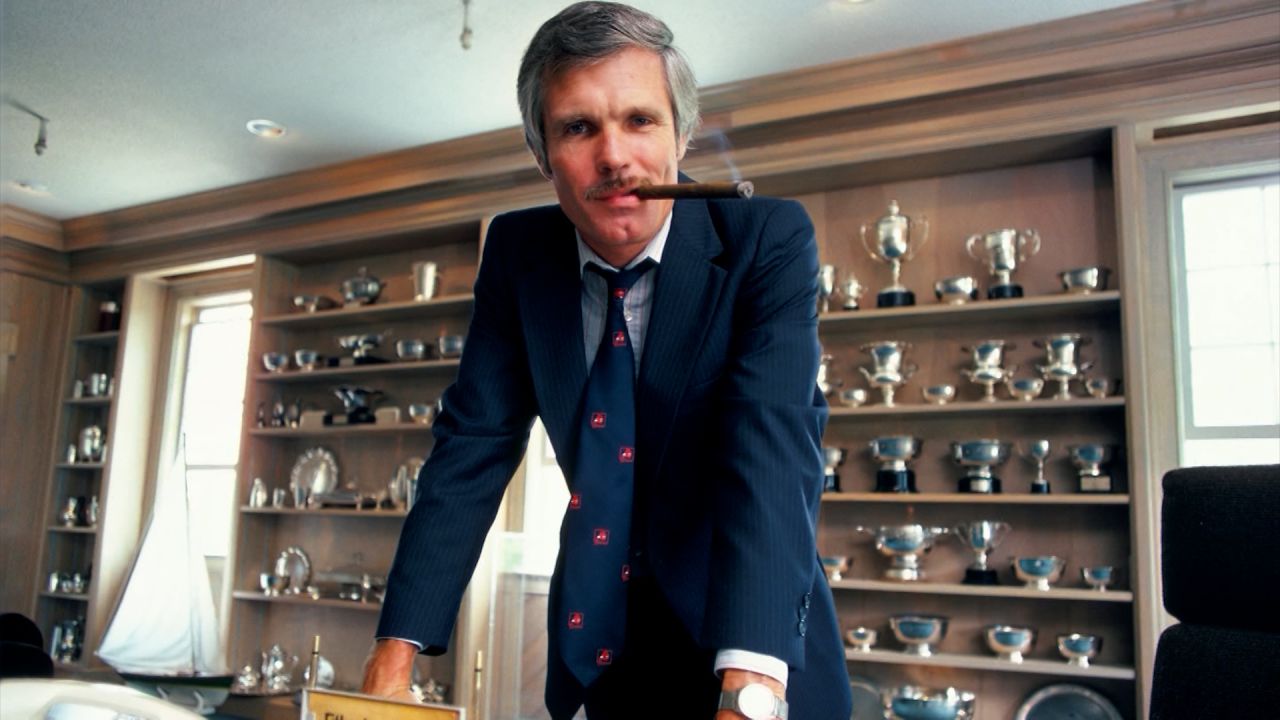
That changed rather abruptly on November 30, 1981 when I reported to work as one of the ten original producers at what was then called CNN2 and morphed in HLN. It’s a job I got through a tip, applied, flew to Atlanta and back in one day from Tucson, Arizona and got hired the next day.
That network, itself, was evidence of Ted’s, um, personality. He had heard that ABC/Westinghouse was going to challenge CNN with a fast-paced headline-type channel. That was in July of 1981.
The hell with that, he said. Turner declared CNN would have its own such channel, beat the challenger on the air, then vanquish it. Chutzpa, no?
In the course of four months executives Turner reassigned from CNN were tasked with creating the new network, hiring a staff, training us and signing on the air January 1, 1982.
Not only did we accomplish that, by the time the other guys finally got on the air months later, its ratings tanked, Turner bought it, then put the thing out of its misery.
Oh sure, he was quirky and a little crazy. Went through wives and girlfriends. Sometimes on a Saturday morning he’d come down to the newsroom/studio at CNN’s original location from his office in a blue terrycloth robe, his hair a mess after a rough night, looking for coffee.
Working at CNN was intense but rewarding and we knew we were part of something no one had the nerve, guts, foresight or money to attempt.
When I later became Detroit Bureau chief and correspondent, I would return to Atlanta every year for the annual bureau chief’s meeting which always included an hour with Ted in his conference room.
He always told us, “you all made my dream come true and that’s why I’m loyal to you. Unless you come in drunk or on drugs and do your job, you’ve got a place here.”
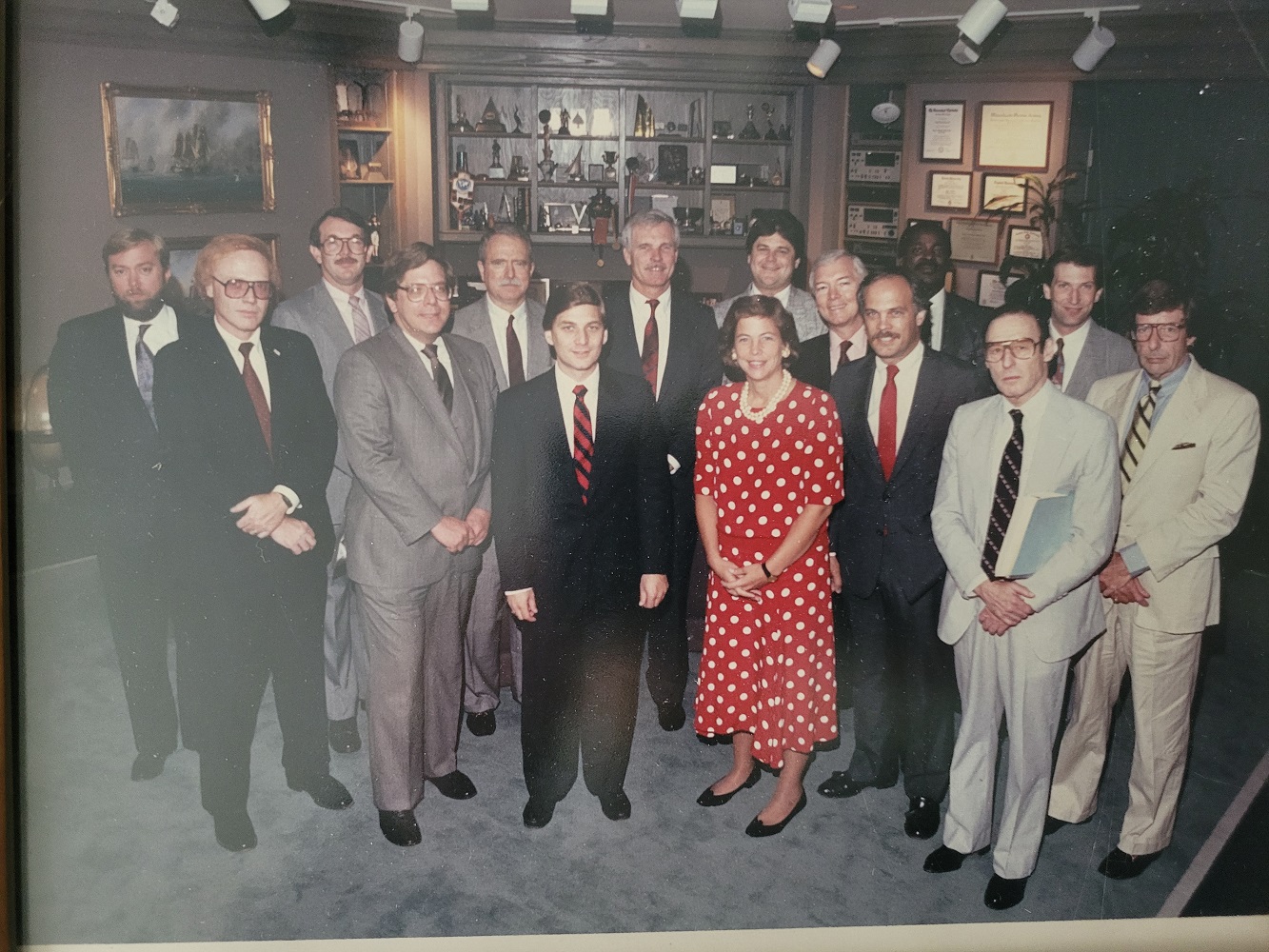
There I am in the first row at the tender age of 37, looking about 17, with the other bureau chiefs and some executives in Ted’s office in 1989.
Ted had an inclusive view of the world. That’s why he created the unique daily “World Report,” which, for the first time anywhere, included news reports from networks around the world, not just CNN journalists, providing a unique and fascinating perspective.
Indeed, we were never to use the word “foreign” in any reporting because, as Ted explained, “if we’re reporting a story on something that took place in Europe and someone from Europe is watching, that’s not foreign news.”
There was actually some sort of fine involved for infractions, but I’m not aware of anyone ever having to pay up.
Someone did joke once, “if someone is choking should we not say their windpipe is blocked by foreign matter?” Newsroom humor. The best.
He created the Detroit Bureau in 1983 and located it two blocks from the original General Motors headquarters on West Grand Boulevard.
Ted said he wanted a bureau to cover the biggest, most important industry in the world and be near the biggest of all the automakers.
I was the second and last Detroit Bureau chief, following the dynamic Bob Vito.
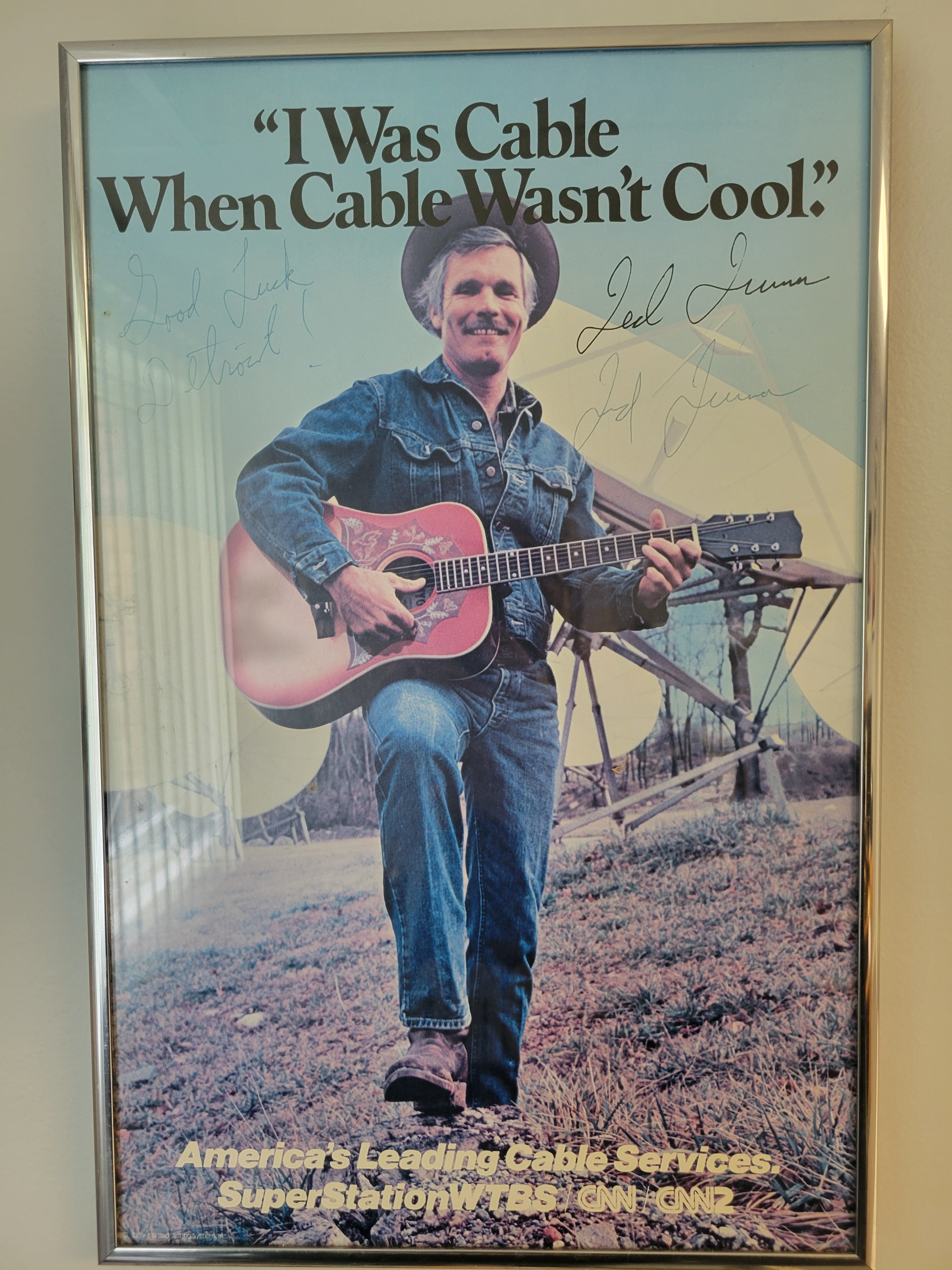
“Good luck Detroit” is how he inscribed this autographed poster that hung in the bureau until I took it with me when I left the company.
Oh, that. As time went on, Ted gradually lost control of the company when cash became an issue following a combination of major expenditures and less than astute business gambles requiring the company to take on partners, eventually being bought out by Time Warner.
When Time Warner and AOL decided to merge the company was ordered to slash costs, in large part by chopping the payroll by around 1,000 of us.
My immediate boss called me at the Detroit Auto Show to say our bureau wouldn’t be touched, but three days later it was. I was laid off, leaving the bureau with a producer, shooter and no reporter.
When the September 11, 2001 terrorist attacks occurred, the two remaining members of the bureau were pressed into action, worked to the bone, then laid off and the bureau closed.
I firmly believe if Ted still ran the company none of that would have occurred and I would have retired from CNN, rather than Fiat Chrysler Automobiles in 2016.
I also believe if Ted still ran the shop CNN would still be the down the middle news organization it always was when I worked there, presenting factual, objective reporting.
You see, never once, in my 20 years there did Ted ever mandate a point of view, except that we make sure our reporting was accurate and representative of a global news organization.
That was borne out during the 1988 Democratic Convention which was held in the old Omni next door to CNN Center in Atlanta. I was a supervising producer at the time, which is like a shift supervisor and I’d often take calls from viewers.
During our coverage an equal number of Republicans would complain to me that CNN was favoring Democrats and vice versa.
It was a lifetime honor and privilege to work for the miracle that Ted Turner created and I can honestly say, any good thing that’s happened in my career and life came as a result of that experience.
So I will say thank you and godspeed to Ted Turner, may he rest in peace in that blue robe, and wherever he is, find that cup of coffee.
Consulting Adults
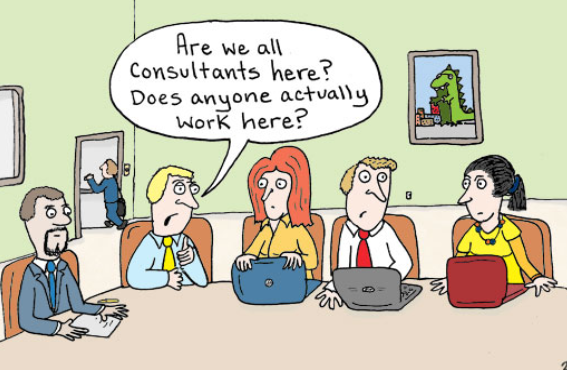
My first contact with a consultant came in 1979 at my first TV job. While attending grad school at the University of Arizona I landed a job as the weekend weather guy at the ABC affiliate in Tucson, KGUN.
I took to the job right away. After several years working as a morning drive time radio DJ, I was comfortable working without a script, ad libbing based on my map and information from the weather wire.
Our station was blessed with a great talent pool but crappy ratings, so they hired consultants based in Southfield, Michigan. The firm consisted of two former/failed news directors and an alleged “style” expert whose personal style was a cross between dust mop and tent maker.
I won’t waste a lot of words. They were crap. They had our main male anchor so self-conscious he actually wrote notes to himself onto the set: “Don’t over emote, don’t move your shoulders, don’t touch your pee-pee.” He added that last one in as a sign of rebellion.
They came after our elegant and talented main weathercaster imploring her to “act naturally.” When she protested that she WAS acting naturally, they told her to “act naturally another way.”
When it was my turn for consultant-certified scrutiny they seized on that fact that when only a little bit of rain was forecast, I would use the word “spritz.”
“Oh! That’s too eastern!” the consultants complained. I replied, “you mean too Jewish?” Busted. They looked at their shoes and moved onto my hair
Indeed, my viewers loved when I used that term and often joked with me when I was out in public, “hey Ed, is it gonna spritz today?” It was an everyday term back where I grew up in New York City, but a novelty in the desert southwest.
Turns out we dumped them because after two ratings periods under their “expert” guidance, our ratings actually fell even further.
What this whole prologue is leading to is I promised myself if I ever ended up as a consultant I could provide useful counsel based on my decades of experiences, while being sensitive to the company’s culture, goals and needs, not boilerplate nonsense.
So far, my two experiences consulting have mixed. In both cases I was told my experience would be valuable, helping staff improve their skills and opening the company’s eyes to new, or at least different angles for attacking certain issues.
After all, I built my reputation as a strong writing and producer covering thousands of stories as a reporter in radio, local TV, CNN, AP, Detroit News before jumping over to corporate PR.
During my 11 years at the various incarnations of Chrysler, I was known as a creative problem solver and innovator, pioneering the concept known as corporate journalism and introducing new methods and technologies, boosting the company’s exposure while saving it millions of dollars through efficiencies and bringing certain functions in-house.
Even before my last day on the job I was approached about lending my expertise to a news organization that was primarily print and online but contained a video element.
“You could teach us so much!” I was told.
Hmm. At first I was welcomed, but as time went on I detected several flaws in their TV production process and attempted to set them straight.
Oh! He’s gonna tell us we’ve been doing it wrong? Yeah. Change is hard. Doing it the same old way even if it’s wrong is easy. See ya, Ed!
The next one started more promising and lasted a few years until the company decided a consultant was really just a spare guy.
No…a consultant is not your spare writer, photographer, gofer, story pitcher. A consultant is there to advise and instruct your people already in those roles how to improve their performances or advise management on certain strategies.
What happens is people who are insecure, or perhaps in over their heads in their current roles, become very jealous and resentful of the outside consultant.
Honestly, consultants don’t want your job. We’re here just to help you do it better. If you can’t accept critique and instruction, perhaps you’re not mature or talented enough to remain in your position.
By no means are all consultants valuable or effective, as my experience back in Tucson attested.
If your company decides a consultant might be helpful, you need to really research the consultant’s track record of improvement, connect with current or former clients and then have that in-person conversation with the prospective advisor to see if it’s a good fit.
You also have to define the scope of work answering a few questions:
1-Why do you feel you need a consultant?
2-What skills and experiences does a consultant need to provide the counsel you seek?
3-How open is your corporate culture to accepting new ideas from outside the organization?
4-How will you prepare the staff for both scrutiny and direction from an outside source and why you feel it’s necessary?
Look, you don’t have to accept or adopt anything a consultant suggests, but by hiring one you’ve al least shown you’re open to examination, scrutiny and considering new ideas.
When it works, it’s a beautiful thing. When it doesn’t, admit it, don’t leave the consultant hanging. Be respectful, professional and courageous enough to end things decisively, informing the consultant why the engagement is ending.
Then you can both move on…without spritzing on each other’s parade.
How Calling Audibles Can Save Your Ass…and Your Kidney
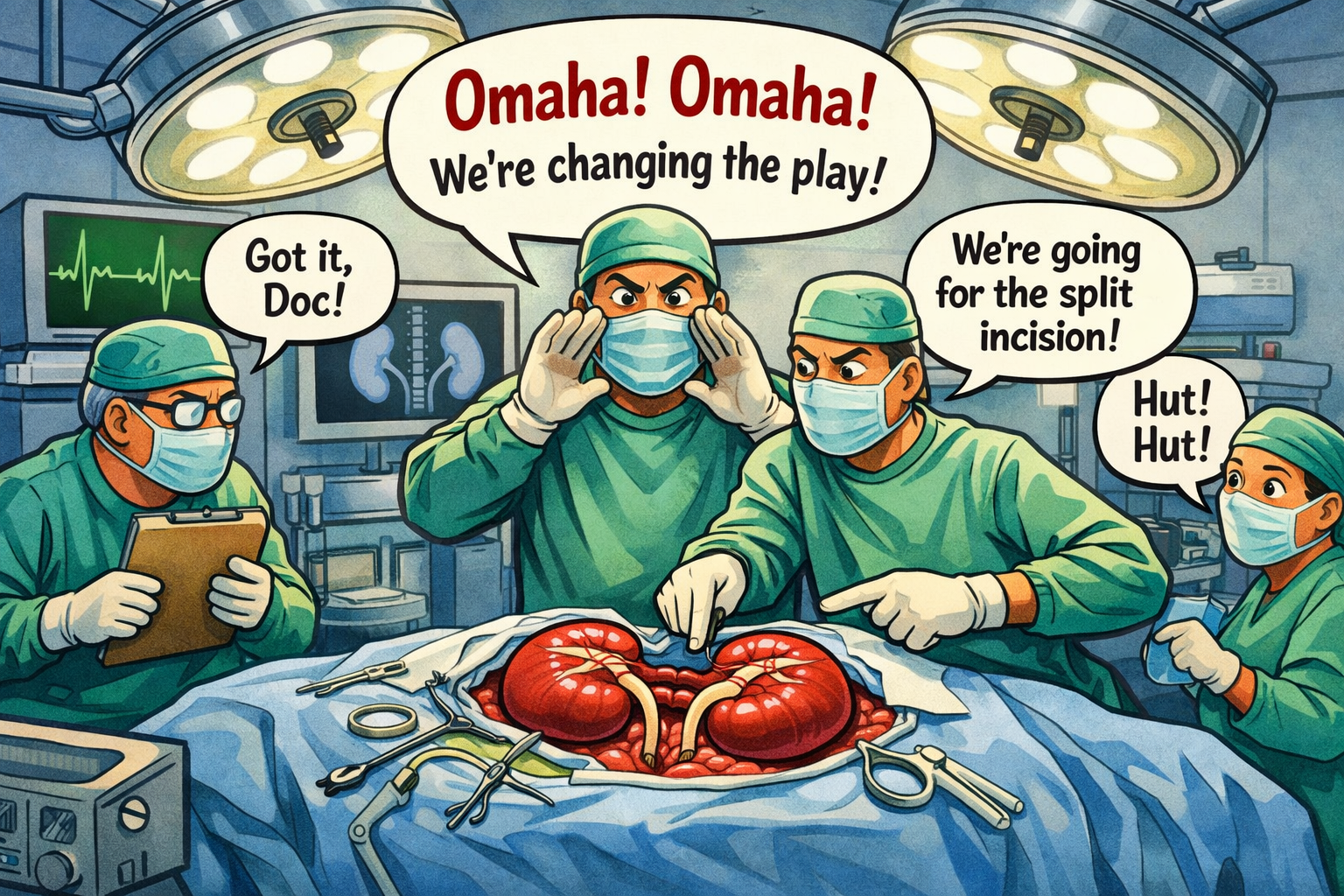
Ahead of Super Bowl Sunday, which coincides with my birthday, it seems like an appropriate time to discuss audibles…and my left kidney. Stay with me in the story below to understand the relationship and what lessons there are for all of us faced with those on-the-spot decision that can be the difference between a big gain or being thrown for a loss.
Last Friday a team of doctors, and robots, conducted what’s known as a pyeloplasty to repair a blockage where my left kidney empties into the ureter..one of two tubes on the wee-wee superhighway that sends the stuff to the bladder.
Such a blockage can basically reduce the kidney’s functionality to the point where it’s useless and must be removed. Who wants that? You start with two, you like to end with two.
In the simplest of terms, it’s a matter of snipping out the blockage, sewing together the truncated tube. Going into the procedure, which takes about three hours, based on a previous MRI the doc already knew there was a little complication. Looked like a tiny blood vessel had wormed its way onto the ureter causing the blockage. If they could move it, the full pyeloplasty might not be necessary.
Now skip ahead to the big game.
Imagine Seattle quarterback Sam Darnold peering over the scrimmage line at the Patriot’s defensive formation ahead of the snap. Crap. The planned play was a play action pass but the Pats are lined up in telltale blitz formation and the Seahawk’s O-line had been leaky thus far.
That would mean Darnold would have to get rid of the ball quickly before he’s swarmed, rather than drop back in a weak pocket for a pass.
Time to call an audible. Screw the pass, it’s now a quick handoff for a short gain. Better than being sacked for a loss.
That’s sort of what happened in operating room 2 last Friday. Just when the docs had their plan they noticed a cyst creeping up in the vicinity of the blockage. Getting to be a bit of a traffic jam in Ed’s tube!
According to my doc’s telling of the story they quickly called an audible in their sterile, hushed huddle.
It went something like this:
Doc 1: Shit…cyst !
Doc 2: OK…bust it!
Doc 1: Cyst busted! Now what?
Doc 2: Could still be a problem. Do the pyeloplasty anyway?
Docs 1 and 2 agree that would be the best strategy for a more permanent repair.
The quickly changed plan was successful.
Major gain.
Indeed, it seems like we’re faced with calling audibles all through life. We had a plan, or expectation but something came up at the last second and we need to instantaneously change our course of action.
Some people find the prospect of a quick pivot under pressure unnerving, or even impossible. They can’t possibly call an audible to change strategy because they’re not equipped do so.
What do they do? Often, they’ll panic, freeze, fail.
The reason my doctors, or a football quarterback, or anyone who must make quick decisions is able to call an audible under pressure with successful results is because of five major factors:
1-They anticipated more than one scenario going into the task
2-They planned in advance for all the possible scenarios
3-They communicated the possible alternative plans with team members or others responsible for completing the task.
4-They instantly leveraged training and experiences situations to help decide the best course of action.
5-They have the courage and confidence to make the call and see it through.
The lesson is never to go into a situation without flexibility, preparation, planning…and plans A,B, C or more.
You never know. Whether you’re quarterbacking the big game, complex project, or even fixing an old reporter’s faulty bodily plumbing, the ability to quickly call an audible on the spot can be the difference that results in gaining ground, hitting paydirt….saving a kidney.
Using Constructive Eavesdropping On the Job-A True Story

I’m a reporter, so I’m naturally nosy. Over the years I learned to read desks upside down and hone a sharpened ability to eavesdrop even in the noisiest conditions.
Big deal. Those are skills in most reporters’ toolboxes. But I want to tell you how paying attention to what was being said around me, and acting on it, during my 11 year adventure in corporate communications may have actually saved most the jobs in my department, including mine.
It’s a story I hope will wake up many of you to why you can’t just live in your own little bubble on the job and be content to follow the obnoxious tenet of “staying in your swim lane.”
Here’s what happened.
I was originally recruited by the VP of corporate communications to ghost write and manage a new blog aimed at journalists at what was then DaimlerChrysler. A year later the company created a new digital communications team and placed me at the head of it.
Our team handled the media website, video, social media and broadcast media relations. We tried all sorts of methods that were new circa 2005-2007 including the first website offering background info, videos, infographics and breaking news during the 2007 contact negotiations with the UAW.
We basically pulled the company into the 21st century despite considerable pushback from various corners of the company, including our department. However, we had the full support from the top two executives running corporate communications.
When Daimler and Chrysler divorced in 2007 the Chrysler entity was taken over by Cerberus Capital Management, a private equity company, aka, corporate slumlord.
The CEO was an executive who had no use for public relations or corporate communications in any form. Indeed, when he asked at a meeting if he should conduct news conferences I told him he absolutely should and listed the reasons.
“Nah,” he whined. “They just ask a bunch of hard questions.”
You can see what I was working with.
At the time our department was located on the sixth floor of the administration tower at Chrysler World Headquarters which was attached to the sprawling Chrysler Technical Center in suburban Detroit.
My cube was at the very head of an aisle and right across from the glass office occupied by the second highest corporate communications executive.
One day the big boss of our department rushed in to see him. They left the door open. My instincts kicked in, so I tuned in my ears to see if I could catch anything good.
What I heard was both idiotic and frightening. Big boss tells next-to-big boss the CEO wants to get rid of the PR department because it wasn’t doing enough to endear him with the other employees.
As I’m listening to this I’m creating a new Word doc and writing down ideas to make this guyr more relatable and respected by employees. They had to be ideas my team could pull off with, perhaps, a little budget, some human support, and, most of all, buy-in from Creep E O.
I believe I wrote down 10 or 12 ideas and instantly submitted them to the two bosses. Yes, I told them, I could hear everything, and it sounded like they needed some help.
Barely a few minutes went by when they came to me with my list, their eyes flashing, breath puffing and number two says to me, “we like number five! Number five!”
Number five was to produce a company-wide webcast where employees from around the world could ask the CEO anything they wished. It would be a chance to show the guy cared and to have him come across as an actual human, rather than a detached corporate robot.
Surprisingly, the CEO not only went for it, he asked to include a couple of other top corporate executives.
We held it in a large TV studio at the production company we often employed. The webcast was a huge success. We received questions from all over the globe which the executives seemed thrilled to address.
They loved it so much, we were asked to produce another one later that year at a product testing facility near the headquarters. It too was a huge success .
The CEO was so pleased he changed his mind about killing our department so we got to keep our jobs. Sadly, most of the corporate communications team was later laid off, along with thousands of others at the company, as Chrysler went through the throes of bankruptcy in 2008-2009.
I was one of the lucky ones who got to stay, as did most of my team. Why? By being attentive, coming up with a way to try to solve a big problem, constantly looking for, and finding, new and better ways of accomplishing certain tasks in cost-effective manners.
We ended up saving the company a ton of money and reaching new audiences by using the latest technologies and techniques, and bringing in-house many of the services we previously outsourced. s
I constantly implored my team that if they wanted to beat the corporate grim reaper, “make yourself indispensable!”.
What did I get out of the whole thing? Well, lots of thanks and the big bosses took me to lunch. Oh yeah. I was promoted twice and got to stay on the payroll until I retired nine years later.
Indeed, the lesson here is simple. Always be attentive to what’s going on around you and be smart, courageous and creative enough to act on what you learn to the benefit of your company, which almost always results in personal career benefit as well.
At the least, you might score a free lunch.
44 Years Since CNN Took A Chance on Me
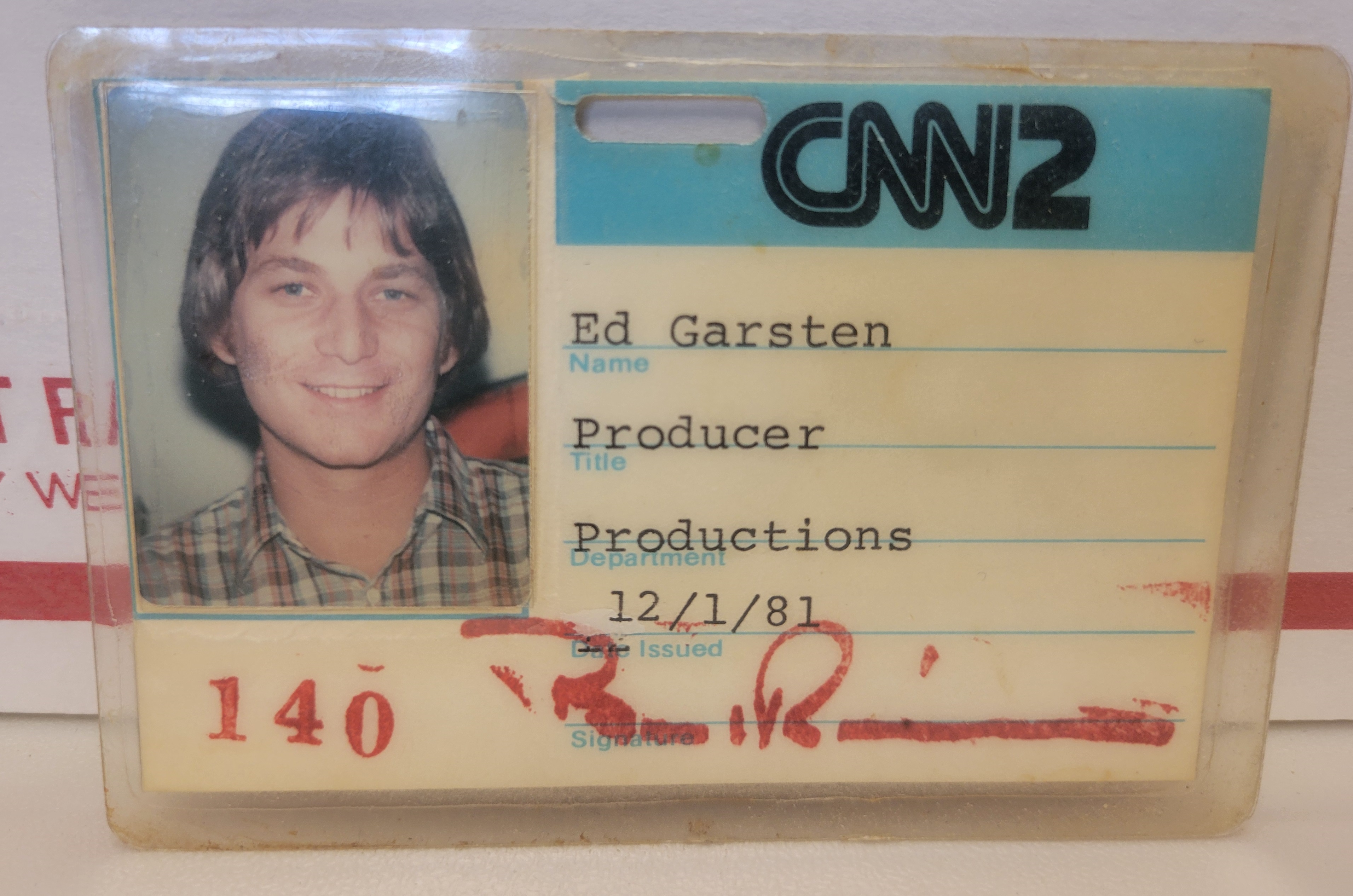
The ID badge is dated December 1, 1981 but November 30 was really my very first day at CNN, 44 long years ago.
It was a rainy day in Atlanta. I was alone in beautiful apartment with just a sleeping bag, air mattress, lawn chair, 19-inch TV and a cardboard box that served as table for eating, and some clothes. All my other stuff was in Tucson, Arizona, along with my wife, who flew back there to sell our little adobe block house. She was gone for three months, along with my stuff.
By the time our house was sold and my wife, and belongings and furniture arrived with her, that poor cardboard box was a greasy mess from its use as my dining room table/foot stool.
I was hired as one of the 10 original producers to launch the new network, CNN2, which eventually became Headline News.
If the bosses really knew how much experience I had producing television newscasts I’m sure they would have sent me on my way, but I fooled them with a kickass tape of my newscasts at KGUN, the ABC affiliate in Tucson.
You see, I joined the station doing weekend weather while I was a grad student at the University of Arizona, earning my Masters in Journalism. It was a way in. Within six months I was hired as a full-time reporter, which was my real goal.
That was going along fine when one day the news director called me in and said our longtime producer with 20 years experience had suddenly quit to take a job at a station in Phoenix and he’d love it if I took over.
Pretty funny. I’d never produced a TV newscast in my life.
“Oh, John will train you!”
He did. My first newscast after he left Ronald Reagan was shot. This was March, 1981.
CNN signed on June 1, 1980. I couldn’t watch it because our local cable system didn’t carry it, but I could catch little CNN news briefs on TBS, which was also part of the Turner Broadcast System.
One of the first anchors CNN hired was Lou Waters, who was the news director/anchor at our cross-town rival in Tucson, KOLD. He brought along his producer, Faye, who happened to be a great friend of our main weather caster Linda Rhodes, who formerly worked at KOLD.
That October, Linda tells me Faye tipped her off that CNN was starting a new network and needed producers. Was I interested? Uh, sure. Hell, I had a “solid” six months of experience. I was ready for the network!
I called the number Faye provided to Linda who gave it to me and next thing I know I’m on a flight to Atlanta on a Sunday. I was interviewed by every living body including the president of CNN at the time, Reese Schonfeld. We hit it off because I told him I worked at a radio station in Fulton, New York right out of college and damn, that’s where his wife was from!
I fly back to Tucson that evening with no expectations of landing the job, but the next morning, Burt Reinhardt, the top money man at the network, and successor to Schonfeld as CNN president calls me and offers me the job. Show up on November 30th.
I did, but it things got off to a clumsy start. Having worked in Arizona where no one gets dressed, I show up in a button down shirt, corduroy jeans and very comfortable shoes. Everyone else is in suits, ties, dresses and smirks, directed at me.
My boss, Ted Kavanau, a news legend from NYC, smiles, takes me aside and kindly mentioned, “as you can see we have a dress code.” Would have been nice to know in advance, but as I found out over the next 20 years, CNN was great at communicating news, just not important stuff to employees.
Ted told me to go over to the national assignment desk and ask one of the extremely busy people to explain how it worked.
I walk up to a bald guy with black-rimmed glasses and a beard and ask him the question. As he glares at my apparent insolence he barks, “you wanna know now the national desk works? Watch this!”
He then picks up the hotline to the DC bureau, starts screaming and swearing , then slams down the phone and quietly, but firmly, answers my original question with, “that’s how the fucking national desk works.”
When Ted asks me how it went I told him how my question was received. He kinda chuckled and said, “yeah, sounds about right.”
Welcome to network news.
I stayed at CNN2/Headline News for a little less than two years, producing hundreds of news casts in the most pressure-filled atmosphere you can imagine. Some producers actually broke down in tears under the pressure, others simply didn’t show up for work ever again.
In 1983 I was promoted to the main network to produce afternoon news casts, then promoted again to share producing the three hour morning show called Daybreak.
All this time, I would pick up a story here and there in hopes of moving back to reporting and by 1986 I was made a full time correspondent out of the Southeast Bureau based in Atlanta.
Here and there I would substitute anchor some newscasts and in 1989 the Detroit Bureau Chief/correspondent job opened. I tossed my tape into the ring and got the job. Been here in the Motor City ever since.
CNN dumped me and about 1,000 others during that “great” merger between parent company Time Warner and AOL in 2001, and closed the bureau.
We could have looked for work anywhere else in the country, but guess what, my family and I loved living in Michigan and I loved covering the auto industry.
Local TV wanted no part of me so I pursued print, because, let’s face it, I was never a TV star, but I could write. Best move I ever made.
It was funny, when I called someone at Ford for an interview while I freelanced for a short time at Automotive News.
“What? You write?” the guy at Ford asked. “TV guys can write?”
“Uh, yeah, I wrote every word that came out of my blow-dried head,” I replied.
“Heh,” he answered. “I thought producers wrote all that stuff for you guys.”
I had some great jobs in the print world. National Auto Writer at the AP, GM beat writer at The Detroit News, and in my semi-retirement, senior automotive contributor at Forbes.com.
But to come full circle, say what you want about what CNN has become, it opened a lot of doors for me when my time there ended there 25 years ago and still does.
The lesson I’d like to leave you all is don’t be afraid to step out of your comfort zone. Before I did the weather, I never did the weather, but I figured it out and succeeded. It led to dipping my feet into TV reporting. I sucked at first, but I received tough, but great direction from our photographers and news director.
I never produced a TV newscast but had a great teacher and got good enough to convince a network to hire me after only six months experience, and promoting me.
I never anchored a newscast when an executive at CNN saw something in me and gave me a chance. I solo anchored an hour network newscast with zero prior experience and it worked out, until the network president thought I looked a little too young. Tried to grow a beard, was too blonde..the lights washed it out.
When fate dealt me a blow I pivoted to print knowing I was a decent writer. Adjustments had to be made to transition from broadcast to print writing, but I was again lucky to have wonderful supervisors and editors to set me straight.
When I jumped to corporate PR at Chrysler, all the skills and news sense I had developed over the decades helped me succeed.
So if you’ve been laid off or otherwise “downsized,” just know you have skills that entirely transferrable and be willing to use them in different ways.
Take a chance, look beyond the obvious and usual. Not only will it help land a new gig, but it will open your life to new experiences and people and perspectives.
Most importantly, bet on yourself. The new stuff might seem challenging, scary, maybe even impossible, at first, but you know the chips in your stack.
Always, always, bet on yourself.
Refusing Role Call

I’m on Linkedin a lot to promote my Forbes.com stories and podcast, Tales From the Beat, so I see things. What I see are a ton of people who write they’re looking for “a new role.”
Of course these are unfortunate individuals who have found themselves suddenly payless because the thing they were doing to make a living was taken away from them due to firing, layoff, business failure or just bad luck.
It happened to me back in January, 2001 when I was laid off as part of the awesome merger between CNN parent company Time-Warner and AOL. I was the CNN Detroit bureau chief and correspondent at the time and was one of about 1,000 employees told to hit the road, thanks to the recommendations by an outside consultant.
So I’ve been there.
In my “role” as a father and husband I burned some of my generous severance to take my family on a vacation out to Arizona, then went to work…looking for work…a job.
The term “role” never entered my mind. I’m not an actor, although I act up some times. I actually was a speech and theater major in college until I realized I had no future as an actor because I couldn’t remember my lines. That’s one of the reasons I pivoted to broadcasting, because you get to read stuff instead of memorizing it.
But I’ve been thinking a lot about the wide use of the term “role” because, well, everyone has a role. Maybe you’re a partner, spouse, parent, mentor, individual pursuing life, support for a disabled person, confidante, conspirator. Those are all roles.
Folks, what you really need….is a job. It may not be as elegant a term as role, but it’s what you really seek.
You need a job because you don’t have one. You need a job because you need a source of income. You need a job because you enjoy working in your chosen field and it gives you pleasure, satisfaction and a sense of accomplishment.
Why do we need to use this word “role” to soften the message?
There is zero shame in admitting you need a job. There is no shame in admitting you need work. It’s what we all need unless you’re independently wealthy.
Coming out loud and clear that you’re in the job market is actually a great message. It tells prospective employers you’re ready to work and don’t mince words. Yup, no screwing around. “I need a job. I’m right for your company because I have all the skills, great employment record, list of accomplishments. I’ve thoroughly researched your company, its goals, its culture, its accomplishments and I bring qualities that will add value to the operation.
You’re not looking to play a role, you’re not looking to play at all. You’re looking to do a job and do it well in exchange for money.
Actors who play roles have understudies to step in when they can’t come to work. In real life, we don’t have the convenience of someone being paid to wait around backstage to do our jobs in case we don’t show up.
In my entire working 52 year working life, I never once said, “gotta head off to my role now!” I’ve never undergone “on the role training.”
I went to work. I underwent on the job training.
There’s no reason to substitute some sugar-coated euphemism to soften the message.
Just say what you mean. Use honest words to find honest work. You’ll always have your life’s role.
Ghost in the Hell–A Workplace Horror Story

Unlike retail stores that show their Halloween stuff in July, I waited until now to conjure up a little verbal potion of apparitions that manifest themselves in the form of untalented and cowardly managers and executives.
You see, they don’t wait for All Hallow’s Eve to dress up as ghosts—they play the role all year long.
Just like all ineffective bosses are not alike, there are various methods employed by the bottom-feeders who would rather lurk as passive-aggressive cowards than have the courage to appear before their charges and reveal their actual frightening thoughts.
Ah..but isn’t Halloween all about fright? There’s a difference between being scary and not having the intestinal fortitude to scare up honest feedback.
Yes..it’s an exercise in the dark arts—keeping employees in the dark about where they stand, the quality of their work, the chances of promotion or raise.
I’ve worked long enough to have been ghosted by several bosses. One day you’re in the “house,” having regular conversations and interplay with the person to whom you report. Then one day that house becomes haunted when that person metamorphosizes into a being never seen, never heard, acting as if you never existed.
You’re spooked.
The questions fly through your brain. Is the boss mad at me? Am I getting fired? What’s going on?
Then you make the mistake of approaching the body with no substance looking for answers. The replies you receive are as transparent as the ghost boss’s soul.
You can hear him or her now conjuring the lies they are about to tell you. Hovering over a cauldron of steaming bullshit, they stir it while chanting the ingredients they are adding.
“A gallon of lies! A dash of mis-direction! A pair of side eyes! A dollop of deceit!”
Then they serve it up expecting you to swallow…and believe.
That’s the time to politely explain you’re already up to here with crap and tender your notice.
When the dispirited spirit attempts to reverse your resolve, you turn to the empty vessel and calmly reply, “Not a fucking ghost of a chance.”
Trick and retreat.
Simplifying Self-Help

Do you rely on so-called “self-help” books to improve whatever it is you want to improve? About eight years ago I wrote about why I don’t think much of them and my unexpected reply to a college student who asked me following a speech I gave, what self-help book I would recommend to improve relationships with co-workers. It’s in the blog post to which I’ve linked.
Lately I started thinking about self-help books again for a couple of reasons. For one, while in a book store, I noticed they’re not called “self-help” books anymore, but rather less obtuse categories such as “self-improvement” or “life-improvement.”
Do those alternative categories soften the realization that one might need actual help in some area of their lives? If so, why is that necessary? There’s no shame in seeking help and we can all certainly stand to improve.
But it falls under a growing trend de-sensitize the truth. It sounds kinda harsh to say we need “help,” and clothing for larger folks is no longer labeled “plus sizes” but rather “comfort fit.” That’s fine. Self-esteem is important and I take no issue with attempts to help individuals feel better about themselves.
That leads to my main point. Self-help, or self-improvement, whichever you prefer, is much simpler than the myriad books and magazine articles make it seem. There’s no need to fill hundreds of pages with many thousands of words.
Self-help can be as simple as self-control. See? Two words.
Let’s take it further by drastically simplifying other subjects of bloated self-help books.
Marie Kondo has made a career with books and TV shows about organizing. I can boil organizing down to six words: “Throw things out. Put things away.” There. Simple.
How about leading a healthier life? So many millions of words blather on about this diet or that lifestyle. I’ll save you a lot of time with this word diet:
“Don’t eat crap. Get enough sleep. Get more exercise.”
Oh, I love the riot of rhetoric about how to get along better at work. This one is near and dear to me because I find workplaces can be one of the worst environments for spending the valuable time we have on Earth.
For this one I’m a little more expansive:
“Focus on your task. Be willing to listen more than speak at meetings. Don’t gossip. Ignore assholes. Office coffee is gross. Bring your own.”
I love the many books out there on how to negotiate—whether it’s a pay raise, business deal, price on a new car.
I’ll negotiate that issue thusly and succinctly:
“Know what you want. Know what you’ll accept. Don’t accept any less. Be willing to walk away.”
One of the more popular topics of self-help books is on relieving stress. I find plowing through hundreds of pages to find the answer is stressful, so I’ll pare it down to a less-stressful volume.
Big task ahead? “Break it down to its parts and complete one at a time rather than look at one big giant task ahead.”
Deadline? “No problem. When the deadline arrives you’re finished so you know you don’t have to live with the task beyond that. So stay focused, get it done, then relax.”
Bigger credit card bill than you can afford? “See what you can return. Pay it down over time. Learn the lesson and don’t do it again.”
See? I just boiled down five types of self-help books to a handful of words. Most of the help we need is not all that complicated and easy to understand if you don’t muck it up with pages and pages of blah, blah, blah.
Indeed, I’ll offer this brief self-help for would -be authors of future self-help books: “Keep it simple. Make it clear. Kill fewer trees.”
I’m telling you, we could shrink the self-help, or self-improvement, book store and library sections to maybe one shelf of single-sheets of concise advice.
It could work—so help me.
Retired For Six Years, It’s Time To Share The Beauty Of A Life Of Taking Chances Outside My Comfort Zone

Six years ago I swiped my Fiat Chrysler Automobiles badge for the last time, walked through the turnstile and extricated my Jeep Wrangler from the lowest level of the employee parking deck, drove home, poured myself a Jack Daniels on the rocks and told my wife I was now her slave for my remaining days.
I don’t think she was all that amused since I owned no particular skills that would benefit her aside from pushing a vacuum or unjustifiably killing spiders. But then again, I thought I could figure out whatever it is she wanted me to do in the future since I made a very nice living jumping into positions outside my comfort zone. I highly recommend it!
Here’s my long-ish story of a life totally enhanced simply by being willing to step outside my safe place—my comfort zone.
We can start with my very first shot at broadcasting. My brother and I used to make up fake radio shows using a music stand as a faux microphone and reading, singing (badly) popular songs using lyric sheets you could buy at the neighborhood candy store or newsstand. It was fun but I never thought of making it a career. Yet.
That changed when I entered college as a speech and theater major because I thought I could be an actor. Before I could audition for even one production, a month after arriving as a freshman, an upper classman decided I was funny and dragged me down to the campus radio station. He told the guy on the air at the time, “put my friend on the radio.”
He did. Gave me my own show. I was awful. I got better though and made the life-changing decision to pursue a broadcast career. That was pivot number one.
I worked in local radio in Central New York for a few years but that was a dead end. Pivot number two coming up. My wife and I decided we wanted to earn our Masters degrees, she in library science, me, in journalism because I loved news and to write and was better at it than making bad jokes as the goofy morning guy on the radio.
We planned well, quit our jobs, sold a lot of our stuff, put the rest on a moving van and hauled out to Tucson, Arizona to attend the University of Arizona and start new lives.
Single best move ever. She went to school full time, I went part-time and landed a radio job after a couple of days. It wasn’t because of my “talent.” The program director was intrigued that I typed my resume’ in blue instead of black.
“Who types in blue?” he asked. “I figured you had to be fun and different.” Whatever you say. I did morning drive until the program director quit and his replacement wanted my slot. I stayed for two more weeks.
Pivot number three. While I was working at the radio station I saw a notice on the wall in the UA journalism building the local ABC affiliate was looking for a weekend weather guy. Ha. Never did the weather, knew nothing about the weather, wanted the job.
I called the number, the news director granted me an audition and I took a couple of weather books from the library, cramming like it was finals to get just enough weather stuff in my head so I could fake it.
Worked out. Got the job. Now I was a weather guy…but I really wanted to be a reporter, so the assignment editor tossed some stories my way. One night the news director called me up and told me to meet him at a neighborhood bar in an hour. Over a couple of Olympias he told me one reporter quit and another got fired, so if I wanted a reporter job it was mine. I accepted without taking another sip.
It just gets better. About 18 months later our newscast producer with 20 years experience suddenly jumped to a station in Phoenix. News director calls me in. I’ll give you a six grand raise to ditch reporting and start producing.
I don’t know why he chose me but when you’re in the 82nd market six grand is a treasure so I took it. First night producing, President Reagan gets shot. The show didn’t crash. I didn’t get fired.
Six months later I get a tip CNN was starting a new network, what eventually became Headline News. Called the number I was given, flown out to Atlanta and got the job. They didn’t know I had only been producing newscasts for a few months but the boss liked my resume’ reel so I guess I fooled ’em.
Suddenly this green kid just in from Tucson is tossed into a 24-hour network newsroom tasked with producing big time broadcasts under massive time pressures and constantly changing conditions. Out of my comfort zone into an inferno. Didn’t get burned. Was promoted to the main network.
I still aspired to be a full-time reporter. Again, a sympathetic assignment editor came through, giving me stories during weekends. Bosses were happy. Gave me a full-time correspondent job out of the Southeast bureau based in Atlanta.
Ready for more? One day I see the anchor schedule on the bulletin board. I always looked there because I still produced occasionally and wanted to know who was anchoring my shows. Ha! I see my own name up there for the late night, west coast show. Well..I’d never anchored a full newscast in my life and now I was going to solo anchor a network show that included a live interview and audience call-ins.
So…okay! This comfort zone thing just seemed to have no boundaries. I guess I did well enough that they kept scheduling me to anchor. Until things changed again.
Not only did I prefer reporting but I aspired to be a bureau chief. I got wind the Detroit Bureau chief was being transferred overseas to Rome. I applied. Got it. Great job because you were both the BC and the correspondent and the team there was terrific.
All well and fine for the next 12 years until the disastrous merger between CNN and AOL. They ended up closing some small bureaus, including Detroit, laying off about 1,000 people. I was one of them.
Shit. Local stations wouldn’t hire me because I’m not really Mr. TV in terms of looks or flamboyance. Once local news director told me “not looking for journalists. We want street characters like you see in New York.”
Major comfort zone move. At the least I knew I was a good reporter and could write. Eternal thanks to Ed Lapham at Automotive News who made me a deal. He’d give me some stories to write on a freelance basis. If I passed the test, when a job opened I’d have a strong shot at it. Deal. Wrote a few, they like the stories, but there weren’t any available jobs.
Fair enough. The Associated Press chief of Detroit Bureau Charles Hill saw my resume on JournalismJobs.com. He needed a national auto write. We had a couple of lunches where he tried to figure out my real story and decide if an old TV guy could write for the wire. I didn’t enough know if I could write for the wire but boy, what an honor it would be to write for the AP knowing its reputation and exposure my stuff would get. I took a writing test and that, plus my performance at the lunches convinced him TV boy could do it.
Compared to a TV reporter package a wire story seems VERY LONG. So many words! I was allowed to use bigger ones too! But bless my editor Randy Berris who was extremely patient and instructive and turned me into a wire reporter.
Must have been OK. About 14 months after I started at the AP the auto editor at The Detroit News approached me about taking over the General Motors beat. I never worked at a newspaper but I was intrigued with the opportunity. During my interview lunch I mentioned that to the assistant managing editor. He said, “you write great stories. I’ll worry about how it actually gets into the paper.”
Suddenly I was a newspaper guy. I loved it—the opportunity to take a few days to work on and craft stories and build relationships. But three years later my comfort zone was challenged again.
I was approached about managing a new blog Jason Vines, the head of communications at then DaimlerChrysler was starting. This was 2005. Blogging was still fairly news and the term “social media” wasn’t yet in common use. Blackberrys were considered state of the art. Smartphones weren’t yet born.
Sure, why not? It was a big decision to jump from news to PR but this seemed like a chance to get in on an emerging communications mode and I had thought for a long time about working at one of the automakers I had covered for so many years.
I not only got to launch and manage Jason’s blog which was unlike any other. It wasn’t open to just anyone. He wanted to admit only “working media” so he could use the blog to comment on published stories and plant ideas for new stories. It was pretty controversial.
Of course I had zero experience blogging but again, out of the comfort zone and into the fire of cutting edge corporate communications. A year later things went so well, a new team was created around me because they never had anyone on staff before who had worked in virtually every corner of the media world. The new team was DaimlerChrysler Electronic Media. We later updated the name to Digital Media.
Our new team would handle broadcast media relations, the media website and social media. We soon added video production and pioneered the concept of “corporate journalism” creating owned media telling the company’s stories in a journalistic style.
I loved my team not only because they were good humans and talented and creative people but they were always game to try something new.
It’s with them I spent my final 11 years in the full-time workforce before retiring at the end of July, 2016.
Yes, this was a long story but one I hope convinces you to have the confidence in yourself and your skills to have the courage to jump out of your comfort zone in the event your current job suddenly ends or an unexpected opportunity presents itself that had never before been under consideration for you.
It can be scary to find yourself in a new work environment, expected to complete tasks with which you have scant, or no, experience, alongside co-workers with habits and sensitivities very different from those of your former colleagues.
But it’s also the most wonderful feeling in the world to discover your core skills and experiences are absolutely transferable opening doors to opportunities that will enrich your life and frankly, your finances.
Oh sure, I officially “retired” six years ago, but I can’t conceive of not continuing to create and learn, which is why I’ve taken on part-time freelance positions writing autos and mobility stories for Forbes.com and as an integrated media consultant for Franco.
I guess you could say working out of my comfort zone is completely within my comfort zone because the one thing I’m most comfortable with is growing. Try it. Yup..it’s a bit of a tightrope but you don’t need a net, because the only thing to fear is by not taking a risk you may miss the best opportunity you didn’t know you would love.

