Tagged: General Motors
Detroit’s Multi-Towering Conundrum–The Renaissance Center’s Dark Ages

What do you do with seven giant glass tubes sticking out of the ground that happen to be the most famous and distinctive feature of your city’s skyline? That’s the question folks around Detroit are asking ever since General Motors CEO Mary Barra announced the company is moving its world headquarters out of the Renaissance Center next year to a new building about a mile north.
Some say tear it all down. Barra promised GM and the developer still putting the finishing touches on the building to which the automaker is moving will work to, um, reimagine the colossal architectural beast.
Yes, I call it a beast that should actually never have been imagined.
Some context. I lived in Atlanta for eight years in the 1980’s when I worked for CNN. It’s where I saw the first iteration of what would grow to become the actual center of the Renaissance Center.
You see, the architect John Portman built his first tubular monstrosity in the city of a hundred streets with Peachtree in their names…and now, one hotel..the Peachtree Plaza. The single glass tube instantly became the key feature of Atlanta’s skyline, showcased in every image of the growing city’s downtown.
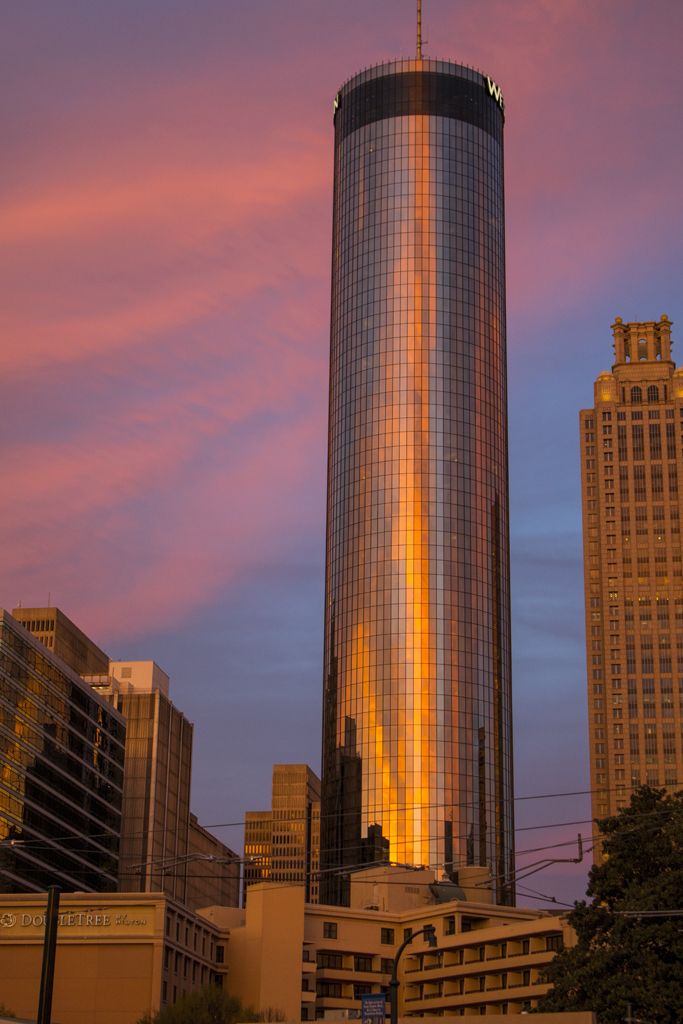
The first time I landed in Atlanta for my interview at CNN in 1981, I looked north from the terminal and saw that thing sticking up like a 12-year boy’s first real boner. The city Sherman burnt down was rising again and finally reaching puberty.
Thankfully, over the years, as Atlanta grew, so did its skyline and Portman’s glass pipette is less prominent.
Here in Detroit Henry Ford II, the Deuce, figured he’d more than double what Portman planted in Dixie and, together with Detroit leaders, commissioned the architect to duplicate Atlanta’s Peachtree Plaza, but then surround it with four octagonal office buildings all connected by a network of passageways that would challenge even the most accomplished spelunkers.
The new Renaissance Center, or RenCen, would become the symbol of Detroit…the Renaissance City. Planted on the banks of the Detroit River, facing Windsor, Canada, the RenCen overshadowed and loomed over older landmark downtown buildings such as the Penobscot and Guardian to herald the Motor City’s vitality and prominence, or at least assert it.
If anything, the RenCen was a photogenic feature that made for effective marketing materials.
Less than 20 years later it all went bad.
In 1989 I was transferred by CNN from Atlanta to Detroit to become its new bureau chief and correspondent. The company had me spend a few days getting to know the staff and the city before moving here. They put me up in what was then the Omni Hotel in the Millender Center…connected to the RenCen by a short pedestrian bridge over Jefferson Avenue.
Of course, I had heard of the RenCen and decided, one evening, to explore this famous landmark. As soon as I entered it from the pedway I felt like a piece of dust might feel as it’s sucked into the collection bag of a Hoover. It was dark and directionless, with scant chance of quick escape.
If I was a mouse seeking a piece of cheese I would starve before finding the morsel since there was no apparent logic to the labyrinth’s layout. I wasn’t dumb enough to attempt to explore the complex because it was just too, well, complex. So I returned, disappointed, to my hotel room.
Not long after I moved up to Detroit and was with my camera crew, I returned with them to the RenCen to shoot an interview with a prominent economist at Comerica Bank which had offices in one of the towers. We weaved in and out between the towers and concourses searching for the right tube to ascend to reach our destination. We were late. We apologized. The economist laughed as he said, “This place sucks. Everyone gets lost…the first dozen times they come here.”
Another time, years later, as I was heading to a meeting a very upset man came up to me. “You look like you know your way around. Please, I heard there’s an ATM here. Can you direct me?”
Deciding this person was an honest Joe who did not deserve to have his hopes and dreams crushed, I looked him in the eye and said, “Sir. Even if I told you, you’d never find it. There’s a bank right across the street. Just head for the daylight of the exit and never stop. I want you to see your family again.”
The man instantly did as he was told. He knew. The RenCen’s tubes would suck you up like bacteria in a test lab.
The place not only didn’t make sense, but it wasn’t making any money as tenants fled to locations where employees, customers and clients could reasonably expect to find their destinations without the utter frustration of being caught in a glass and concrete hamster cage.
Just as it was given up for dead, in 1996 GM bought the place at a bargain rate and moved its world headquarters there from an historic building a couple of miles north. The automaker saved the day. Instantly, thousands of people occupied offices, supported the stores and restaurants. The RenCen had a new life!
Not so fast. Shortly after GM made the move we had an interview booked with then GM CEO Jack Smith. Nice guy. The interview was for our annual auto show special and our producer wanted to use lots of lights.
We plugged ‘em in. Our lights, and all the lights on the floor, went out. Guess the building wasn’t quite ready for prime time…or any time that required extra voltage. It took a few minutes, but the electricians did their magic and we smartly reduced our lighting scheme.
Smith was cool about it. “I guess there’s still some work to be done,” he said with an embarrassed chuckle.
There was plenty of work still to be done.
GM poured millions upon millions to finally take some of the mystery of navigating the maze with a simple innovation called the circulation ring. No more weaving in and out. Take the ring like a big traffic roundabout and bail out when you reached the exit closest to your destination. The big berms that walled off the complex from the rest of the city were torn down and the soaring Wintergarden was built, offering a bright gathering venue and passageway to the Detroit River.
Then Covid hit. People started working from home. The RenCen returned to its ghostly, pre-GM silence. After the pandemic abated, Barra said workers needed to return three days a week, but by then many of them had already relocated to other GM facilities and others just never returned.
It became time to find a smaller place for the automaker to park.
So what to do with it when Mary and all her sheep settle in their new pasture?
Some say to knock it down. Others imagine apartments, condos, restaurants, some commercial space.
In another era, it might have served well as a garrison guarding Detroit against hostile canon fire from gunboats on the Detroit River. Ah..Fort Renaissance! Tower 400 forever! We have secured the circulation ring! Remember the Marriott! It’s enough to make one forget the Alamo, which is much, much smaller and has an expensive gift shop.
Only because I’m semi-retired and have the time, I think about the future of the Renaissance Center. To demolish it would just add tons of waste to the environment. To save it would just leave tons of waste above ground where at least squatters could literally lose themselves for awhile.
Maybe get Carvana to turn one of the towers into its most giant vehicle vending machine. Wouldn’t you love to see your late model Buick do a swan dive from the 39th floor? Good way to test its shocks.
Offer bungie and parachute jumping over the river. Just make sure you packed your passport in case the winds make you wind up in Windsor.
Fill one tower with infused water for all those enjoying Detroit’s magnificent River Walk. Lotsa taps all around the tower where walkers, joggers, cyclists could fill their Stanley cups, less than a mile from where the Detroit Red Wings won their Stanley Cups. Joe Louis Arena is long gone but the ground remains hallowed. Hey…it’s all marketing, go with it.
In reality, the RenCen will probably become the banal “mixed-use” property with a variety of residences, hotels, stores, restaurants and maybe once in a while, sponsored races around the circulation ring.
I can’t wait to see how Mary Barra and master developer Dan Gilbert will reimagine the RenCen, because love it or hate it, it would be a colossal shame if our city’s signature bundle of glass towers was allowed to go down the tubes.
A Striking Difference

I don’t get out much…to cover stories, that is. Being semi-retired, freelancing for Forbes.com, I knock out most of my stories from the comfort of my home office, conducting interviews over Zoom or Teams or whatever electronic method allows me to wear sweatpants below a more suitable shirt.
But when you’re a news guy, no matter how old, there’s something you never lose—the urge to actually be out where the action is.
I’ve been covering the UAW strike against GM, Ford and Stellantis pretty much the way I described above, but the other day I decided I had to put on actual pants, and shoes, and ran down to Ford’s giant assembly plant in Wayne, Mich. In suburban Detroit, about a 30 minute drive from my house.
I told my editor I was out for “pictures and perspective.” What I really wanted was, yes, pictures, but to speak face-to-face with striking workers, learn their stories, find out why walking off the job was worth any financial sacrifice and yes, to smell the fires in those barrels along the picket lines where picketers could find a little warmth. They all smell the same and I like it.

I spoke with a guy wearing a reflective vest and a huge smile. His name is Roger. Said he’s just three months from retirement and could have easily just ridden out his time, but he told me it was worth spending time on the line to try to win financial security for, as he called them “the young ones.”
Roger told me the aggressive tactics taken by UAW president Shawn Fain were unlike anything his predecessors had attempted and at first “he scared the hell out of me.” But now Roger can’t wait to see if it all pays off.
I spoke with a woman who didn’t want to give me her name. No problem. I told her whatever insight and information she could offer was more important than her name. “OK, cool,” she said, now more relaxed. “I don’t care if we don’t get everything Shawn’s demanding, but just something better than we have now. We gotta get something.”
You don’t get this stuff sitting in your basement in front of a computer and I’d be out there every day except I’m not a full-time reporter anymore, after a certain number of stories I don’t get paid and working for free’s not the kind of charity the IRS will let me deduct.
I do think how things have changed, mainly due to technology, social media and the economy.
In 1998, when I was CNN’s Detroit Bureau Chief and correspondent I covered the entire 54-day strike at two GM parts plants in Flint, Mich. Resulting the automakers shutting down completely, costing it $3 billion after taxes.
We were out there every single day. On the picket lines, at the union halls, on the phone. Facebook and social media weren’t yet invented. The UAW president couldn’t go live, neither side posted details of their demands, offers and counter-offers. You got what you got from digging, from sources, from gumshoe reporting.
Working at CNN meant also doing about a billion live shots. I stood at a corner in front of Flint Metal Stamping for hours and hours knocking out one live shot after another, for CNN, for Headline News, for CNN International, for CNN affiliates.
Makes it hard to get any reporting done. I’d have to tell the sound tech to kill my mic so I couldn’t be heard over the satellite feed. Then I’d quickly make a call or two in between live shots to try to dig up some new nugget of news I could report.
Frequently, other reporters on the scene would stop and listen to what I was saying to see if they were either missing anything or if I was fulla shit.
I remember two of my friendly competitors—one at the AP, the other at USA Today paying especially close attention as I was on the air. You must know print reporters are contemptuous of broadcast journalists, figuring we’re all about hair and make up and not about honest reporting.
When I got off the air, they walked up to me and actually said, “we were listening to you and everything you said was right.” Well, why wouldn’t it be? Since we were friends they took no umbrage when I shot back, “bet you wish you could say that about your stories.” All’s fair on a breaking story.
That strike went on so long it actually jeopardized a promise I had made to my the, 10-year old daughter. Remember, this was 1998. The Spice Girls were huge. I had scored free tickets to their show at the late, great Palace of Auburn Hills, about a 30-minute drive down I-75 from Flint.
CNN, bless ’em, understood the gravity of the situation and actually sent in a reporter to relive me while I dashed down the freeway, took my daughter to see Baby, Sporty, Posh, and Scary—Ginger had just left the group, sad. It was, to that moment, the best day of her short life. Then I ran back up to reclaim my spot staking out the endless contract talks.
When the merciful end of the two-month ordeal was about to come to an end, there were no social media posts, no Tweets, or whatever they’re called now, no Facebook Live webcasts.
The most plugged-in reporters got tips on their phones from their best sources, then, to make it more official, a guy came running out of the Holiday Inn where the talks were going on and yelled, “hey! Press conference in 30 minutes! Get inside and set up!” That’s all we needed. So analog! So fun.
There’s something about being outside, on the scene, building relationships, swapping tips on where to get the best sub sandwiches for lunch. The folks at the plants ALWAYS know the best lunch spots. It’s never a chain place.
The guy at the local deli named for the guy who owned it was freakin’ Picasso of subs. Best bread, best meat, best cheese, best bullshit to share when picking it up. Wasn’t always bullshit. The great sandwich guy was also a great listener and often picked up tips he’d exchange for tips.
You don’t get that stuff sitting at a laptop or scrolling emails and texts on your phone. Sure, it’s convenient and fast, but it’s not as fun, and I bet the chainstore sandwich you ordered from Doordash sucked compared to the Stradivarius of Subs wrapped in wax paper with a fat pickle tucked in by the guy at the deli by the plant.
Well, it was fun getting out for a morning, chatting with folks just hoping to get their share of the bounty and a better life. Made my life better too…before I descended back to the basement.
Assembly Plant Postcards

GM’s announcement this week that it plans to close several assembly plants has me feeling extremely sad for all those affected and I wish them well, and it also has me thinking about some people I’ve met and experiences I’ve had visiting a number of auto factories during my 30 years of covering the industry.
I’ll start with a couple of the doomed GM plants. First, Detroit-Hamtramck. During my 12 years as CNN Detroit Bureau Chief and Correspondent, we visited that giant factory several times, but were only allowed to shoot assembly line footage once. That was in 1989. That stuff had to hold us for a long time because every time we mentioned that plant or GM production workers, that’s all the footage we had. But as you know, things change quickly in the auto industry and the models being built in ’89 weren’t the same as those moving down the line in subsequent years. In fact, we used that stuff so long we wondered if the line worker featured in most of our closeups was still alive. We assumed he wasn’t, and so that stock footage was named “Dead Guy.” When it was time to use the footage in a piece, we’d just mark on the script, or tell the video editor, “Dead Guy.” Yeah..news people can be cruel.
 Another GM plant scheduled to close is in Lordstown, Ohio. Lordstown is a big ol’ plant that specializes in building small cars. Ahead of the 2003 contract talks, I took a ride over to Lordstown to prepare a set-up piece for The Detroit News. Got to the local UAW union hall where I was to interview some of the factory workers about their feelings going into the talks and what they hoped they’d gain from GM. After the formal interview I had a side conversation with one of the older workers due to retire.
 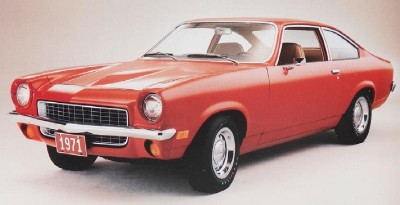 He mentioned some of the vehicles built over the years at Lordstown including the disastrous Chevy Vega. I told him I had owned a 19474 Vega. The gentleman’s smile quickly disappeared. He clenched his teeth and peered directly into my eyes and his voice took on the tone of someone shocked at hearing of a sudden death in your family as he said, “Ed. On behalf of all the men and women here at Lordstown Assembly, I offer you our deepest apologies.” Apology accepted! We then took a quick moment, started laughing and said in unison, “yeah, what a piece of shit.”
On an assignment to a newer plant down south operated by a foreign automaker I ran into the head of human resources who, at that moment, looked pretty dismayed. The occasion was the Job 1 ceremony for a new pickup truck. I won’t reveal the name of the automaker because my story might cause some heartburn, or at least embarrassment and that’s not my purpose. The plant was fairly new and was still ramping up its staff, including assembly line workers. So I asked the nice HR lady how it was going. She thought for a moment, shook her head and said, in her nice southern accent, “weelll, not so good. Damned idiots forget what they’re doing and keep leaning on the brand new trucks with their stupid belt buckles and scratch ‘em all up!” I asked why they weren’t placing protectors over their buckles as is the practice in every other plant. “Wellll,” she replied, “they say ya cain’t see the pretty buckles if you put ‘em on.” Cain’t argue with dat. And thus the industry’s belt tightening continues.
 edLINES