Tagged: journalism
Consulting Adults
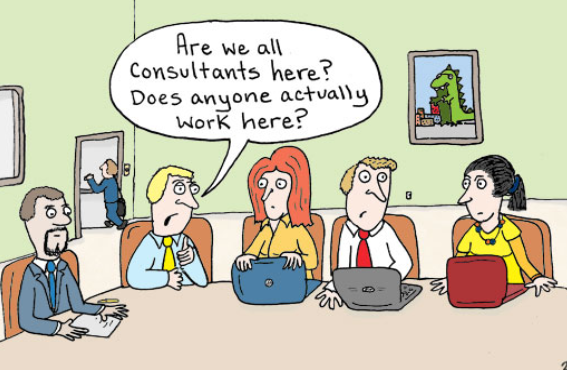
My first contact with a consultant came in 1979 at my first TV job. While attending grad school at the University of Arizona I landed a job as the weekend weather guy at the ABC affiliate in Tucson, KGUN.
I took to the job right away. After several years working as a morning drive time radio DJ, I was comfortable working without a script, ad libbing based on my map and information from the weather wire.
Our station was blessed with a great talent pool but crappy ratings, so they hired consultants based in Southfield, Michigan. The firm consisted of two former/failed news directors and an alleged “style” expert whose personal style was a cross between dust mop and tent maker.
I won’t waste a lot of words. They were crap. They had our main male anchor so self-conscious he actually wrote notes to himself onto the set: “Don’t over emote, don’t move your shoulders, don’t touch your pee-pee.” He added that last one in as a sign of rebellion.
They came after our elegant and talented main weathercaster imploring her to “act naturally.” When she protested that she WAS acting naturally, they told her to “act naturally another way.”
When it was my turn for consultant-certified scrutiny they seized on that fact that when only a little bit of rain was forecast, I would use the word “spritz.”
“Oh! That’s too eastern!” the consultants complained. I replied, “you mean too Jewish?” Busted. They looked at their shoes and moved onto my hair
Indeed, my viewers loved when I used that term and often joked with me when I was out in public, “hey Ed, is it gonna spritz today?” It was an everyday term back where I grew up in New York City, but a novelty in the desert southwest.
Turns out we dumped them because after two ratings periods under their “expert” guidance, our ratings actually fell even further.
What this whole prologue is leading to is I promised myself if I ever ended up as a consultant I could provide useful counsel based on my decades of experiences, while being sensitive to the company’s culture, goals and needs, not boilerplate nonsense.
So far, my two experiences consulting have mixed. In both cases I was told my experience would be valuable, helping staff improve their skills and opening the company’s eyes to new, or at least different angles for attacking certain issues.
After all, I built my reputation as a strong writing and producer covering thousands of stories as a reporter in radio, local TV, CNN, AP, Detroit News before jumping over to corporate PR.
During my 11 years at the various incarnations of Chrysler, I was known as a creative problem solver and innovator, pioneering the concept known as corporate journalism and introducing new methods and technologies, boosting the company’s exposure while saving it millions of dollars through efficiencies and bringing certain functions in-house.
Even before my last day on the job I was approached about lending my expertise to a news organization that was primarily print and online but contained a video element.
“You could teach us so much!” I was told.
Hmm. At first I was welcomed, but as time went on I detected several flaws in their TV production process and attempted to set them straight.
Oh! He’s gonna tell us we’ve been doing it wrong? Yeah. Change is hard. Doing it the same old way even if it’s wrong is easy. See ya, Ed!
The next one started more promising and lasted a few years until the company decided a consultant was really just a spare guy.
No…a consultant is not your spare writer, photographer, gofer, story pitcher. A consultant is there to advise and instruct your people already in those roles how to improve their performances or advise management on certain strategies.
What happens is people who are insecure, or perhaps in over their heads in their current roles, become very jealous and resentful of the outside consultant.
Honestly, consultants don’t want your job. We’re here just to help you do it better. If you can’t accept critique and instruction, perhaps you’re not mature or talented enough to remain in your position.
By no means are all consultants valuable or effective, as my experience back in Tucson attested.
If your company decides a consultant might be helpful, you need to really research the consultant’s track record of improvement, connect with current or former clients and then have that in-person conversation with the prospective advisor to see if it’s a good fit.
You also have to define the scope of work answering a few questions:
1-Why do you feel you need a consultant?
2-What skills and experiences does a consultant need to provide the counsel you seek?
3-How open is your corporate culture to accepting new ideas from outside the organization?
4-How will you prepare the staff for both scrutiny and direction from an outside source and why you feel it’s necessary?
Look, you don’t have to accept or adopt anything a consultant suggests, but by hiring one you’ve al least shown you’re open to examination, scrutiny and considering new ideas.
When it works, it’s a beautiful thing. When it doesn’t, admit it, don’t leave the consultant hanging. Be respectful, professional and courageous enough to end things decisively, informing the consultant why the engagement is ending.
Then you can both move on…without spritzing on each other’s parade.
Brief Encounters With Robert Duvall and Jesse Jackson
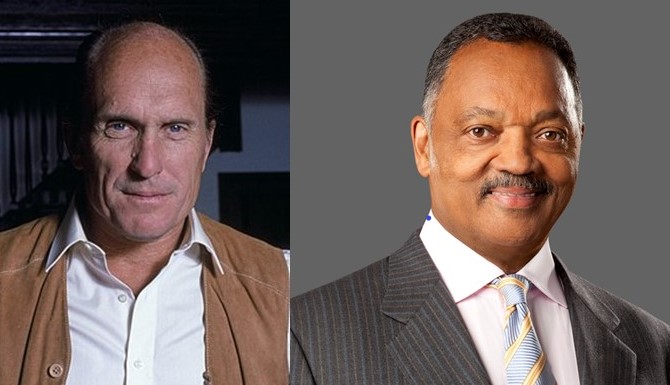
I won’t make either of these anecdotes bigger than they are. They’re just about little moments, brief encounters, with two notable gentlemen who left us this week.
I’ll start with one that involved no words between us. It was back in 1982 when I was a producer for what was then known as CNN2, later Headline News.
It was a slow Sunday and I was struggling to find enough stories to fill out my rundown for my back-to-back 30-minute newscasts.
The deadline to get the thing done and hand it over to the writers was looming and I was feeling the pressure.
We often had visitors come through the newsroom and I noticed one of them standing a little too close to me, trying to look over at my computer terminal to see what I was doing.
He was a short, balding man. Very quiet, but apparently curious as to what I was furiously working on.
Honestly, it was distracting to me and I didn’t need a stranger’s enquiring eyes boring in at that moment.
Finally, he moved on and as the supervising producer walked by I asked who was that little bald guy hovering in my space.
“Oh, just a guy taking a tour,” the supervisor said with a hint of sarcasm. “His name is Robert Duvall….he’s an actor.”
Yeah..just an actor. Robert, freakin’ Duvall..whose characters loved the smell of napalm in the morning and served the Godfather. Some little bald guy. Some incredible actor. Some clueless young producer who was so immersed in his own little task he missed the chance to have an actual word with one of the foremost actors of our time.
Except, for those brief moments, he seemed to be aware of me, and interested in what I was doing. I’ll take the win, and the memory.
The second little story involved the late Rev. Jesse Jackson. It was around 1987. By then I had been elevated to a correspondent at CNN out of its southeast bureau, based in Atlanta.
I had interviewed Jackson once before very briefly and I doubted he’d ever remember me. But he also hosted a program on CNN, so it was all in the family.
Long after that initial interview I was assigned to cover Jackson and a group he led presenting aid to drought-stricken farmers near Greenville, South Carolina.
As he and his contingent arrived, I started to approach him to grab a few words.
But before I could get too far, Rev. Jackson gave me a look and a subtle hand signal that telegraphed two messages: “not quite yet,” and “don’t worry, we’re CNN brothers,” but mostly, “back off.”
I quickly understood. Ever the media-savvy, and frankly, publicity-loving figure, Rev. Jackson and company staged an emotional photo op with the grateful farmers.
Once he was sure all the news crews got their shot, Jackson came over to me, smiled a little sheepishly and said, “thanks for getting the signal. Now, let’s talk.” And we did.
Yeah, sure, not giant stories, but little moments to recall related to a couple of disparate notables, and revel in how the privilege of being a journalist often presents the opportunity to encounter some very special people. May they both rest in peace.
Personal Thanks on Detroit Newspapers Independence Day
On the occasion of independence day for both the Detroit Free Press and Detroit News as their JOA expires, I thought it appropriate to relate how my three-year stint at the latter turned a longtime broadcast guy into the reporter I never really got to be standing in front of a camera.
My long broadcasting career came to a sudden halt in January, 2001 when I was laid off from CNN, along with about 1,000 others as a result of that awesome merger between parent company Time Warner and AOL.
My family liked living in Michigan, even though my wife and I were native New Yorkers and both our kids were born in Atlanta. I thought the local TV stations would be open to hiring an ex-network guy. Not so.
I wasn’t flashy enough. CNN reporters didn’t do a lot of consultant-certified “reporter involvement” shtick and an agent said there was “no interest.”
In fact, in an interview with one news director I was told “we don’t want journalists, we want street characters, like they have at the stations in New York City.”
OK. Broadcast career done, but I still needed to make a living.
Thankfully the Associated Press Detroit bureau chief, Charles Hill, saw my resume on the Journalism Jobs website and contacted me about the national auto writer position.
I had to take a writing test and go through two lunches and interviews before Charles decided to take a chance that a TV guy could handle a very demanding and competitive print beat.
There was a definite learning curve and our news editor Randi Berris and supervisor Mike Householder were patient and instructive in guiding me through the transition.
I missed TV but as I locked onto the longer-form of print I reveled in being able to use many more words—even big ones! I loved having the time to develop stories and not crashing a two-minute broadcast package to make a satellite feed.
A little over a year into my time at the AP, I got a call from then Detroit News autos editor David Phillips asking if I was interested in an opening at the paper as the General Motors beat writer.
I jumped at it, even though I’d never worked at a paper before. When I mentioned that fact during my interview, I was told, “don’t worry about how the paper works. Just write great stuff and we’ll do the rest.”
My first assignment was to write a 36-inch story on the 100th anniversary of Cadillac. I really didn’t have any concept about how long a story that really was and sweated that I’d never get it done that day.
Ha! First new lesson about working at a paper. My deadline was not 5 p.m. that day, a Monday, but 5 p.m. on freakin’ Thursday! In my past life at CNN and the AP I would have written at least five stories in that time, maybe more.
But it didn’t take long before I was faced with some new realities that I did not handle very well. In TV, especially at CNN with strict editorial standards, our scripts were reviewed and closely edited before reporters recorded their narration. Our copy editors were properly persnickety, but given the tight deadlines the process was fairly quick.
Once the story was edited and fed to Atlanta for air, that was it. You always knew how the story would look on the air because there could be no further changes.
Not so in newspaper-land. One day I came into the office and my message light was flashing. It was a pissed-off voice mail from a PR guy at GM. Something in the story angered him. It angered me too, because it wasn’t what I wrote. An editor decided to play around with the story after I left for the day and changed the tone and meaning of the original sentence.
It wasn’t factually wrong, requiring a correction, but it was misleading. When I protested to the editor I was told he was just “cleaning up the language.”
Hmm.
Other times, when I thought I had come up with brilliant word play or sentence construction, I’d find it revised by an editor who didn’t think it was either brilliant or appropriate.
I whined about this to one of my co-workers who became my valued mentor, the very experienced and brilliant Christine Tierney, who looked me in the eye, and in no uncertain terms set me straight.
“This is called editing,” she scolded me. “It’s part of the process and we’re all subject to it so knock it off.”
Got it.
I actually loved working at a newspaper and took so much pride in seeing my stories and byline on the front page at times and knowing they weren’t some ephemeral thing disappearing into the ozone.
I loved having the time to build relationships, break stories, having the opportunity to dig in and write stories with substance.
I also loved newspaper people—tough, quirky, brilliant, hilarious, and unlike my former TV colleagues, didn’t spend a lot of time in front of a mirror.
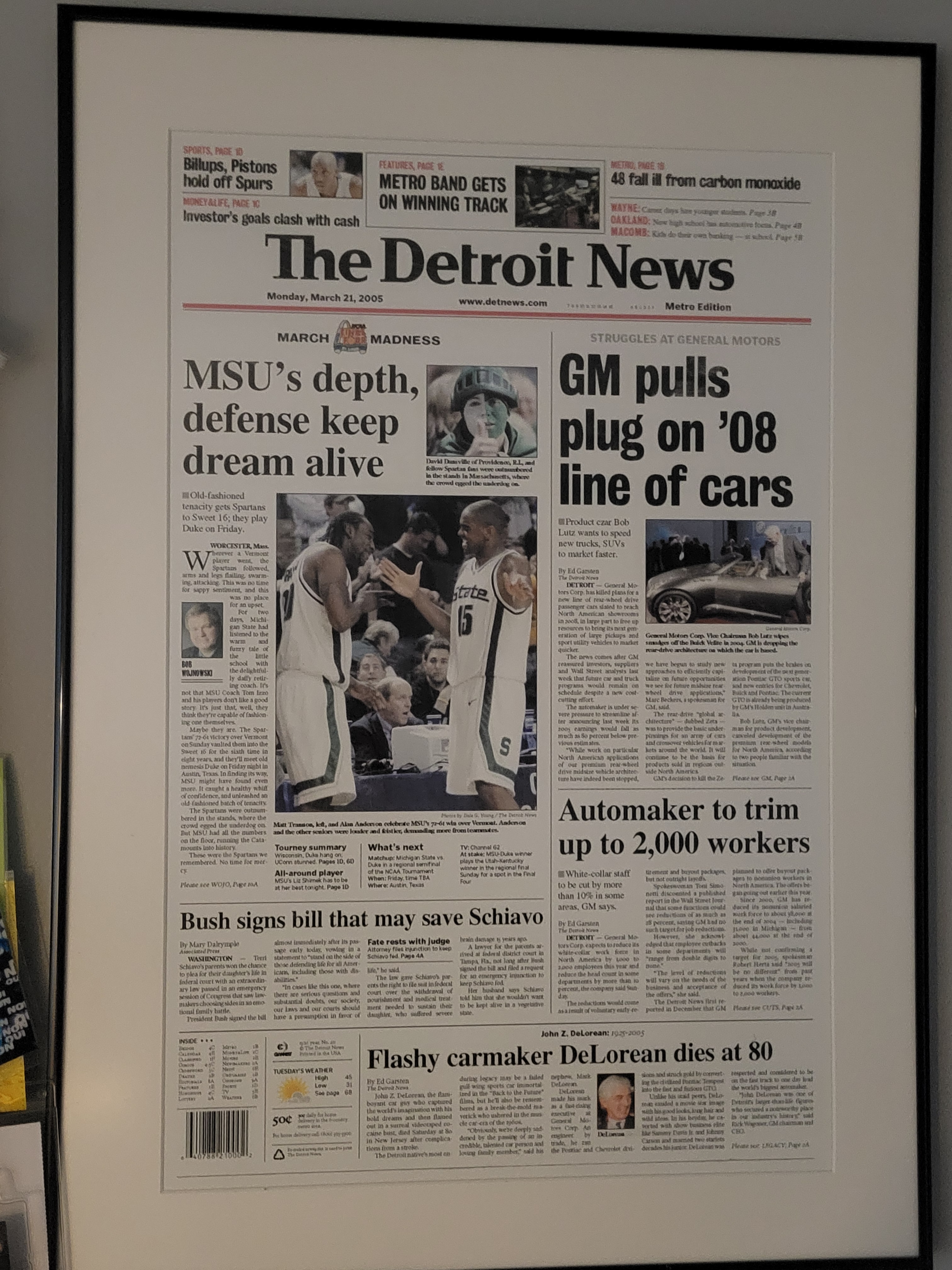
My highlight at the Detroit News was landing three page one bylined stories I in the same edition. The managing editor awarded me a framed copy of the page and told me it was only the third time that feat had been accomplished since the 1930’s.
What made it an even bigger feat, for me, anyway, was that one of those stories was written while I was prepping for a colonoscopy. Hey..breaking story.
I worked at the Detroit News for three years to the day, from August 23, 2002-August 23, 2005, when I left to accept the intriguing position to manage and write then, DaimlerChrysler’s first blog.
I stayed at the automaker through its changes for 11 years until I retired in 2016 as head of its digital communications team.
In my semi-retirement I’ve been writing mobility stories for Forbes.com.
But I credit my brief time at the AP, and longer time at the Detroit News for giving me the experience, confidence and education to successfully make the transition from broadcast to broadsheet to web.
I do miss the format of TV news at times, but those days are long passed. It’s mainly live shots and one-man band crews where the reporter is also the shooter and editor and my ego doesn’t require that sort of satisfaction.
I’m perfectly satisfied crafting stories with words and facts and sparing the public my aging puss.
But hell, I still carry a little powder in my go-bag. Ya never know when a lens is lurking.
I know print editions of newspapers are an endangered species, giving way to online delivery. Yes, it’ll be sad when I can’t spread my morning paper out while I’m slurping my Cheerios but what really matters is the reporting and public service.
We need newspapers in any format and I sincerely hope our two newly independent papers here in Detroit flourish and continue to bring us their great reporting for many years to come.
44 Years Since CNN Took A Chance on Me
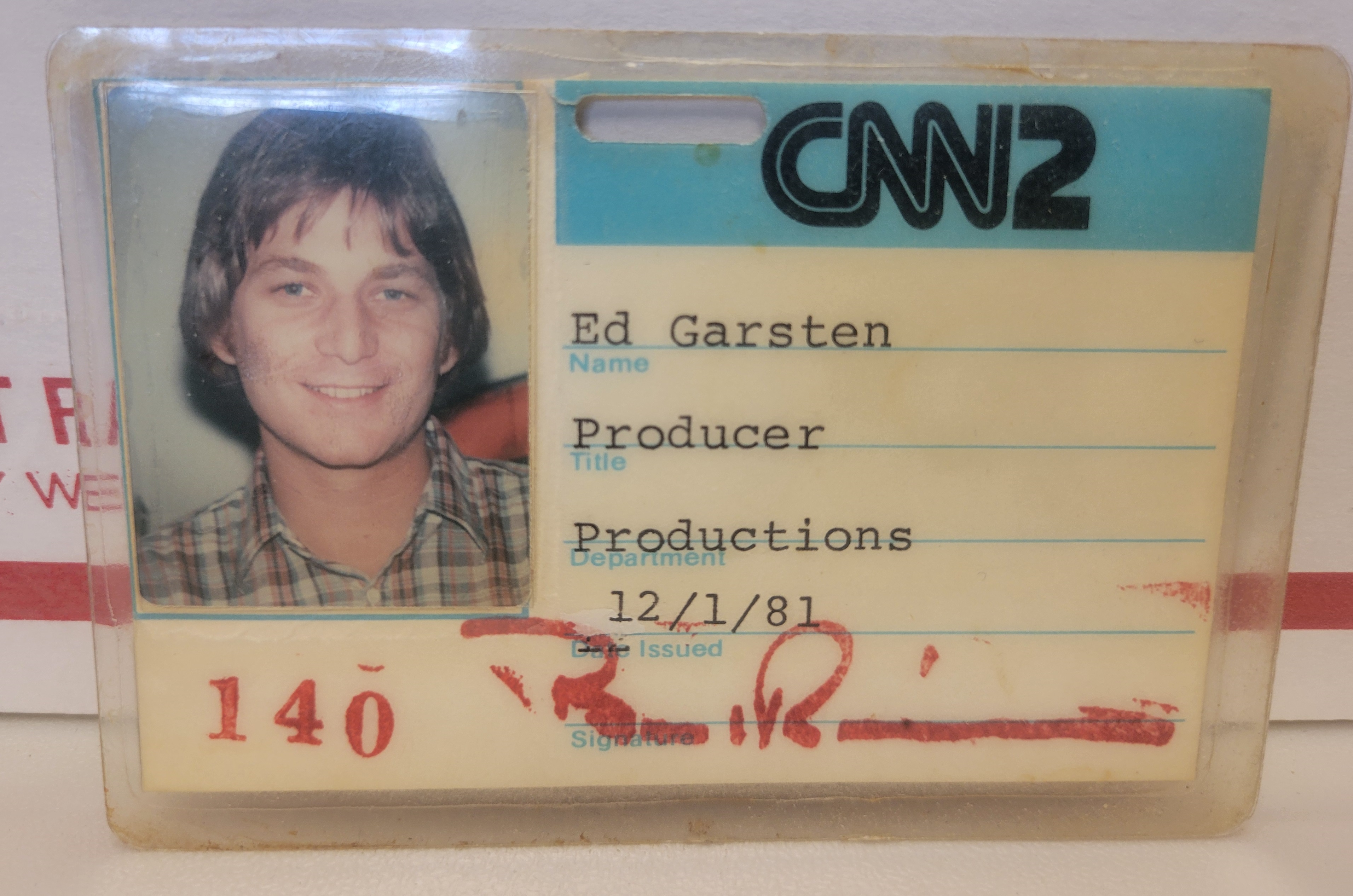
The ID badge is dated December 1, 1981 but November 30 was really my very first day at CNN, 44 long years ago.
It was a rainy day in Atlanta. I was alone in beautiful apartment with just a sleeping bag, air mattress, lawn chair, 19-inch TV and a cardboard box that served as table for eating, and some clothes. All my other stuff was in Tucson, Arizona, along with my wife, who flew back there to sell our little adobe block house. She was gone for three months, along with my stuff.
By the time our house was sold and my wife, and belongings and furniture arrived with her, that poor cardboard box was a greasy mess from its use as my dining room table/foot stool.
I was hired as one of the 10 original producers to launch the new network, CNN2, which eventually became Headline News.
If the bosses really knew how much experience I had producing television newscasts I’m sure they would have sent me on my way, but I fooled them with a kickass tape of my newscasts at KGUN, the ABC affiliate in Tucson.
You see, I joined the station doing weekend weather while I was a grad student at the University of Arizona, earning my Masters in Journalism. It was a way in. Within six months I was hired as a full-time reporter, which was my real goal.
That was going along fine when one day the news director called me in and said our longtime producer with 20 years experience had suddenly quit to take a job at a station in Phoenix and he’d love it if I took over.
Pretty funny. I’d never produced a TV newscast in my life.
“Oh, John will train you!”
He did. My first newscast after he left Ronald Reagan was shot. This was March, 1981.
CNN signed on June 1, 1980. I couldn’t watch it because our local cable system didn’t carry it, but I could catch little CNN news briefs on TBS, which was also part of the Turner Broadcast System.
One of the first anchors CNN hired was Lou Waters, who was the news director/anchor at our cross-town rival in Tucson, KOLD. He brought along his producer, Faye, who happened to be a great friend of our main weather caster Linda Rhodes, who formerly worked at KOLD.
That October, Linda tells me Faye tipped her off that CNN was starting a new network and needed producers. Was I interested? Uh, sure. Hell, I had a “solid” six months of experience. I was ready for the network!
I called the number Faye provided to Linda who gave it to me and next thing I know I’m on a flight to Atlanta on a Sunday. I was interviewed by every living body including the president of CNN at the time, Reese Schonfeld. We hit it off because I told him I worked at a radio station in Fulton, New York right out of college and damn, that’s where his wife was from!
I fly back to Tucson that evening with no expectations of landing the job, but the next morning, Burt Reinhardt, the top money man at the network, and successor to Schonfeld as CNN president calls me and offers me the job. Show up on November 30th.
I did, but it things got off to a clumsy start. Having worked in Arizona where no one gets dressed, I show up in a button down shirt, corduroy jeans and very comfortable shoes. Everyone else is in suits, ties, dresses and smirks, directed at me.
My boss, Ted Kavanau, a news legend from NYC, smiles, takes me aside and kindly mentioned, “as you can see we have a dress code.” Would have been nice to know in advance, but as I found out over the next 20 years, CNN was great at communicating news, just not important stuff to employees.
Ted told me to go over to the national assignment desk and ask one of the extremely busy people to explain how it worked.
I walk up to a bald guy with black-rimmed glasses and a beard and ask him the question. As he glares at my apparent insolence he barks, “you wanna know now the national desk works? Watch this!”
He then picks up the hotline to the DC bureau, starts screaming and swearing , then slams down the phone and quietly, but firmly, answers my original question with, “that’s how the fucking national desk works.”
When Ted asks me how it went I told him how my question was received. He kinda chuckled and said, “yeah, sounds about right.”
Welcome to network news.
I stayed at CNN2/Headline News for a little less than two years, producing hundreds of news casts in the most pressure-filled atmosphere you can imagine. Some producers actually broke down in tears under the pressure, others simply didn’t show up for work ever again.
In 1983 I was promoted to the main network to produce afternoon news casts, then promoted again to share producing the three hour morning show called Daybreak.
All this time, I would pick up a story here and there in hopes of moving back to reporting and by 1986 I was made a full time correspondent out of the Southeast Bureau based in Atlanta.
Here and there I would substitute anchor some newscasts and in 1989 the Detroit Bureau Chief/correspondent job opened. I tossed my tape into the ring and got the job. Been here in the Motor City ever since.
CNN dumped me and about 1,000 others during that “great” merger between parent company Time Warner and AOL in 2001, and closed the bureau.
We could have looked for work anywhere else in the country, but guess what, my family and I loved living in Michigan and I loved covering the auto industry.
Local TV wanted no part of me so I pursued print, because, let’s face it, I was never a TV star, but I could write. Best move I ever made.
It was funny, when I called someone at Ford for an interview while I freelanced for a short time at Automotive News.
“What? You write?” the guy at Ford asked. “TV guys can write?”
“Uh, yeah, I wrote every word that came out of my blow-dried head,” I replied.
“Heh,” he answered. “I thought producers wrote all that stuff for you guys.”
I had some great jobs in the print world. National Auto Writer at the AP, GM beat writer at The Detroit News, and in my semi-retirement, senior automotive contributor at Forbes.com.
But to come full circle, say what you want about what CNN has become, it opened a lot of doors for me when my time there ended there 25 years ago and still does.
The lesson I’d like to leave you all is don’t be afraid to step out of your comfort zone. Before I did the weather, I never did the weather, but I figured it out and succeeded. It led to dipping my feet into TV reporting. I sucked at first, but I received tough, but great direction from our photographers and news director.
I never produced a TV newscast but had a great teacher and got good enough to convince a network to hire me after only six months experience, and promoting me.
I never anchored a newscast when an executive at CNN saw something in me and gave me a chance. I solo anchored an hour network newscast with zero prior experience and it worked out, until the network president thought I looked a little too young. Tried to grow a beard, was too blonde..the lights washed it out.
When fate dealt me a blow I pivoted to print knowing I was a decent writer. Adjustments had to be made to transition from broadcast to print writing, but I was again lucky to have wonderful supervisors and editors to set me straight.
When I jumped to corporate PR at Chrysler, all the skills and news sense I had developed over the decades helped me succeed.
So if you’ve been laid off or otherwise “downsized,” just know you have skills that entirely transferrable and be willing to use them in different ways.
Take a chance, look beyond the obvious and usual. Not only will it help land a new gig, but it will open your life to new experiences and people and perspectives.
Most importantly, bet on yourself. The new stuff might seem challenging, scary, maybe even impossible, at first, but you know the chips in your stack.
Always, always, bet on yourself.
Requiem For An Idea

This is an obituary for an idea that sprang from momentary consternation, lasted 17 years, won awards and respect and recently died a quiet, undignified death.
It was September, 2007, a month after corporate slum lord Cerberus took over Chrysler from merger of unequals Daimler. My job was head of the company’s digital communications team, which included its media website, social media, broadcast media relations and video production.
Since all news releases issued by the company came through my team to be posted on the special website for media, I knew everything we were putting out there in hopes of winning coverage.
The truth is, earned media, as it’s known today, is a crapshoot. You post and pray, and most times whomever you’re praying to treats you like an atheist.
So one day I was looking over some recent releases that were posted to the media site and realized there were several that earned little to no media at all. As a journalist-turned PR guy, I knew these items would languish for lack of major news, but as a company employee I also knew the item was important to someone, probably an executive, who was banking on seeing some daylight for his or her little bit of news.
If you’re familiar with the process of creating a news release and related assets, you know a lot of work goes into it—writing, editing, approvals, re-editing, re-approvals…..miles of red tape.
This bothered me.
So in the course of literally a moment, I thought, what if we created a weekly video recap of Chrysler news that included some of those ignored items? It would give those stories another chance to reach an audience instead of just languishing and going nowhere.
Chrysler’s main logo at the time was the Pentastar, and there was a big pentastar-shaped window on the top floor of our Auburn Hills, Michigan headquarters.
So I titled the recap “Under the Pentastar.”
My bosses instantly approved going forward, but with zero budget.
No problem. I posed the idea to my team but told them we’d all just have to pitch in on a volunteer basis to produce the feature every week. OK, they said!
A signup sheet was posted and it didn’t take long for it to be filled with volunteers, including myself.
We posted what we called “UTP” on the media website, YouTube and our social media channels.
It took awhile but it slowly gained an audience. Those of us who narrated UTP became known and even had followers.
One member of my team, the wonderful Betty Carrier Newman, was a former anchor at WDIV in Detroit. Has a great voice. In fact, our boss nicknamed her “The Voice” long before the cheesy singing show.
Betty had her fans who looked forward to listening to her golden pipes.
As a former radio announcer and network news correspondent, I’d record some of the narrations as well.
One year, at the Los Angeles Auto Show I introduced myself to a worker setting up our stand. Now remember, I was on the air at CNN for almost 20 years. But when I told him my name, he said, “Ed Garsten…From Under the Pentastar! I listen every week..love it!”
That’s when it hit me we’d really done something worthwhile.
UTP won an award from the International Association of Business Communicators (IABC) and maybe another. Can’t remember. It was more important that we’d won an appreciative audience.
When Fiat took over the company in 2009 and later changed the name to Fiat Chrysler Automobiles, (FCA) the Pentastar logo was discontinued. “Under the Pentastar” became “FCA Replay.”
Our new Italian bosses absolutely loved it and referred to it often in reverent terms.
All this time, the weekly video news recap was produced by team members who continued to sign up to write, produce, narrate it above and beyond their actual duties.
It was never slick the way an actual agency or production house might handle it, but we did our best with limited resources and it always looked at least professional.
After I retired from FCA in 2016 and the company was later taken over by the French, a new company was created called Stellantis. The team members I left behind changed the feature’s name again, accordingly, to “Stellantis Spotlight.”
All this time, our two video editors/producers, Paul Cirenese and Peter Spezia kept it going. Never missing a week. I don’t know if I ever properly expressed how much their devotion meant to me. They’re two of the most solid souls I’ve ever been privileged to work with, along with Betty Newman and our incomparable media site manager Courtney Protz-Sanders.
In recent years I would only occasionally view Stellantis Spotlight as my life in retirement took on its own life. But I would check in periodically.
It had been a couple of months since I did when this week I noted there were no episodes after September 27th. The episode is below.
As a freelance auto reporter for Forbes.com I was well aware of the cutbacks and job losses at Stellantis and suspected “Stellantis Spotlight” fell to the budget ax, which is troubling, since it operated with no budget.
A few days ago I spoke to one of my former teammates about it.
Knowing it was something I still held dear she gravely informed me my suspicions were correct.
After more than 800 episodes over 17 years, under three different titles, our award-winning little weekly video recap created in a moment’s thought and kept alive by the power of devotion, just ended without ceremony.
Look, as trite as it sounds, nothing lasts forever, especially in the corporate world. But for the rest of my life, I will always be thankful for my dedicated team for embracing, then giving life to an idea borne in a moment’s thought, simply to give overlooked stories a second chance of being noticed.
Podcast: Tales From the Beat-Weekly Look At News and PR From Both Sides
One of the features I write for Franco PR as their Integrated Media Consultant is a look at news and PR issues from both sides of the scrimmage line given my long experience in both journalism and corporate communications. Recently, I decided to add a podcast version that I’d love to share with you all.
You can now listen to Tales From the Beat on Spotify, IHeartRadio, Amazon Music and Apple Music.
Here’s the first one related to the recently revived Detroit Auto Show. Love to get your feedback. Thanks!
Retired For Six Years, It’s Time To Share The Beauty Of A Life Of Taking Chances Outside My Comfort Zone
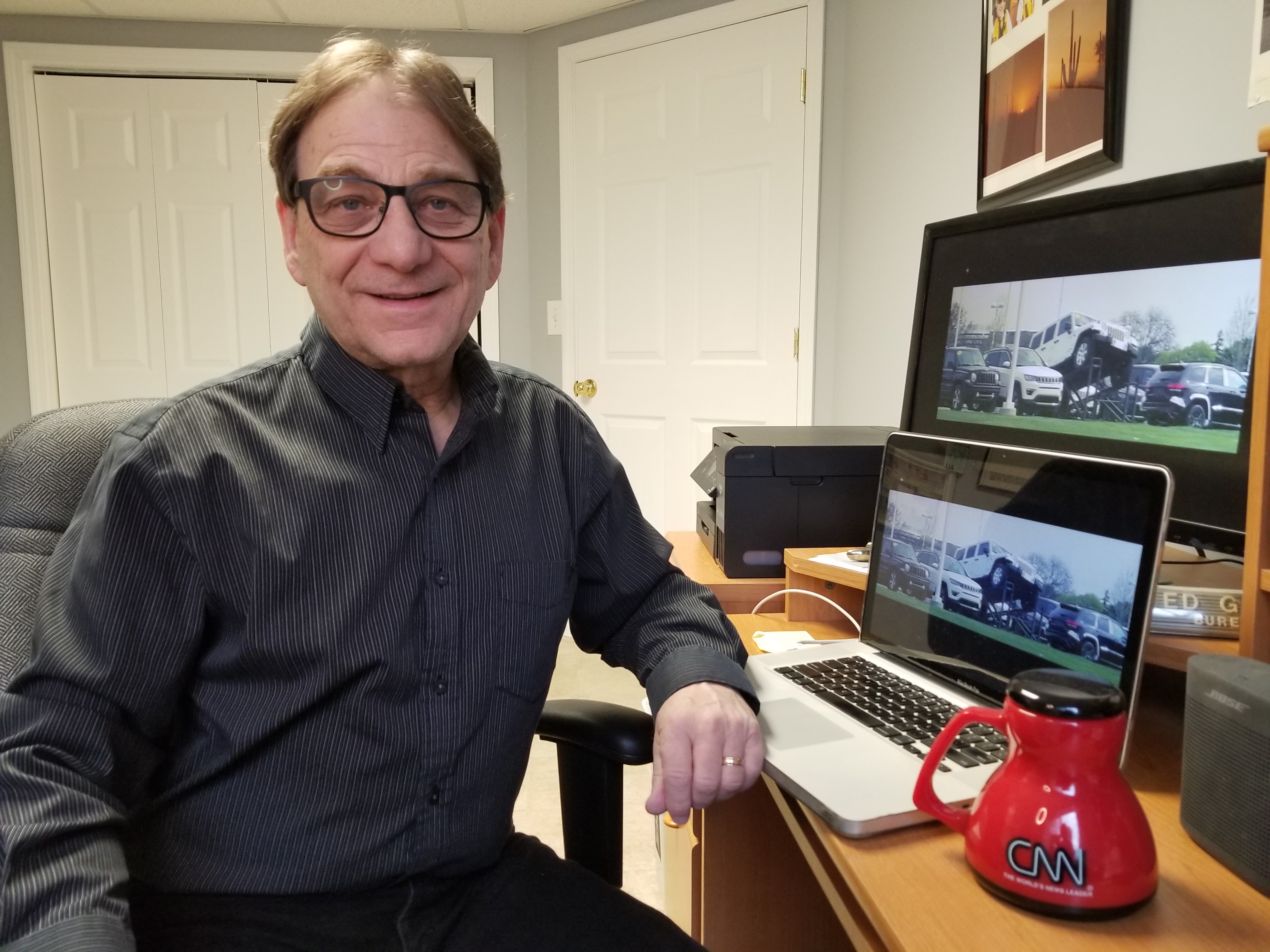
Six years ago I swiped my Fiat Chrysler Automobiles badge for the last time, walked through the turnstile and extricated my Jeep Wrangler from the lowest level of the employee parking deck, drove home, poured myself a Jack Daniels on the rocks and told my wife I was now her slave for my remaining days.
I don’t think she was all that amused since I owned no particular skills that would benefit her aside from pushing a vacuum or unjustifiably killing spiders. But then again, I thought I could figure out whatever it is she wanted me to do in the future since I made a very nice living jumping into positions outside my comfort zone. I highly recommend it!
Here’s my long-ish story of a life totally enhanced simply by being willing to step outside my safe place—my comfort zone.
We can start with my very first shot at broadcasting. My brother and I used to make up fake radio shows using a music stand as a faux microphone and reading, singing (badly) popular songs using lyric sheets you could buy at the neighborhood candy store or newsstand. It was fun but I never thought of making it a career. Yet.
That changed when I entered college as a speech and theater major because I thought I could be an actor. Before I could audition for even one production, a month after arriving as a freshman, an upper classman decided I was funny and dragged me down to the campus radio station. He told the guy on the air at the time, “put my friend on the radio.”
He did. Gave me my own show. I was awful. I got better though and made the life-changing decision to pursue a broadcast career. That was pivot number one.
I worked in local radio in Central New York for a few years but that was a dead end. Pivot number two coming up. My wife and I decided we wanted to earn our Masters degrees, she in library science, me, in journalism because I loved news and to write and was better at it than making bad jokes as the goofy morning guy on the radio.
We planned well, quit our jobs, sold a lot of our stuff, put the rest on a moving van and hauled out to Tucson, Arizona to attend the University of Arizona and start new lives.
Single best move ever. She went to school full time, I went part-time and landed a radio job after a couple of days. It wasn’t because of my “talent.” The program director was intrigued that I typed my resume’ in blue instead of black.
“Who types in blue?” he asked. “I figured you had to be fun and different.” Whatever you say. I did morning drive until the program director quit and his replacement wanted my slot. I stayed for two more weeks.
Pivot number three. While I was working at the radio station I saw a notice on the wall in the UA journalism building the local ABC affiliate was looking for a weekend weather guy. Ha. Never did the weather, knew nothing about the weather, wanted the job.
I called the number, the news director granted me an audition and I took a couple of weather books from the library, cramming like it was finals to get just enough weather stuff in my head so I could fake it.
Worked out. Got the job. Now I was a weather guy…but I really wanted to be a reporter, so the assignment editor tossed some stories my way. One night the news director called me up and told me to meet him at a neighborhood bar in an hour. Over a couple of Olympias he told me one reporter quit and another got fired, so if I wanted a reporter job it was mine. I accepted without taking another sip.
It just gets better. About 18 months later our newscast producer with 20 years experience suddenly jumped to a station in Phoenix. News director calls me in. I’ll give you a six grand raise to ditch reporting and start producing.
I don’t know why he chose me but when you’re in the 82nd market six grand is a treasure so I took it. First night producing, President Reagan gets shot. The show didn’t crash. I didn’t get fired.
Six months later I get a tip CNN was starting a new network, what eventually became Headline News. Called the number I was given, flown out to Atlanta and got the job. They didn’t know I had only been producing newscasts for a few months but the boss liked my resume’ reel so I guess I fooled ’em.
Suddenly this green kid just in from Tucson is tossed into a 24-hour network newsroom tasked with producing big time broadcasts under massive time pressures and constantly changing conditions. Out of my comfort zone into an inferno. Didn’t get burned. Was promoted to the main network.
I still aspired to be a full-time reporter. Again, a sympathetic assignment editor came through, giving me stories during weekends. Bosses were happy. Gave me a full-time correspondent job out of the Southeast bureau based in Atlanta.
Ready for more? One day I see the anchor schedule on the bulletin board. I always looked there because I still produced occasionally and wanted to know who was anchoring my shows. Ha! I see my own name up there for the late night, west coast show. Well..I’d never anchored a full newscast in my life and now I was going to solo anchor a network show that included a live interview and audience call-ins.
So…okay! This comfort zone thing just seemed to have no boundaries. I guess I did well enough that they kept scheduling me to anchor. Until things changed again.
Not only did I prefer reporting but I aspired to be a bureau chief. I got wind the Detroit Bureau chief was being transferred overseas to Rome. I applied. Got it. Great job because you were both the BC and the correspondent and the team there was terrific.
All well and fine for the next 12 years until the disastrous merger between CNN and AOL. They ended up closing some small bureaus, including Detroit, laying off about 1,000 people. I was one of them.
Shit. Local stations wouldn’t hire me because I’m not really Mr. TV in terms of looks or flamboyance. Once local news director told me “not looking for journalists. We want street characters like you see in New York.”
Major comfort zone move. At the least I knew I was a good reporter and could write. Eternal thanks to Ed Lapham at Automotive News who made me a deal. He’d give me some stories to write on a freelance basis. If I passed the test, when a job opened I’d have a strong shot at it. Deal. Wrote a few, they like the stories, but there weren’t any available jobs.
Fair enough. The Associated Press chief of Detroit Bureau Charles Hill saw my resume on JournalismJobs.com. He needed a national auto write. We had a couple of lunches where he tried to figure out my real story and decide if an old TV guy could write for the wire. I didn’t enough know if I could write for the wire but boy, what an honor it would be to write for the AP knowing its reputation and exposure my stuff would get. I took a writing test and that, plus my performance at the lunches convinced him TV boy could do it.
Compared to a TV reporter package a wire story seems VERY LONG. So many words! I was allowed to use bigger ones too! But bless my editor Randy Berris who was extremely patient and instructive and turned me into a wire reporter.
Must have been OK. About 14 months after I started at the AP the auto editor at The Detroit News approached me about taking over the General Motors beat. I never worked at a newspaper but I was intrigued with the opportunity. During my interview lunch I mentioned that to the assistant managing editor. He said, “you write great stories. I’ll worry about how it actually gets into the paper.”
Suddenly I was a newspaper guy. I loved it—the opportunity to take a few days to work on and craft stories and build relationships. But three years later my comfort zone was challenged again.
I was approached about managing a new blog Jason Vines, the head of communications at then DaimlerChrysler was starting. This was 2005. Blogging was still fairly news and the term “social media” wasn’t yet in common use. Blackberrys were considered state of the art. Smartphones weren’t yet born.
Sure, why not? It was a big decision to jump from news to PR but this seemed like a chance to get in on an emerging communications mode and I had thought for a long time about working at one of the automakers I had covered for so many years.
I not only got to launch and manage Jason’s blog which was unlike any other. It wasn’t open to just anyone. He wanted to admit only “working media” so he could use the blog to comment on published stories and plant ideas for new stories. It was pretty controversial.
Of course I had zero experience blogging but again, out of the comfort zone and into the fire of cutting edge corporate communications. A year later things went so well, a new team was created around me because they never had anyone on staff before who had worked in virtually every corner of the media world. The new team was DaimlerChrysler Electronic Media. We later updated the name to Digital Media.
Our new team would handle broadcast media relations, the media website and social media. We soon added video production and pioneered the concept of “corporate journalism” creating owned media telling the company’s stories in a journalistic style.
I loved my team not only because they were good humans and talented and creative people but they were always game to try something new.
It’s with them I spent my final 11 years in the full-time workforce before retiring at the end of July, 2016.
Yes, this was a long story but one I hope convinces you to have the confidence in yourself and your skills to have the courage to jump out of your comfort zone in the event your current job suddenly ends or an unexpected opportunity presents itself that had never before been under consideration for you.
It can be scary to find yourself in a new work environment, expected to complete tasks with which you have scant, or no, experience, alongside co-workers with habits and sensitivities very different from those of your former colleagues.
But it’s also the most wonderful feeling in the world to discover your core skills and experiences are absolutely transferable opening doors to opportunities that will enrich your life and frankly, your finances.
Oh sure, I officially “retired” six years ago, but I can’t conceive of not continuing to create and learn, which is why I’ve taken on part-time freelance positions writing autos and mobility stories for Forbes.com and as an integrated media consultant for Franco.
I guess you could say working out of my comfort zone is completely within my comfort zone because the one thing I’m most comfortable with is growing. Try it. Yup..it’s a bit of a tightrope but you don’t need a net, because the only thing to fear is by not taking a risk you may miss the best opportunity you didn’t know you would love.
News Conferences…Hate ‘Em…Need ‘Em
I’ve had a couple of weeks to think about this whole concept of news conferences after tennis star Naomi Osaka walked away from the French Open rather than face reporters at mandatory sessions. She revealed that for her news conferences are stressful, counter productive and amount to a legitimate mental health issue for her.

As someone who’s covered a bajillion news conferences over the past 47 years, I hate them too. Oh sure, they’re a necessary evil because it’s not practical to give reporters individual interviews in most cases, but sometimes they can amount to public showcases for individuals astute at the fine art of bullshitting, self-aggrandizement, lack of preparedness or pugnacious discourtesy…and that’s just on the part of those staging the event, let alone some journalists.

Perhaps the worst so-called news conference I ever attended lasted less than 30 seconds. We were called to Cleveland to hear from boxer Mike Tyson after he was released from serving time on a rape rap. He was to discuss his return to the ring. After cooling our heels for quite awhile in the bowels of what was known at the time as Gund Arena Tyson finally came on stage, in a half-whisper said he was glad to fight again and walked off. No questions, no nothing. Well…almost nothing. Wasn’t worth the plane ticket or the price of the crappy hot dog I ate while waiting for the former heavyweight chump.
So yes. That’s a clear case of a useless news conference because the very word “conference” infers a dialogue. This was barely a monologue.
Then there are the news conferences where some reporters appear to want to “share” knowledge rather than gather it. If you’re in the biz you know these people. They take an eternity to let the speaker know how much they already think they know about the subject before finally spilling a question.
On the auto beat there’s one longtime reporter whom I won’t name who has gained a decades-long reputation for such endless preambles. Indeed, at an event in conjunction with the New York Auto Show in the early 2000’s two executives of a major automaker played the roles of police officer and perpetrator to show off a new police cruiser.
They staged a fake chase in front of the press corps then suddenly stopped. Fake cop tells fake perp to put up his hands. Fake perp says, “no problem. I’ll do anything you want. It would be better than enduring a question from (reporter). The guy was in the crowd and enjoyed the notoriety. The rest of us got a good laugh. Comedy based in truth always hits home best.
One time I was actually the main speaker at a news conference and gained instant empathy for those who regularly stand at the business end of reporters’ questions. It happened in the 1990’s when I was one of three pool reporters for the in-prison arraignment of James Nichols, brother of Oklahoma City bombing perpetrator Terry Nichols.

I was joined by reporters from the Associated Press and a local newspaper. When it came time to decide who would brief the rest of the press I was drafted because as the the print guys said, “you’re CNN, TV. You don’t mind facing the cameras.” No, I don’t mind cameras. It’s people who give me the creeps. I gamely gave the top line facts of the proceeding then in a case of “back at ya,” I tossed it over the print guys for “more of the details.” This was not planned by anyone…but me. I was always a decent ad libber on camera.
Truthfully, I ended up feeling exhilarated after fielding some questions and not saying something stupid or wrong. It was a kick being quoted by CBS and others but I’d rather be the inquisitor.
Honestly, I hate to ask my best question during news conferences, especially if it was based on some information I had in hand that would give my place a competitive edge on a previously unexplored angle. Why give it to everyone else? In that case I would try to find a way to ask the question privately, but you can’t always count on that and you need an answer so sometimes you have no choice.
Look, I feel for Ms. Osaka if facing the media is stressful and unpleasant. A person’s mental health is a serious matter and should not be downplayed.

Unfortunately, professional sports is actually a form of show business where athletes’ stages are the field, pitch, court or ice. Tickets are sold and fan loyalties are stoked in part by news stories. That all can generate the millions athletes can reap from prize money, bonuses and endorsements. In other words, there’s tremendous demand for what an athlete has to say, even if it’s not especially enlightening.
For journalists, direct quotes offer depth, context and perspective to a story which adds to a richer experience for their readers or audience.
Perhaps some of the anxiety for those thrust into situations that demand presence at news conferences could be allayed by counseling or league-sponsored media training that includes realistic mock sessions using actual journalists. When I conduct media training sessions the strategy is to always put the trainees through an even tougher experience than they might actually face. Kinda like swinging a heavy bat in the on-deck circle so your real bat feels lighter when you’re facing a fast ball.
That, or know what you would be getting into before you decide to become a professional athlete or other high-profile profession, and choose another path to avoid the news conference blood sport.
Frank Conversations Between My PR and Journo Selves
My 47-year career has taken me to both sides of the street as both a flak and a hack. So I’ve seen things from each side of the scrimmage line. Right now, in my semi-retirement, I’m actually doing both simultaneously as a freelance journalist, mainly as a Senior Contributor at Forbes.com, and consultant for Detroit PR and marketing firm Franco.
The cool part of playing both roles is it sensitizes you the challenges, frustrations, wins and losses you encounter in each position. So I decided it might be fun, and useful, to have a couple of internal conversations with both sides of me. It’s OK to eavesdrop. That’s why I’ve posted them here. You can even contribute to the conversation in the comments. Here we go.
Key: JE=Journalist Ed
PRE=PR Ed
PRE: I’ve got a client that wants me to get national coverage on the fact they opened a new office in East Dumpy. Would you bite?
JE: Don’t know. What business are they in?
PRE: They sell printer paper in packs of 400 instead of 500-sheet reams. The CEO insists this will help solve what he believes is a massive office supply storage space crisis at firms around the country. He says 100 fewer sheets saves 7/8-inch for each pack.
JE: Sorry, I’ll pass. I think it’s a made up crisis.
PRE: Wait! What would it take for you to do this story? I’m under a ton of pressure. New client and the agency is busting my ass to make them happy.
JE: First of all, office issues, paper or otherwise, are not what I write about. You have to think of that before pitching a reporter. Second, even if I was your guy, you can’t just say something’s a crisis. You have to be prepared to back it up with some research–proof. A CEO just trying to get some publicity with an unproven scheme isn’t a news story. Finally, I feel for ya, but my masters are my editors and audience.
PRE: (trying to pull out a win) But you’re a business writer. Aren’t office storage issues a business story? What if I came back with some stats that back up the client’s claims. Would you reconsider?
JE: Possibly. I’d have to look at the info then decide if it’s BS or not. I’m swamped right now. On deadline, so I gotta run, but get me that stuff ASAP and I’ll let ya know.
PRE: OK, cool. I’ll have it for you by the end of the day.
(later)
(PRE is sweating. He knows there really isn’t much, or any, research on the subject, but smells pulling this one out of his butt…sends email to JE)
PRE: OK, did you get that stuff I sent you? Pretty convincing, I’d say.
JE: What’s the Institute of Office Ergonomics and when did they do this study? I never heard of them and Googling it comes up with nothing. Plus, I’m calling BS on the conclusion that over 3-million square feet of storage space could be saved each year in the U.S. by using smaller packs of paper. Did your client pay for this study?
PRE: OH, they’re a, um, boutique outfit. Don’t even have a website, and, well, the client did subscribe to the study but the IOE is totally impartial.
JE: Nice try. Not buying it. Very sorry
PRE: Well, you’ll be sorry when your competitor runs it.
JE: I’ll take that chance.
———–
PRE: Hi. Thanks a lot for doing that story with my client, but he’s kinda pissed.
JE: What’s the problem?
PRE: He says you took his position on “solar powered pencil technology” out of context and actually misquoted him.
JE: Really? What part of “I believe solar powered pencil technology will render ink an archaic form of inscription” was wrong? I recorded the entire interview, as agreed to, and that’s exactly what he said.
PRE: Check your recording. He claims he actually said, “I believe solar powered pencil technology will render ink a second tier form of inscription.” Plus, the way your framed it was inaccurate. Going into the quote you wrote, “Solar Pencil CEO Al Bum makes an unproved claim regarding his product’s rising role in imaging, declaring…….”
JE: So what’s the issue? He can’t prove his declaration and there isn’t one industry expert who will back it up. I know. I tried finding one.
PRE: I get it, but couldn’t you have gone into that quote a little softer? I’m taking a lot of heat for this.
JE: I understand your situation but I’m writing news stories, not ads.
PRE: Yeah, sure, of course I know that but at least resist the use of judgmental adjectives and just state the facts.
JE: It’s not judgmental to state the fact that there’s no documentation whatsoever your client’s claims are viable.
PRE: Why did you even accept the story if you weren’t convinced it had merit?
JE: Fair enough. Why did you agree to sell a story you knew wasn’t true?
PRE: I didn’t know and I long ago vowed I would never knowingly lie to a reporter
JE: You’re in a tough spot when your clients lie to you. So how will you explain things to him?
PRE: Yes, I’m in a very tough spot. I’ll just blame everything on you 🙂
JE: Heh…OK…Good talk!
EVENT NOTE: I’ll be on a PRSA panel Feb. 19th in Royal Oak, Mich. with several other journalists who have gone to the “dark side.” Details at this link. Should be pretty lively…and..there’s breakfast! Hope you can come if you’re in the area.
Food For Thought On Deciphering Clues to Auto Contract Talks
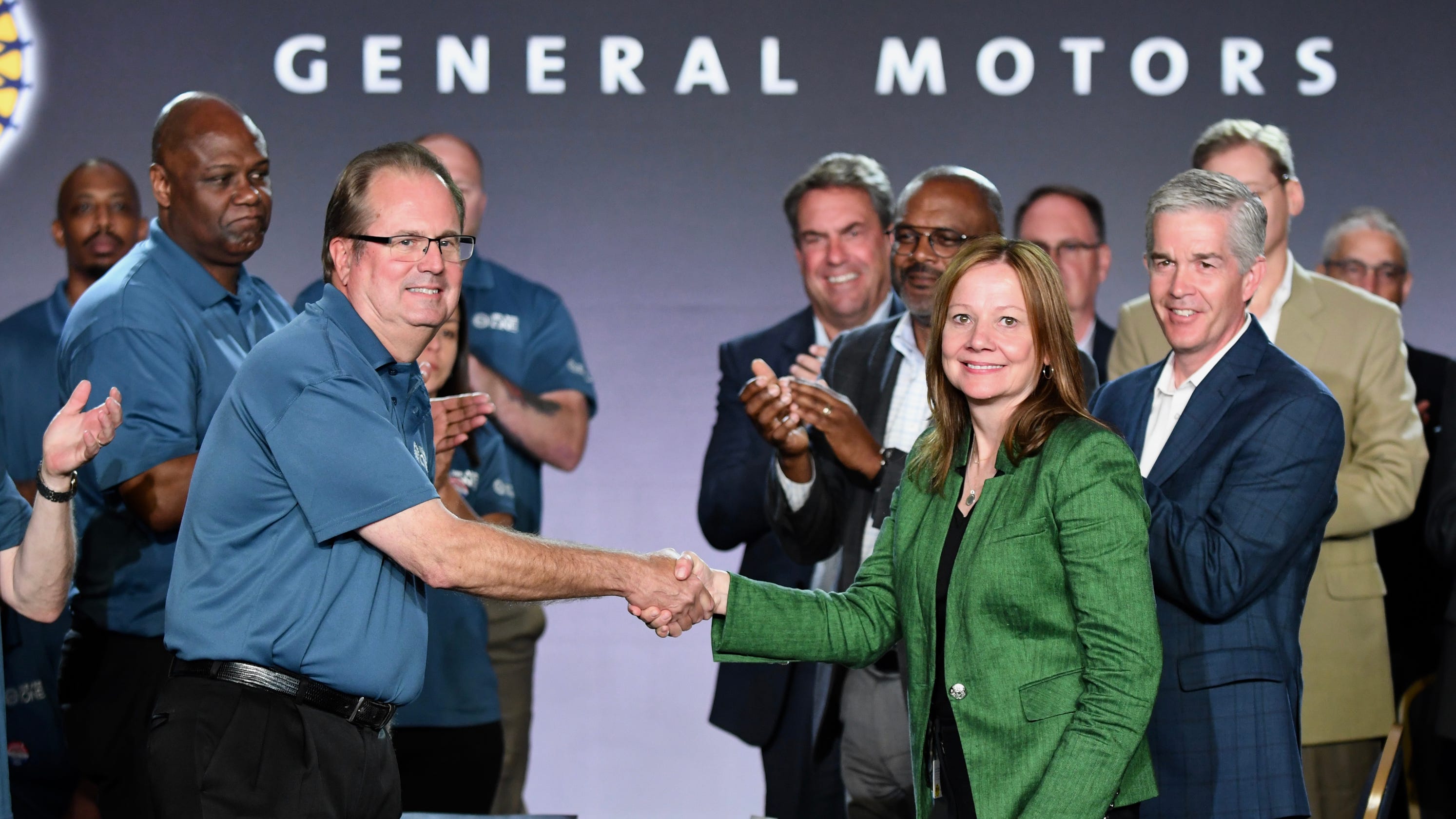 I’ll be blunt. When it comes to reporting the progress, or lack thereof, in contract negotiations between the UAW and General Motors, present day journalists are going down the wrong rabbit hole.
I’m retired now, but I have covered my fair share of contract talks between Detroit’s automakers and the UAW and worked for one of them between 1989 and when I retired from Fiat Chrysler Automobiles in 2016. That means I’ve seen the meat grinder from both sides of the gristle.
The bottom line is too many reporters are wasting their time calling their sources asking for some indications as to how the talks are going. Oh sure, some may have a pipeline to the bargaining table and others who have been through the process previously, may think they know what’s happening. I’ve found those clandestine quotes make for good stories under even better headlines and broadcast news teasers, but are often off the mark.
Now I’ll share what many longtime auto scribes already know–the truth is in the food. I realize times have changed dramatically since the days of reporters basically living at auto company headquarters waiting for the white smoke of a contract settlement. I even spent my 20th wedding anniversary at Ford’s Glass House fast asleep on a couch hoping for a timely agreement so I could get home in time to celebrate our big occasion.
 Back in the day, the automakers fed us ‘round the clock. Catered meals, unending supplies of Dove Bars, midnight snacks. For the first few hours it seemed like the most fun you could have without beer.
Yes, we’d constantly be calling our sources hoping for at least one new lead. I was working at CNN most of the I covered the auto beat, so I was desperate for something new to say on my almost hourly live shots. The producers got pissed if all you had was “GM stuffed our faces with a delicate linguini.”
But the menu was more prescient than less experienced reporters realized. When the fare was suddenly upgraded to include steak, or lobster, or steak and lobster, it was like the big finale at a fireworks show. We’d get on the horn to our editors, breathlessly reporting, “Shit! It won’t be long now. Put me on the air!”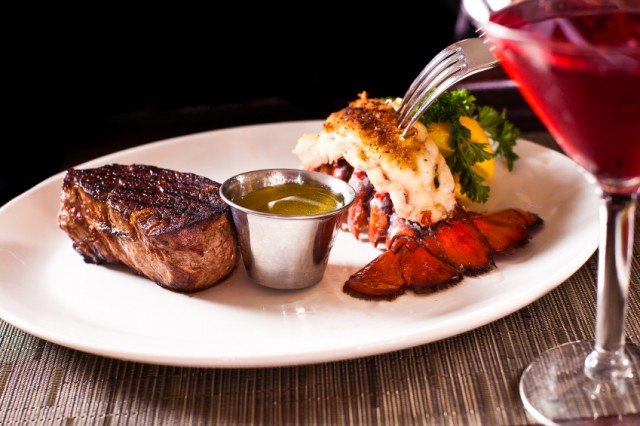
Anchor to Ed: “Ed, what’s the latest from the contract talks?”
Ed: “Well Bernie, all indications are they’re about to shake hands on a new pact.”
Anchor: “How do you know this?”
Ed: “They just fed us surf and turf. There can be no doubt it’s a done deal.”
Anchor: “Thanks for that scoop, Ed! Folks, you just heard it first on CNN. The two sides are just dessert away from inking a new four-year contract!”
Then there was the time a PR guy at one of the Detroit 3 decided to spoon feed me the scoop without actually saying it. This actually happened.
Ed to PR guy: “Hey Tom..what do you hear? Can I step out for a little bit?”
PR guy: “NO! The pizza is coming and it’s gonna be SO GOOD!”
Ed to PR guy: “Aw thanks, Tom, but I’m stuffed”
PR guy: “NO! you don’t understand. The pizza is coming at about 2 a.m. and it’s gonna be awesome. Don’t leave!”
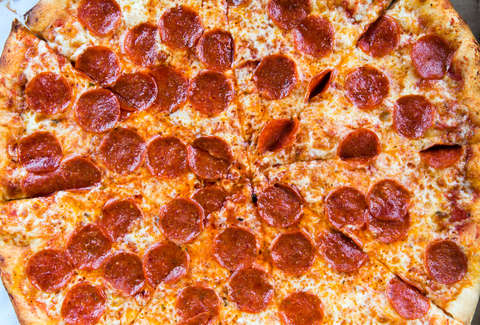
He seemed kinda wound up so I stayed. Good thing. “Pizza” was code word for an agreement and sure enough, at around 2 a.m. word came down they’d reached a deal.
Sure, times have changed. I haven’t been stuck holed up staking out labor talks for several years so I’m sure the automakers aren’t serving up surf, turf or Dove Bars anymore which means today’s journalists are working hard, working their sources, pumping them for any nuggets of news. But it just might be worth it if one enterprising scribe went a little old school and asked the question, “hey, what’re they serving?”
If it’s pizza, fire up your device and prepare to file. It’s gonna be “so good!”
 edLINES