Biden my time
 I was busy shooting a soft little feature on self-driving cars at a backwater display below the main floor at the Detroit Auto Show. Then the text from the boss came through. “Biden’s in Chevy!” Chevy, as in the Chevrolet stand about a billion footsteps and an escalator ride from my current location. Boom. I schlepped my gear and went as fast as my short little legs would go. Keep that image in mind. It comes into play in a moment.
As I’m running, well, dragging my sorry butt, into Chevy I see….nothing. Crap! Missed the shot. Except I didn’t. A moment later a moving wall of shooters, reporters and security people swarmed into the stand, and I could only assume it was, indeed, the Vice President of the United States, or a special appearance by the current Miss Manifold.
Hopelessly stuck behind taller people, meaning anyone taller than my Lilliputian 5’6″, I got on my tippy toes while raising the camera as high as possible, meaning about nose level for normal human beings.
I get lucky and a former CNN colleague now working for General Motors offered me her spot in the mob and that got me a couple of feet closer, but of course, no taller. But it was enough to get a shot of Biden with a GM exec. Not a great shot, but something. Being a pesky little bastard I worm my way into a better spot and start to shoot..until a security guard steps right in front of my lens. “Excuse me,” I say. “You just blocked my shot.” Well, the SOB takes issue and stands his ground, even moving an inch to make sure I have nothing. I see another guard, not much taller than me who hears my plea, so I appeal to him. “Look, I’m a runt. I’m just trying to do my job.” He laughs. I instantly wish herpes on him.
But then providence intervenes. I take up a spot near a blue Corvette where no one else seemed to be. At once I notice a grey haired blur to my right. Biden’s brushing right up against me as he heads to the ‘Vette. I start rolling. He’s right there! Money shot! I won’t be short-changed!
 I’ve worked every Detroit Auto Show since 1990 for four different employers: CNN, AP, The Detroit News, Chrysler, and its variations. Next week I’ll be back for a fifth. The difference is, for the first time since the 2005 show, I’ll be covering as a journalist once again, for Automotive News, after 11 years indentured as a PR guy for DaimlerChryslerChryslerFiatChryslerAutomobiles, or DCCFCA.
 All sorts of reasons have been given for two once-great retailers, Sears and Macy’s, closing scores of stores and rolling out the pink slip carpet for tens of thousands of employees. Most of those reasons have to do with changing consumer habits, competition from lower-cost chains and the fact that malls now seem to attract more annoying kids hanging out than actual shoppers buying things.
  Now Sears. We never bought any clothes at a Sears. That was where my dad bought car stuff and hardware. There were big Sears department stores and smaller Sears auto
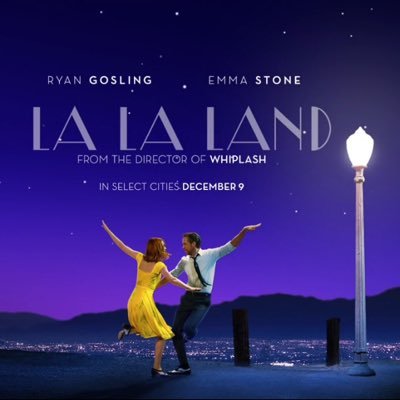 We don’t go to the movies very often but when I stumbled on a story in the New York Times about “La La Land,” I became obsessed with it. I sought out and read everything I could find related to the film and watched the trailer and any other videos that offered interviews with the director, choreographer and stars. I really can’t remember the last, or first time, this happened to me.
  How did 2016 go for you? For me, it was a year of lots of changes including an exit, a re-entry and a rough touch down resulting in an acute need for pain killers and Jack Daniels.
  We once had one of those green, plastic wreaths with a bunch of slots that held all the Christmas cards we received. There usually weren’t enough slots for all the cards that filled our mailbox. That actually was helpful because some of the uglier cards that didn’t make the cut for wreath display were handy coasters and bookmarks.
 The Electoral College is this nebulous “thing” that no one ever really sees and the members seem to come and go in relative anonymity. So I appreciated very much the opportunity to cover for CNN Tennessee’s Electoral College vote after the chaotic 2000 election that saw Al Gore lose his home state to George W. Bush.
 On February 20, 1962 I was in second grade at P.S. 186 in the New York City borough of Queens. Our teacher, a bubbly little delight with curly, dark brown hair, Mrs. Kantor, rolled in a TV set and we watched John Glenn become the first American in space orbit.
 It happens every few years. Christmas and Hanukkah occur at the same time leaving families like mine with the vexing issue of how much surface space to grant each holiday’s symbols.
  edLINES